Hello! I am a native Estonian who has decided to take a closer look at Seele's new cosmetic skin and how it represents my country and culture.
Please bear in mind that I do not claim to speak on behalf of all Estonians. We are not a monolith, some Estonians might like this skin, some might not. I'm just speaking my own thoughts and opinions.
First of all, this skin is modeled after traditional Estonian clothes, so, yes, these are cultural. I've seen some people claim that they're not. These clothes would be worn during festivals, dances, gatherings, etc.
It is also very important to recognise that these traditional clothes vary between region and group, so not all Estonian clothes look the same. For references, I suggest this website (https://rahvaroivad.ee/).
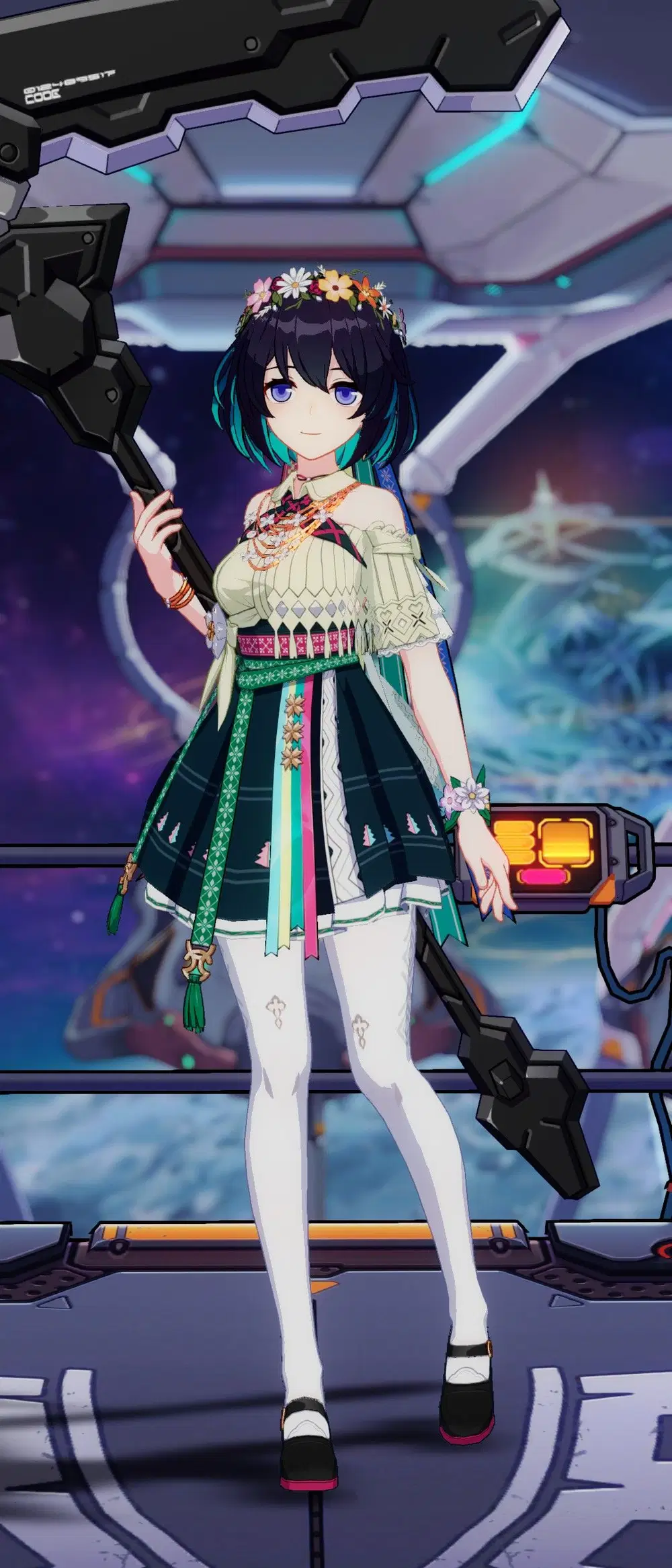
It is kind of hard to pinpoint what region's version the final design is based off of, but it does get the message across without limiting itself to any one specific region.
The most typical depiction of the skirt is one with either horizontal or vertical colourful stripes. These colours, patterns and direction varies between region (some use red as a base colour for the skirt, others use blue, some use yellow, etc.). Sometimes they're not even stripes, but instead they use other designs.
The skirt should definitely be longer, but I won't complain too much. She is supposed to be fighting, after all.
The shirt is almost always white and always made of linen. It is also often partially/fully covered in embroidery of flowers or symmetric designs. Though the shoulders would not be exposed and the sleeves would be much longer. And it would also be held together at the collar by asõlg. Women also often wore a vest on top, but, again, this varies with region.
Jewelry is a big part of the clothes and women wore many necklaces and other such things. The most famous wearers of these are the Estonian Seto people.
One thing that is definitely accurate is the belt. Though there would only be one tied tightly around the waist and would not be dangling. The belt is a long (and I do mean long) strip that is spun around the waist multiple times and then tucked into place. It is always decorated with handmade designs.
As a side note, you'll notice that Seele is not wearing an apron, when a lot of women in real life do. That is because the apron was often used to signify that a woman was already married. So her not having one makes sense.
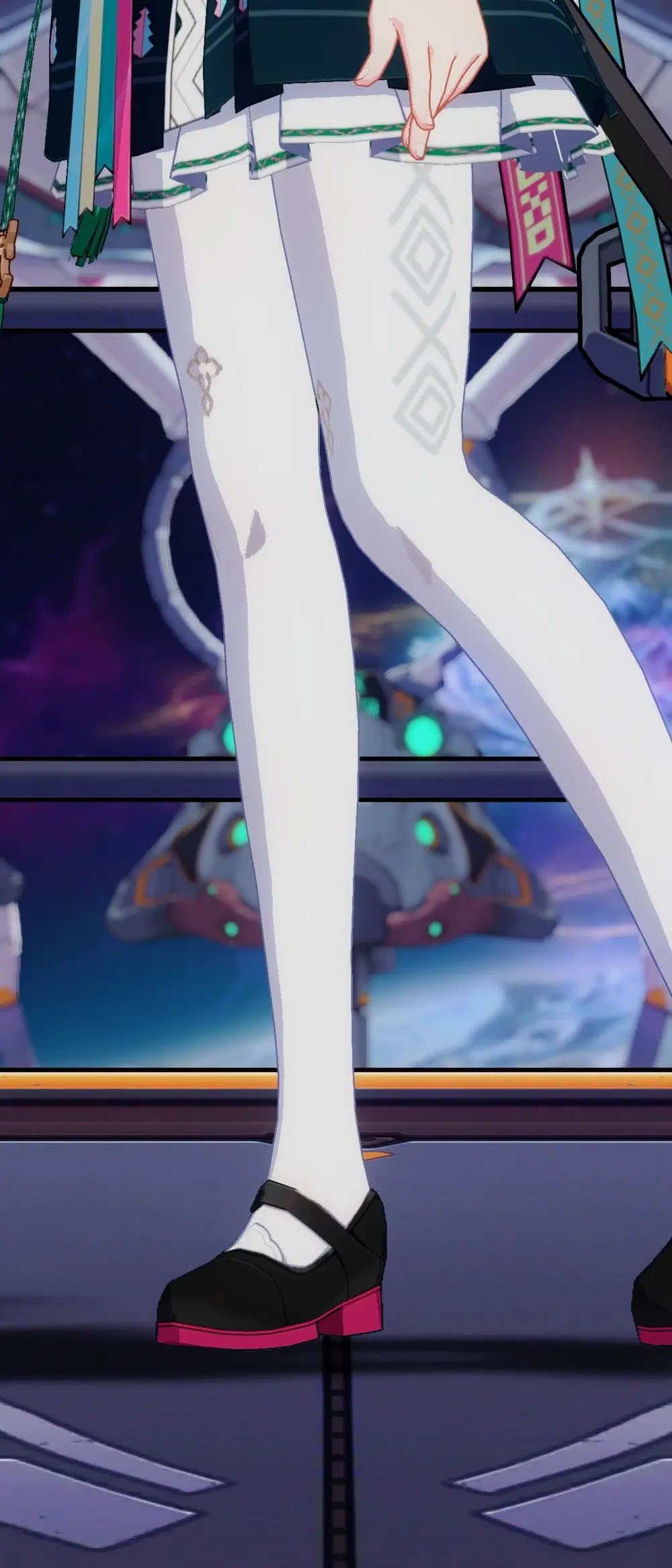
Skirts were layered upon each other, so her having a white underskirt is accurate.
The white stockings are also accurate, though the design should either not be there, or run all the way down. But that's mainly a nitpick. The stockings are not always white. The other most popular colour is red.
The black shoes would be okay for a more "modern" look, which this is. Traditionally, the shoes would be made of brown leather and the straps would be tied around the ankle or halfway up the knee.
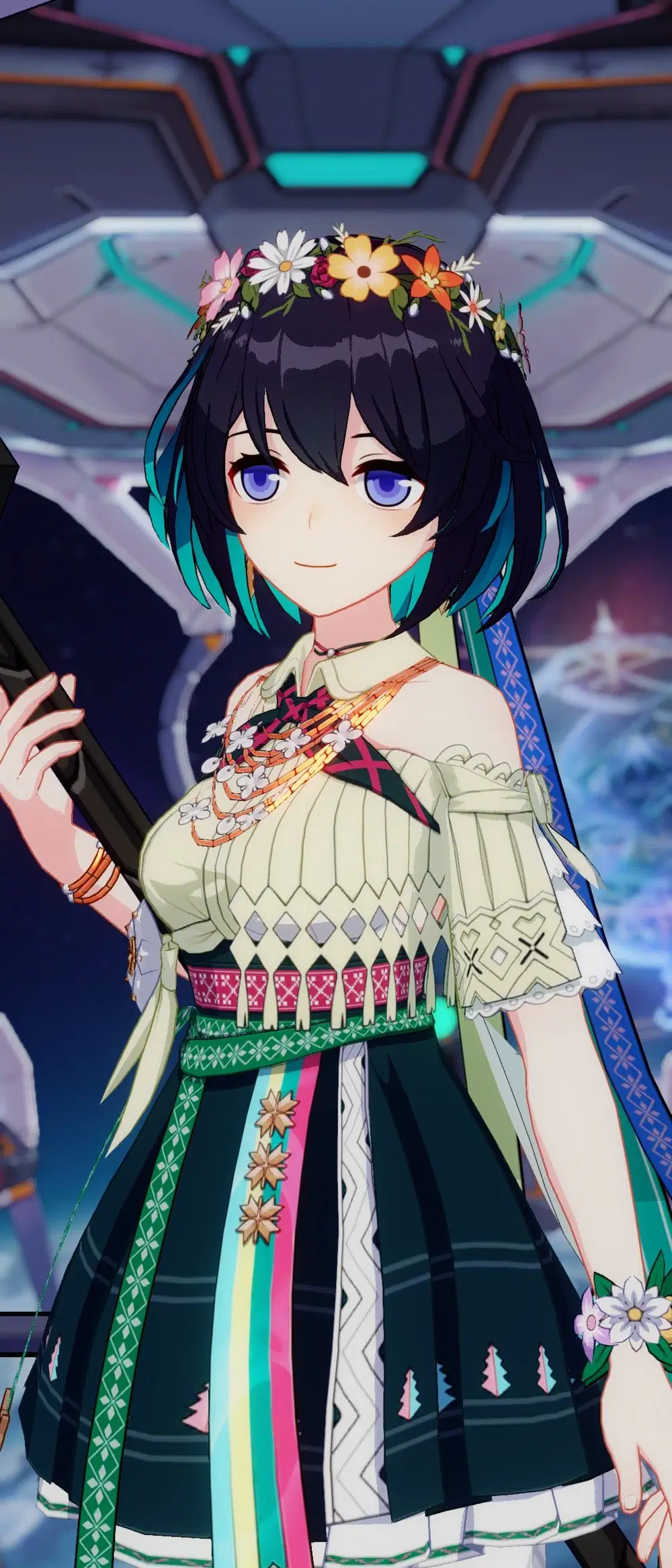
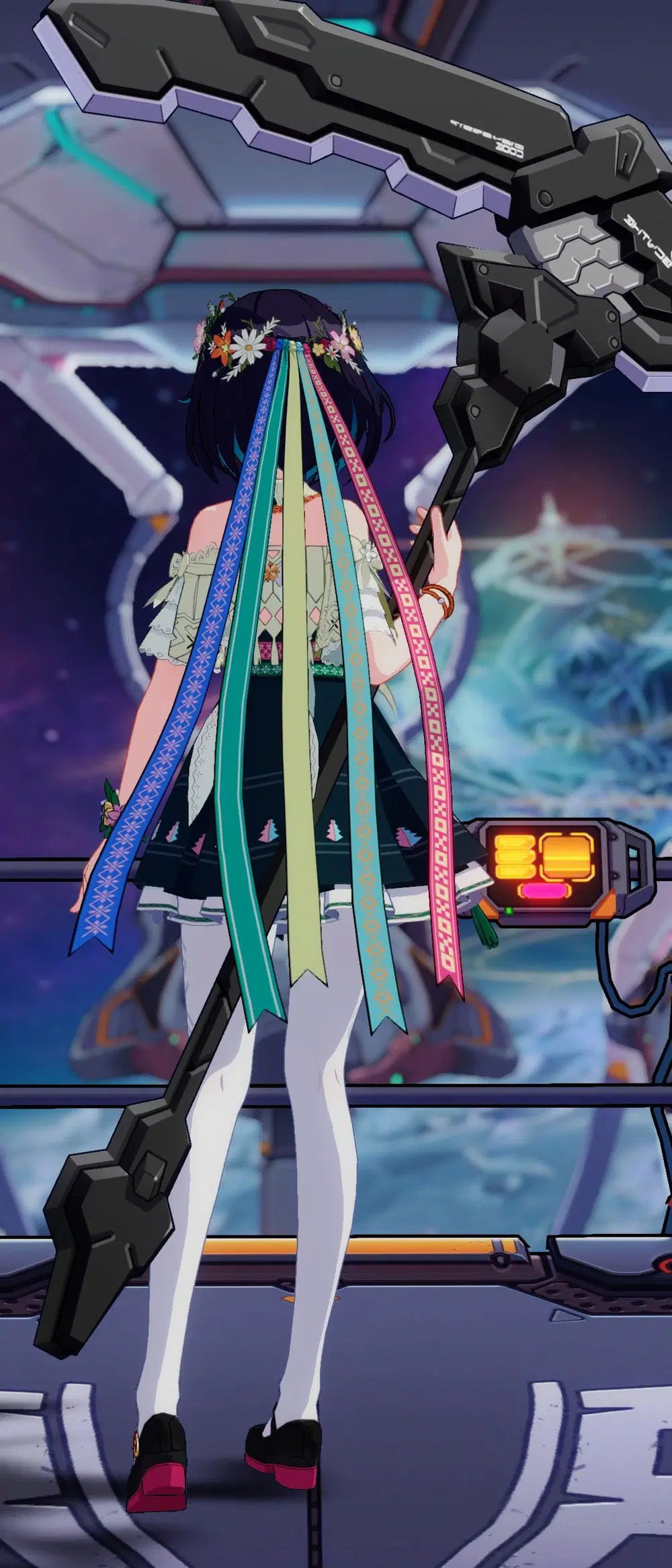
Now. The headdress.
Am I saying that the flower crown is wrong? Ehhh... It would have been a lot more accurate if she wore a tanu (shapes and colours are wildly different based on region), but it's not like every woman wore one. Particularly, a young girl would be more likely to wear a self-made flower crown.
Personally, I would have used Cornflowers instead of more generic flowers. Cornflowers are our national flower and their blue colour would fit with Seele's colourscheme.
The ribbons flying from it are perfectly fine.
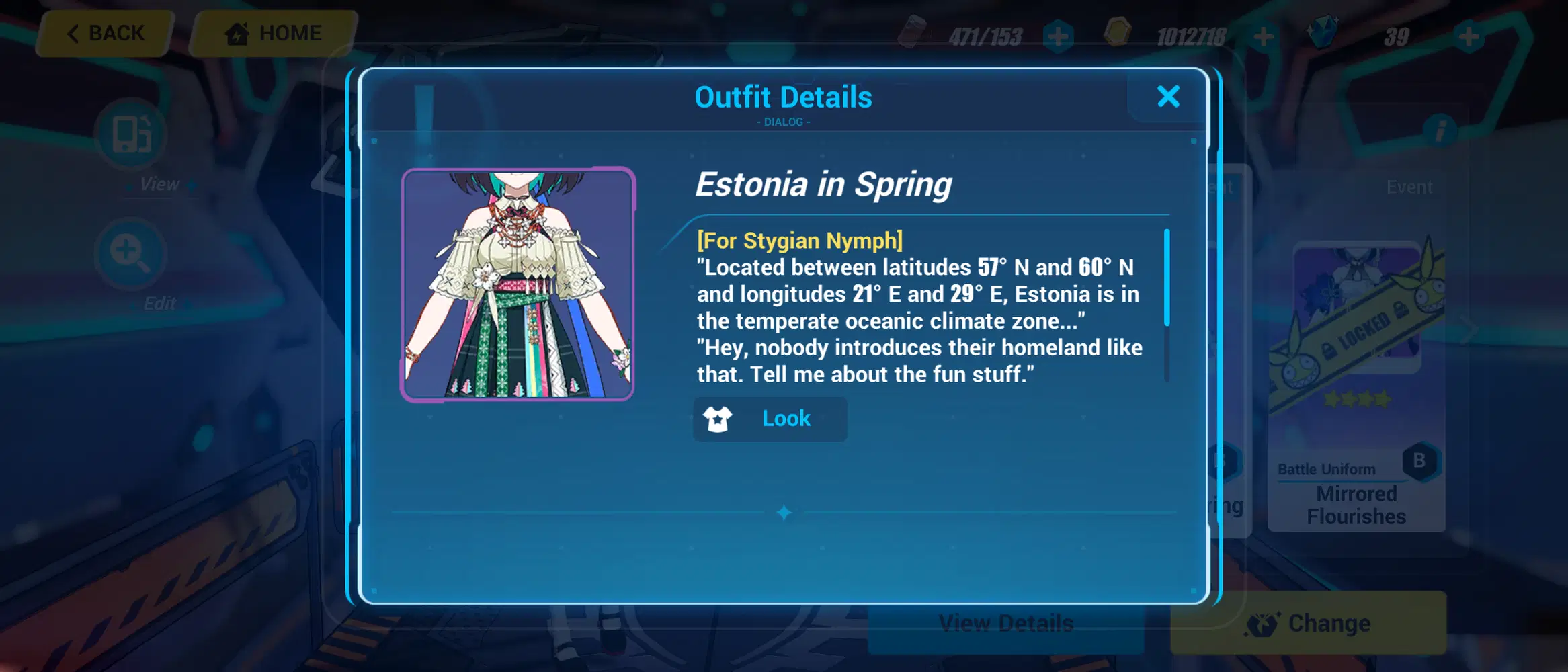
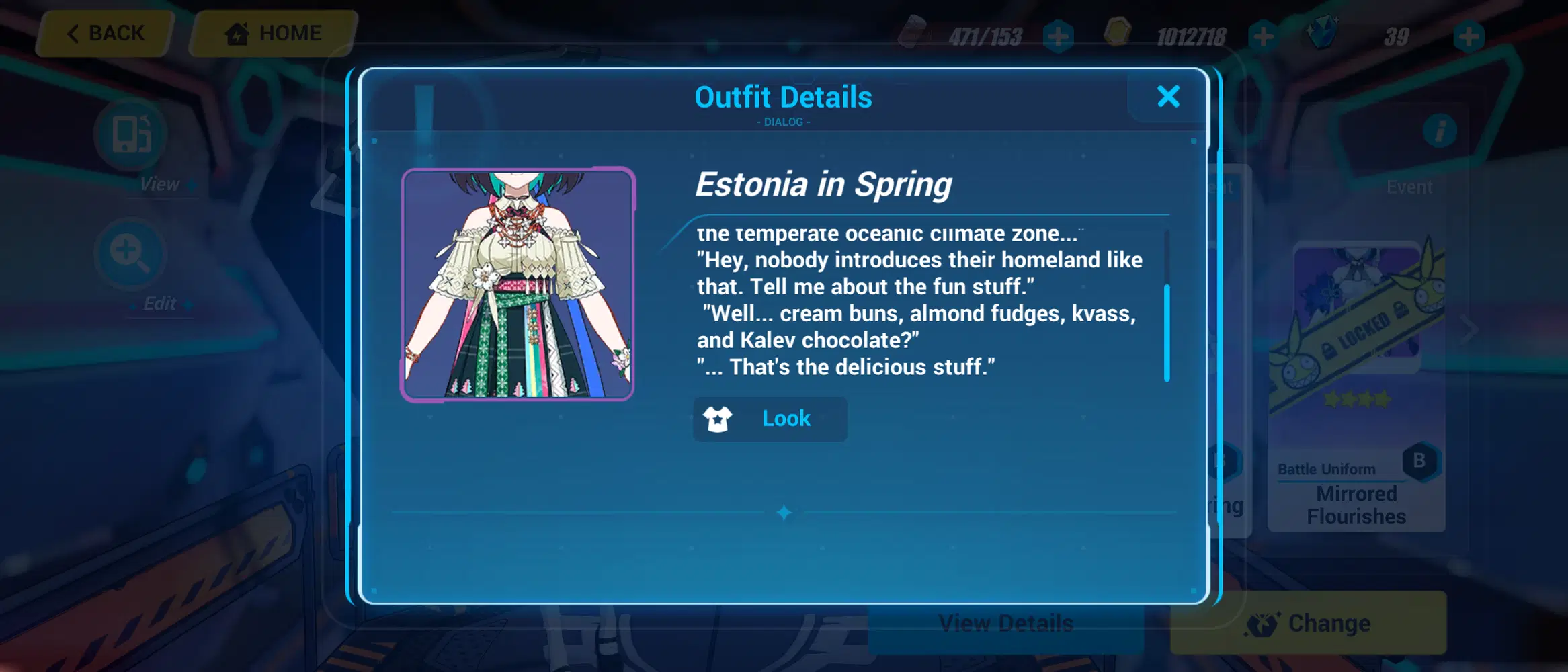
Okay, this one made me giggle a little. It is true that a lot of Estonians immediately start off with saying where our country is. Mostly because no one knows that we even exist and if they have heard of us, they either don't know where it is, or they think that we're some city in Russia.
In the food section, they talk about marzipan, Kvass and Kalev chocolate.
Marzipan is popular in Estonia as a sweet treat by itself, served with coffee/tea, or used as an ingredient in chocolate or cakes. Fun fact, marzipan used to be considered a health food, and was sold almost always in apothecaries. Even the royal family of Russia bought all of their marzipan from this pharmacy in Tallinn ( founded in 1422 ad which is the oldest still operating pharmacy in Europe). They actually still make and sell the same marzipan there today.
Kvass is a mead drink, but that is the Slavic word for it. We call it Kali, because we are not Slavic. It's not exactly considered alcoholic by the law, but it does have an alcohol percentage of about 0,7-2,0%.
Kalev chocolate is the most famous chocolate in the country, made by the Kalev company (founded in 1806). It is also a stereotype that Estonians will bring you Kalev chocolate when they come visit abroad. I can confirm that it's true. My family does this every time.
Hoyo also published these concept designs and I encourage you to check them out. Of these, I'd say that the first and second ones are the most accurate to the real life version. The third one is definitely a much more "fantastical" and "modernised" redesign.
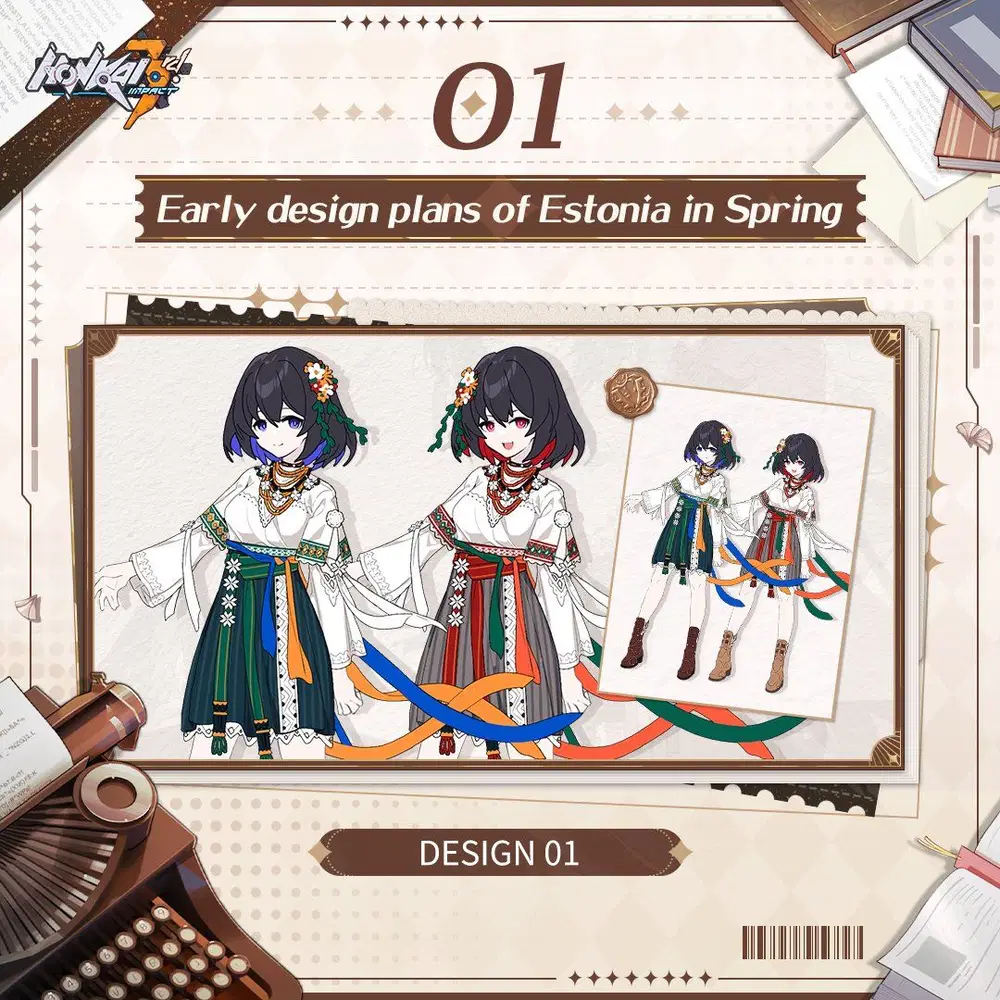
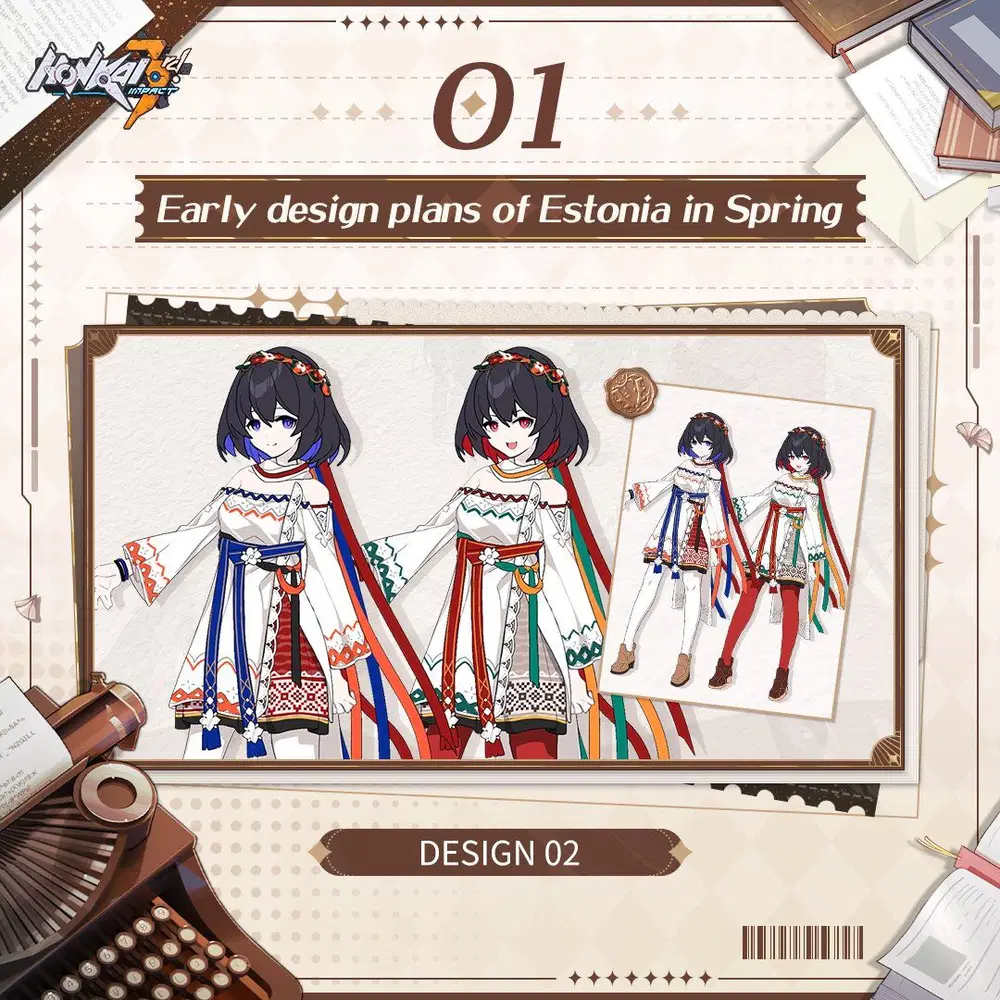
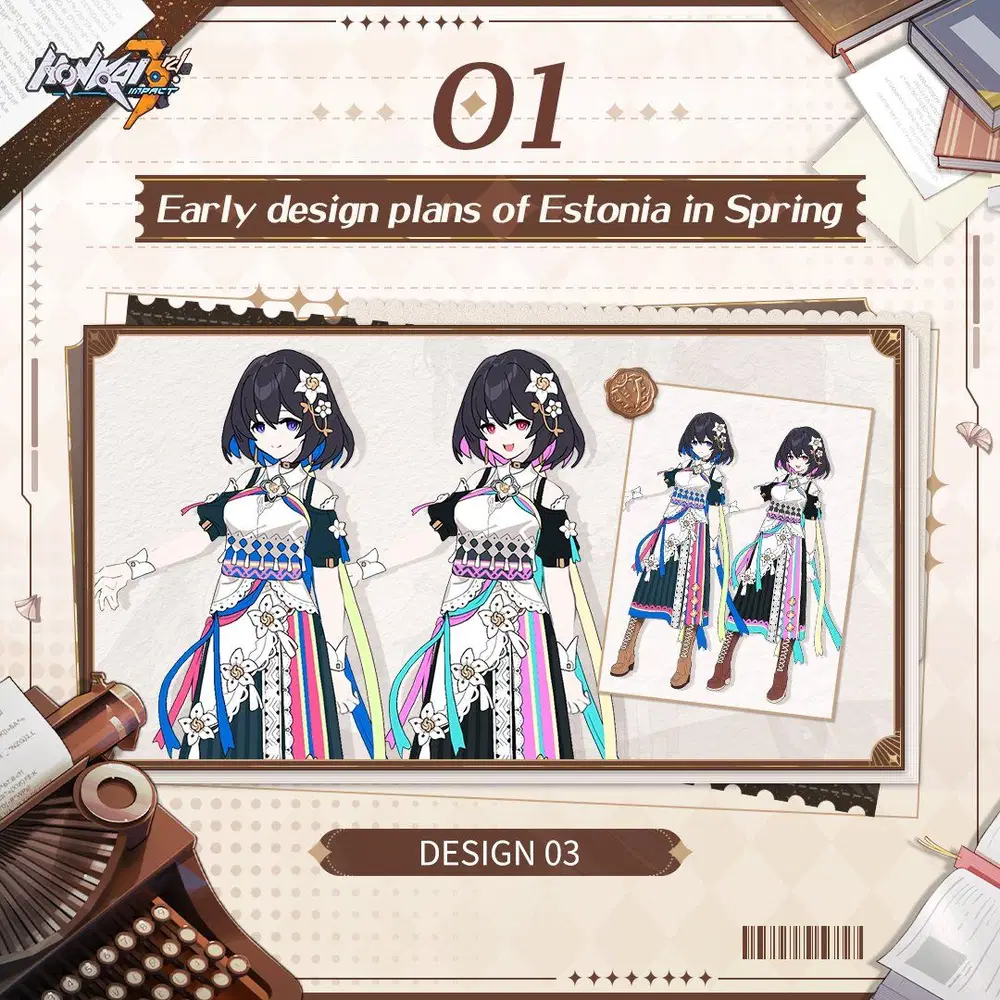
Overall, I think that Hoyo did do research into this. Is it perfect? No. Is it better than a lot of the "representation" that we get in other media? Yes.
I can't find anything offensive about this, so, good job, Hoyo. I give this an 8/10.