Foreword
Sumeru is the capital city of scholars located in the west-central part of the Teyvat. In reality, "Sumeru" is a transliteration of a Sanskrit term and is said to be the name of a sacred mountain in ancient Indian mythology. According to Buddhist beliefs, it is the king of all mountains, the center of the world, and the universe in Buddhist cosmology. Sumeru means "wonderful height," "wonderful light," "virtuous accumulation," and so on, so Sumeru Mountain is sometimes translated as "Wonderful High Mountain" and the like.
In Genshin Impact, Sumeru is a unique country that has both lush rainforest and barren desert, where countless fruits of wisdom grow and are buried. Whether Travelers travel from afar through the forest to reach the academy city or delve deep into the desert to discover the historical ruins of the red desert, a wealth of valuable knowledge awaits them here.
Among the four currently open nations on Teyvat, Sumeru is undoubtedly the nation with the most complex image. It shuttles between rainforests and deserts, listening to music with a West Asian flavor, seeing Southeast Asian-style appearance in the rainforest, feeling the grandeur of ancient Egyptian culture at the Mausoleum of King Deshret and witnessing the perfect fusion of Persian and Indian cultures in Sumeru City. Such a rich and exotic cultural source makes it hard for us to locate Sumeru in existing countries. What cultural references does Sumeru draw on in reality has always been a concern and topic of discussion among travelers. Currently, we can see obvious Middle Eastern cultural elements in the game, as well as some elements from India and Southeast Asia. Because of the large amount of content, this article will focus on the following two aspects for discussion. Welcome everyone to join me in discussing the relationship between Sumeru and reality~
Part 1: Textual Research on 【Middle Eastern】Culture
Part 2: Textual Research on Culture of 【Other Nations】
I Textual Research on 【Middle Eastern】Culture
1.Names & Outfits of the Characters
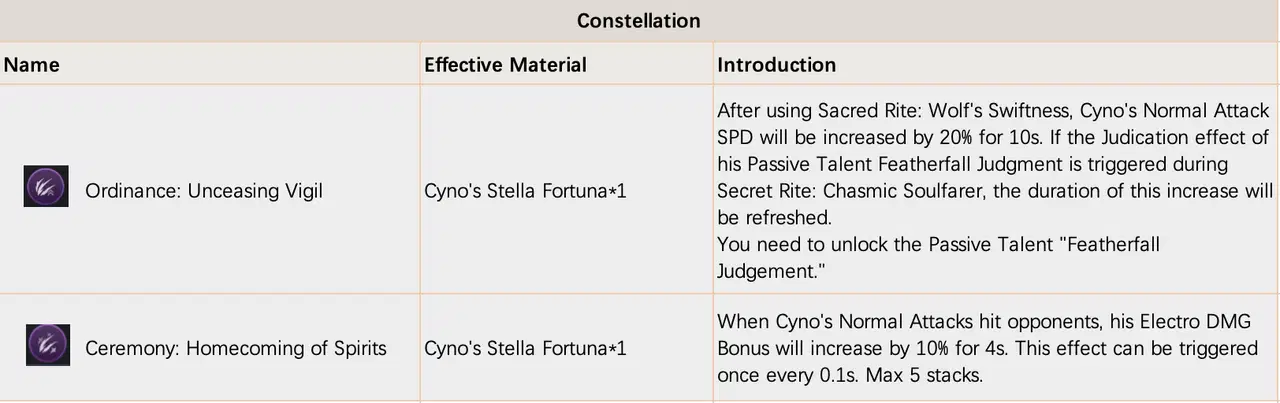
Taking Cyno, the well-known General Mahamatra of Sumeru Akademiya, as an example, his character design clearly incorporates a lot of Anubis elements, such as the jackal-headed hat that corresponds to Anubis' jackal-headed human body. His talents, voice lines, and constellation all reflect the famous legend of "weighing the heart against a feather," which corresponds to Anubis' ability to judge the dead as a General Mahamatra responsible for judging crimes. The names of his first and second constellations also respond to Anubis' role as a guide for the undead.
Anubis (Ancient Greek: Ἄνουβις) is a jackal-headed god in Egyptian mythology who is associated with mummification and the afterlife. During the Ptolemaic Kingdom period, Anubis' image merged with the Greek deity Hermes to become "Hermanubis". In Cyno's story about the vision, it is mentioned that Cyno is a descendant of King Deshret and was raised by a nameless Hermanubis priest. It can be seen that Cyno's overall design and background story draw heavily from ancient Egyptian and Greek mythologies.
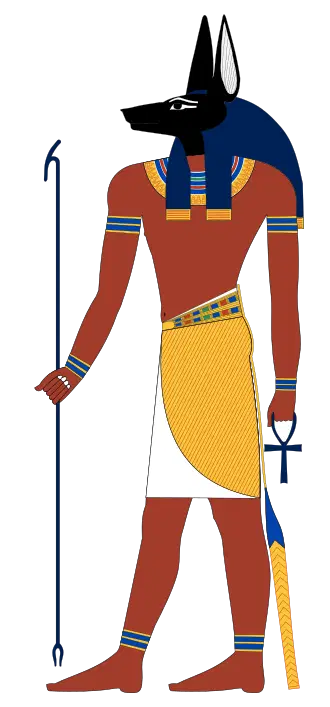
Image Source: Wikipedia Anubis
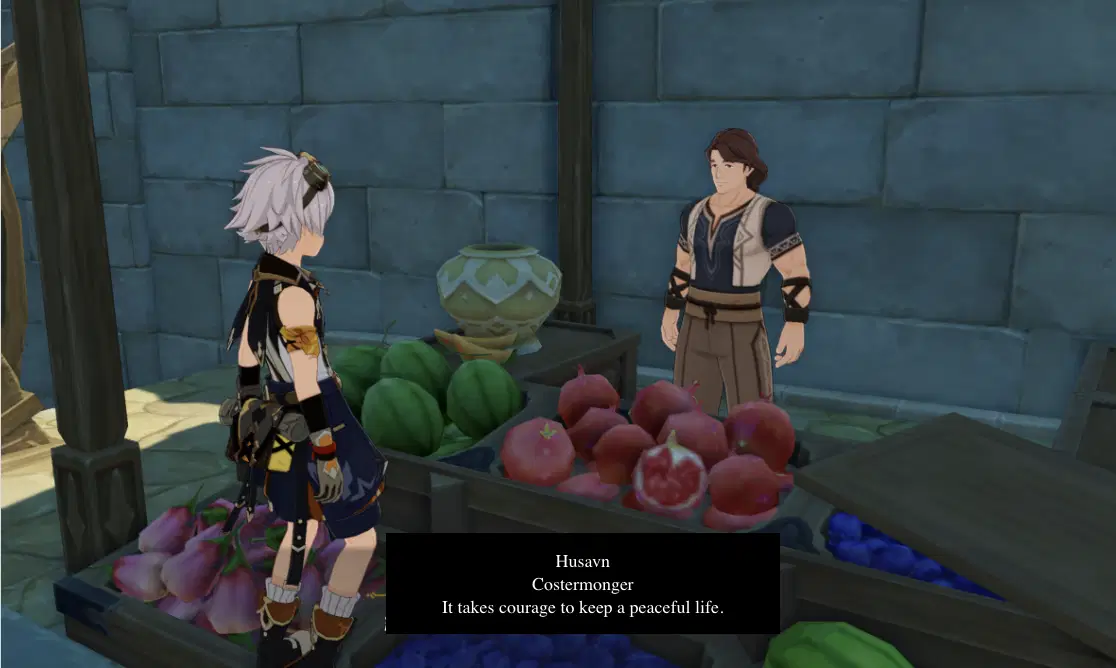
The NPCs in Sumeru also use a lot of Arabic and Persian names and settings, in addition to the main characters. For example:
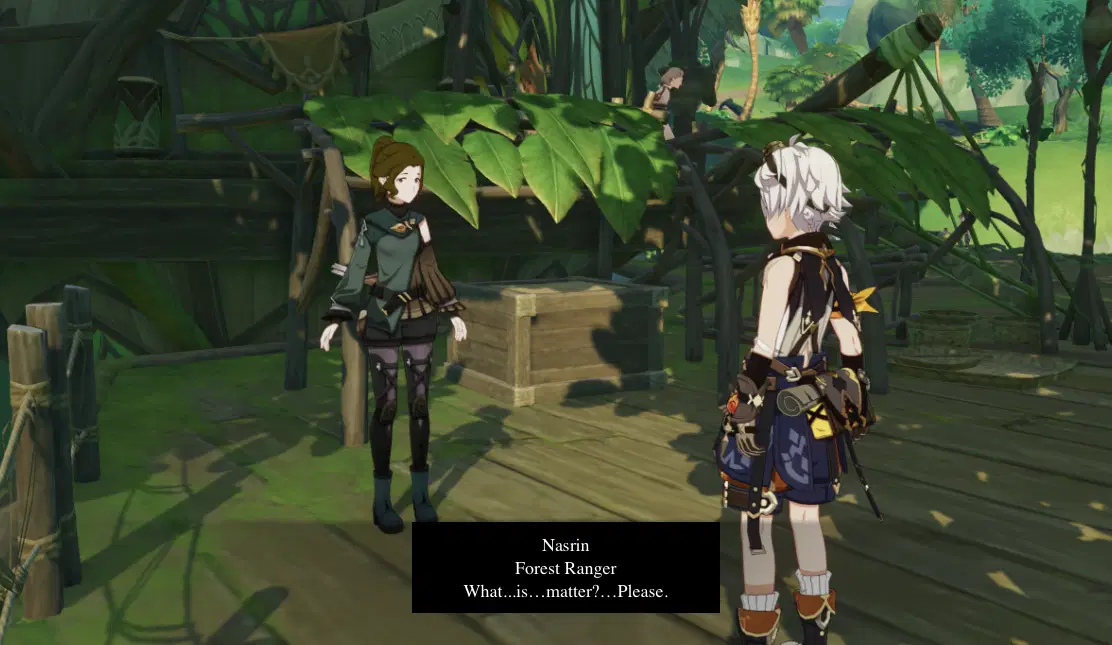
Nasrin is a female Persian name, which means "wild rose" in Persian. It is popular in the Persian cultural sphere and the Arab world, especially in Turkey, India in South Asia, Pakistan, Bangladesh, and Arab countries in North African (influenced by the Ottoman Empire).
Husavn is a common Arabic male name, derived from Hasan, which means "good, handsome, beautiful" in Arabic. It is generally believed that this name first appeared during the time of Muhammad, when the Prophet named his son-in-law Ali's two sons Hasan and Husavn by divine command. After Ali's death, Husavn became the leader of the Ali group and refused to pledge allegiance to the Umayyad caliphate. He was subsequently killed by the Umayyad army in the Battle of Karbala. Husavn's death marked a complete break between the Ali group and the Sunni sect, and his followers evolved into the later Shia sect, making Husavn one of the most common names in Shia countries, especially in Iran.
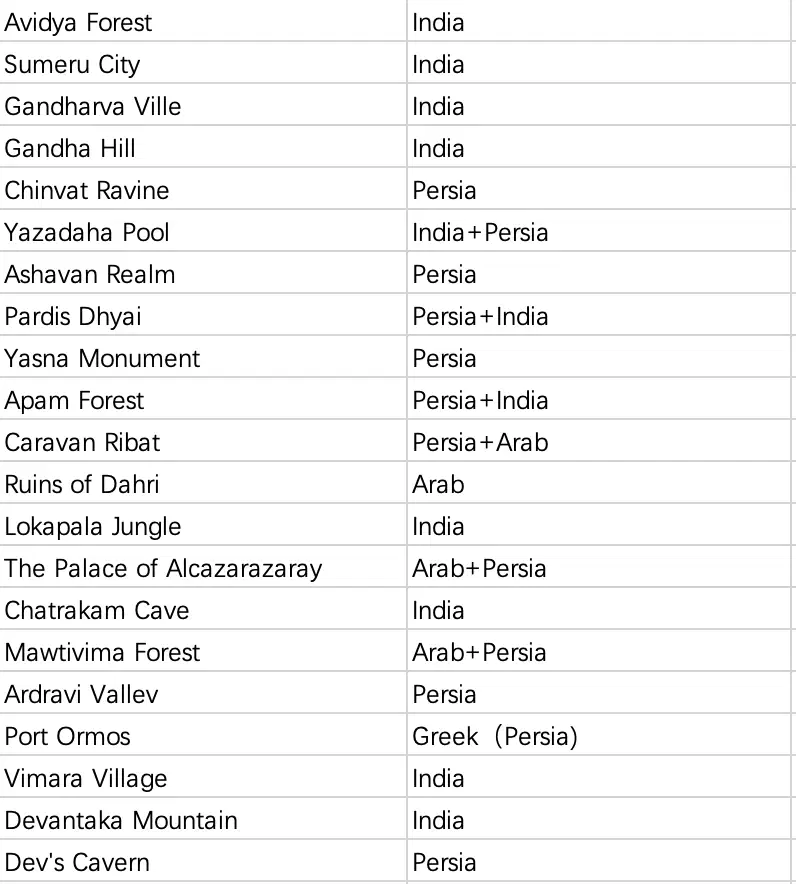
Sumeru's place names also contain lots of Middle Eastern and Indian elements. Part of the sites can refer to the following table:
2.Music of Sumeru
Taking the example of the Genshin Impact Sumeru concert, a large number of ethnic instruments from the Middle East and India were used, including the following:
Riq, Middle Eastern drum (Darbuka/Doumbek), Tar, Nay, Baglama, Duduk, Sitar, Tambura, Oud, Mandolin, Santur, etc.
Here are some examples of these instruments:
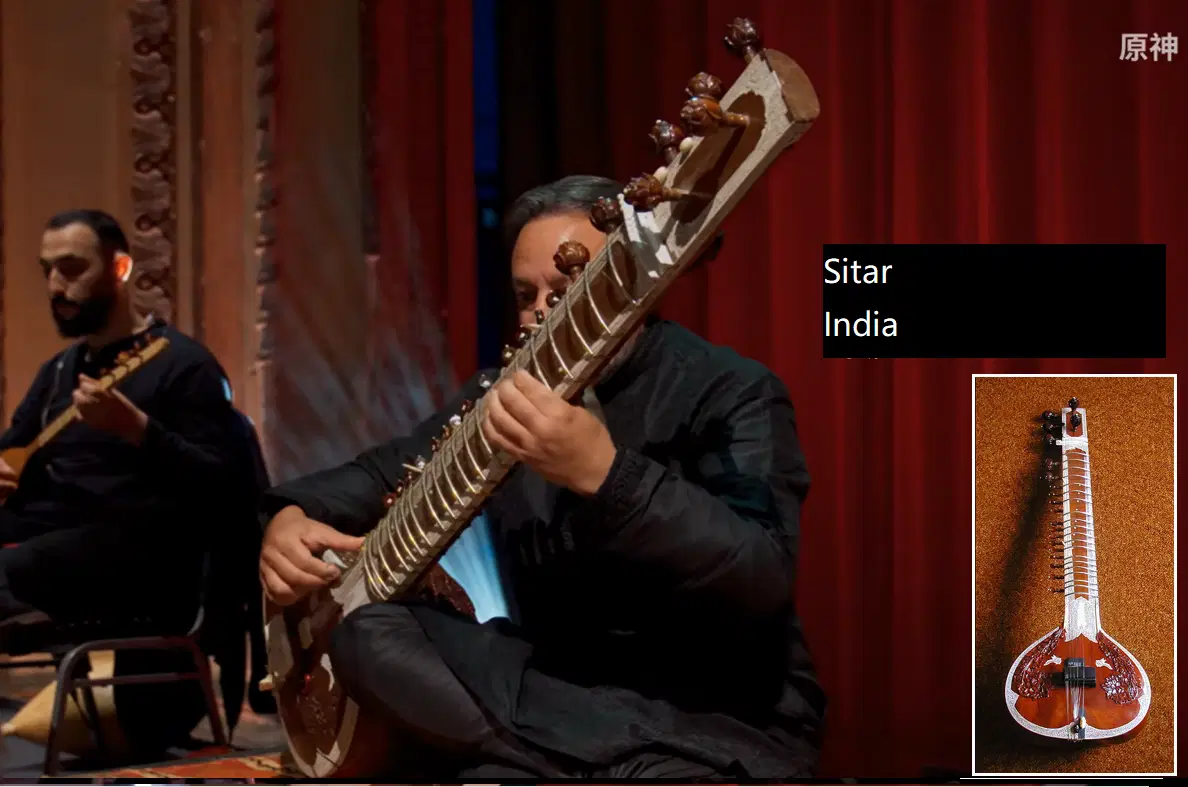
Example 1 - Sitar
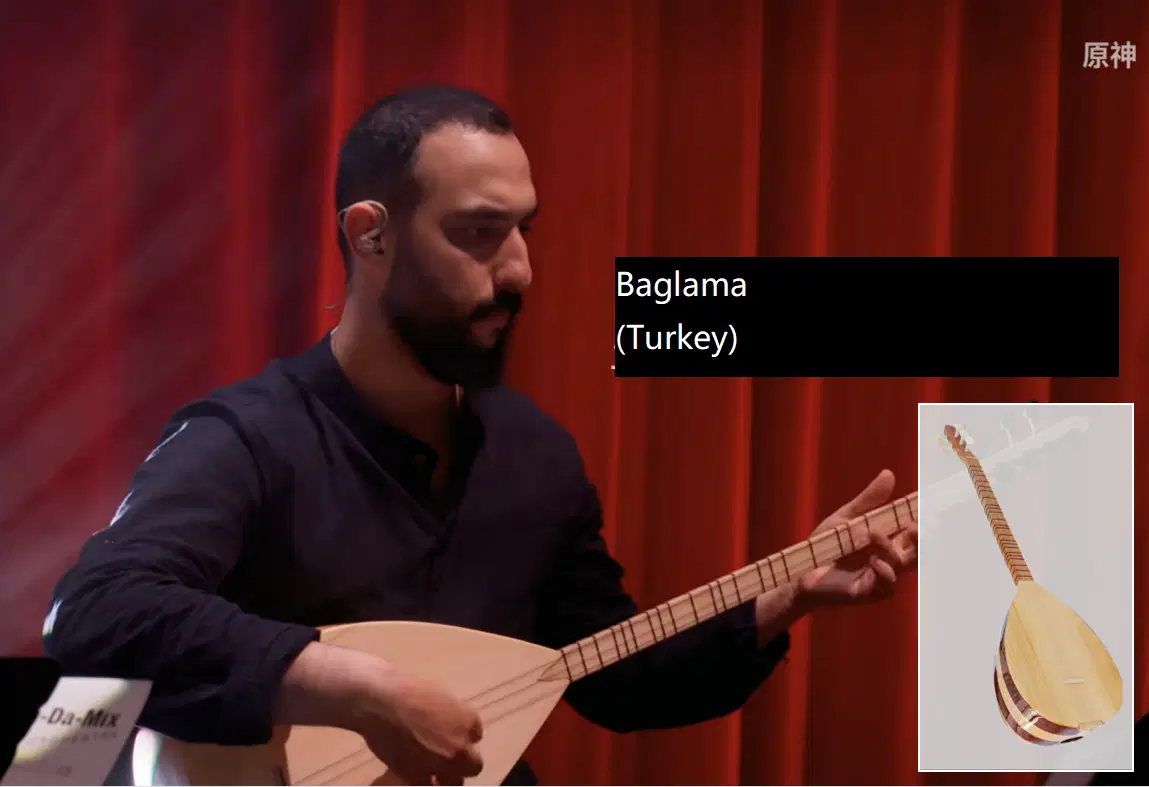
Example 2 - Baglama
Image source - Genshin Impact Official Video
Musical Instrument Image Source - Baidu Pedia
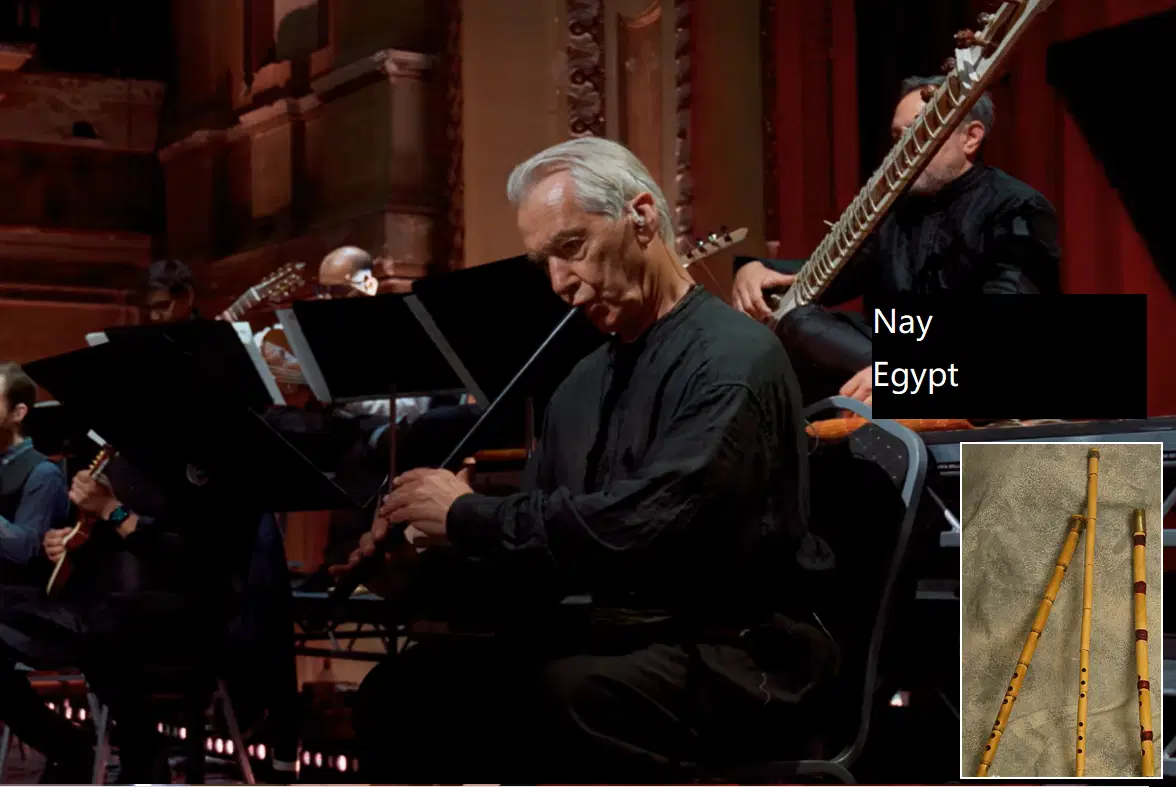
Example 3 - Nay
Image source - Genshin Impact Official Video
Musical Instrument Image Source - Baidu Pedia
As shown in the picture in the lower right corner, from left to right are Turkish Nay, Arabian Nay, and Persian Nay
Image source - Genshin Impact Official Video
Musical Instrument Image Source - Baidu Pedia
3.Buindlings in Sumeru
The architecture in Sumeru is mainly based on Islamic architecture, as seen in the Lighthouse of Alexandria and the Sumeru Akademiya in the Port Ormos, which are reminiscent of mosques.
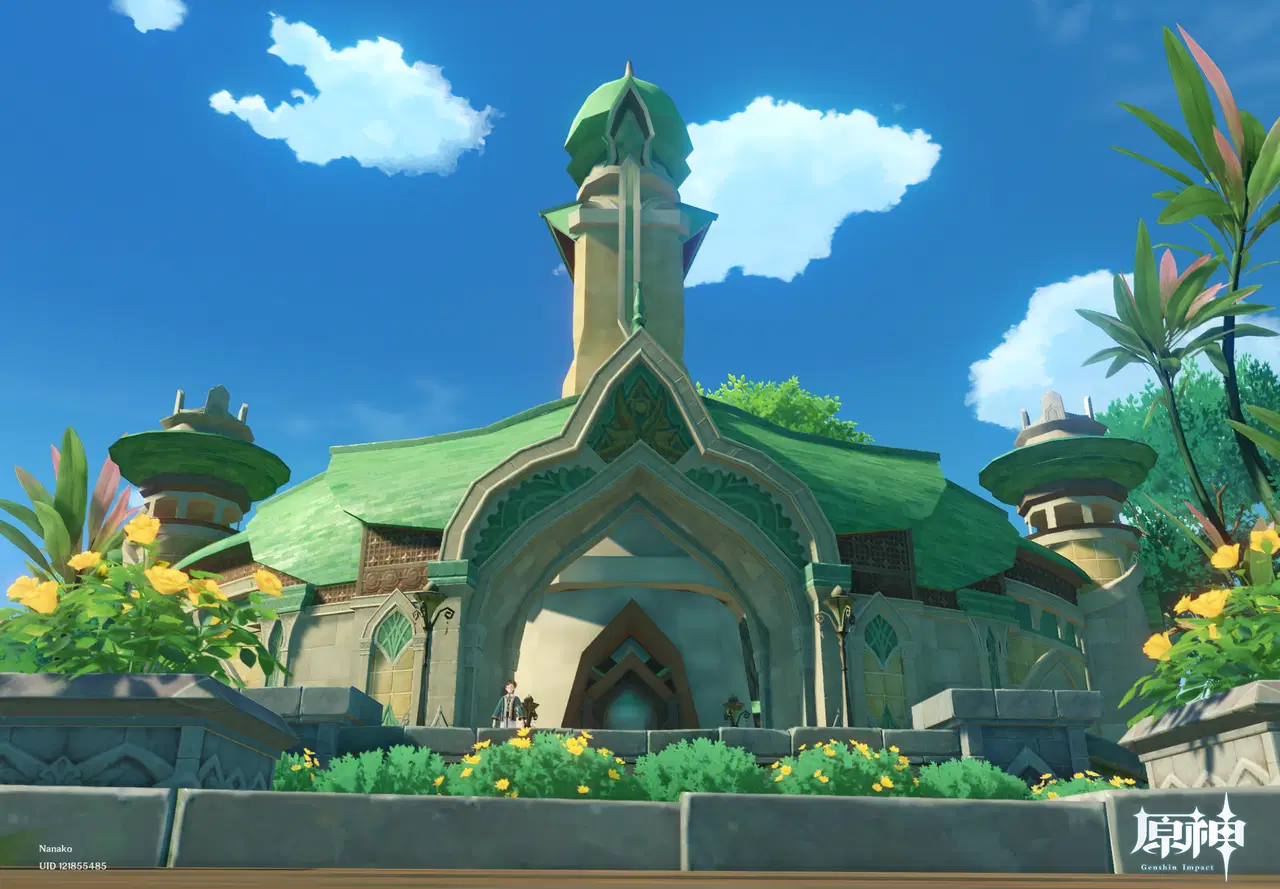
Image - Lighthouse of Alexandria
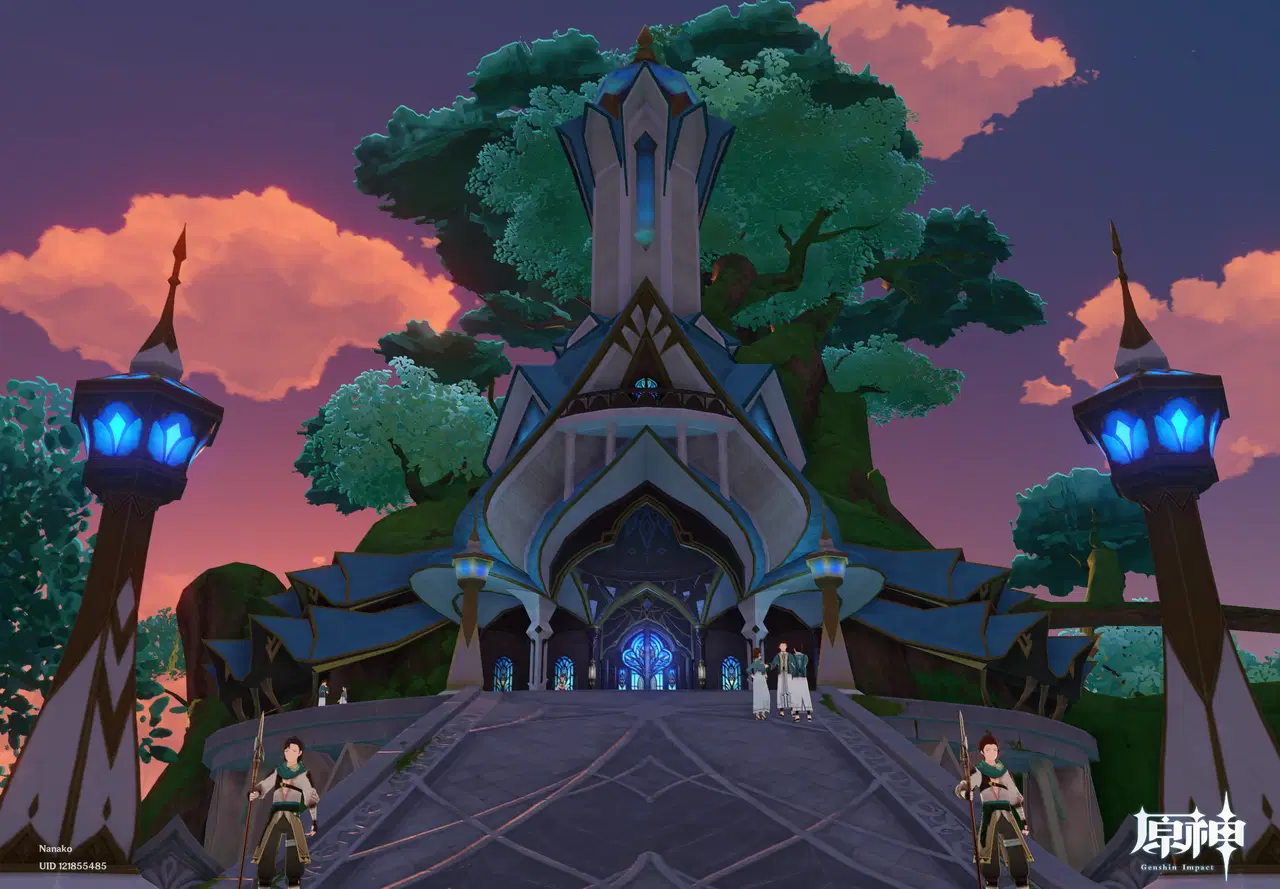
Image - Sumeru Akademiya
A mosque, also known as a masjid, is a place of worship for Muslims, and the word comes from the root word meaning "to bow down" because Muslims bow down and prostrate during prayer. Based on this prototype, we can analyze some of its characteristics:
1. A high central dome. Compared to real-life mosques, the domes of buildings in Sumeru tend to be higher, with many dome-shaped buildings towering over the surrounding area and occupy a small area, which does not match the space requirements of the centralized main building. This feature is most common in Sumeru architecture.
A dome is a common architectural structure that resembles the upper half of a hollow sphere. The cross-section of a dome does not necessarily have to be a complete spherical shape and can also be a barrel vault. Domes can be constructed using various materials and the architectural styles they exhibit can be traced back to prehistoric times.
2.On each side of the elevated drum, there is a minaret, which is the opposite of the high drum. In the game, the minarets are lowered in height, which may be intentionally done to weaken the religious elements. Like their real-life counterparts, this feature only exists near specific buildings. The minaret, also known as the light tower or evening prayer tower, is a common feature of mosques used to call the faithful to prayer (originally lit with torches, later called by the muezzin, and now amplified with loudspeakers). The earliest mosques did not have this structure, and it appeared around 80 years after the death of Muhammad.
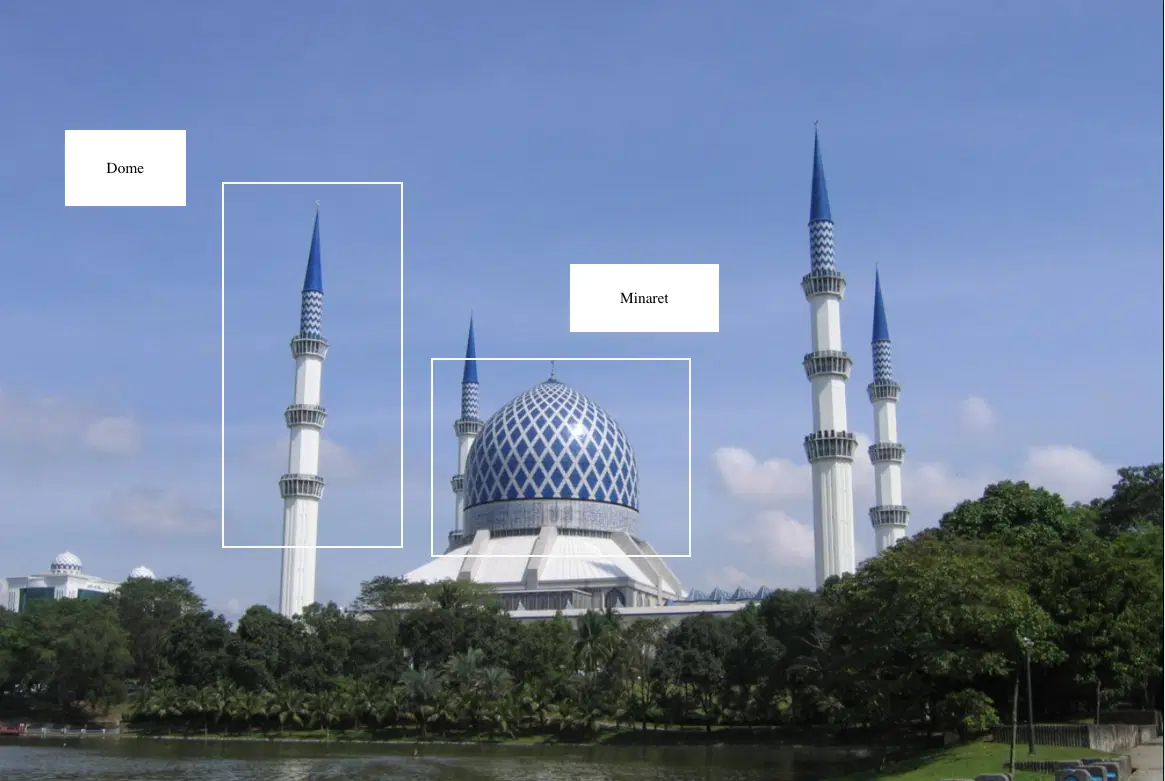
Image - Mosque [Source Wikipedia]
The most prominent and well-known architecture in desert areas is the Egyptian pyramid, which is also the prototype of the Mausoleum of King Deshret in reality.
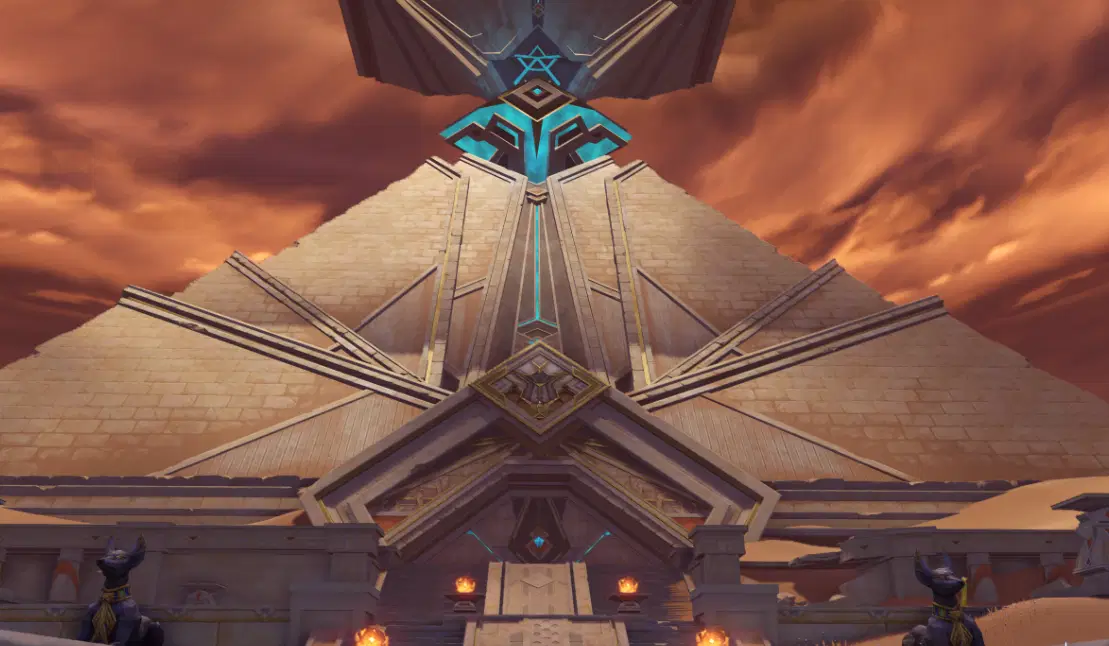
The Egyptian pyramids (Arabic: أهرام مصر) are said to be the tombs of ancient Egyptian pharaohs. Pyramids were mainly popular during the Ancient Kingdom of Egypt, about 4600 years ago. The base of the tomb is square, with four equal triangles (a square pyramid) on each side, which looks like the Chinese character "金" (jin), hence the Chinese of pyramid is 金字塔 meaning "金" shaped tower. The Egyptian pyramids are one of the largest groups of buildings to this day, and are one of the most influential and enduring symbols of ancient Egyptian civilization. Most of the pyramids were built during the Ancient and Middle Kingdoms of Egypt.
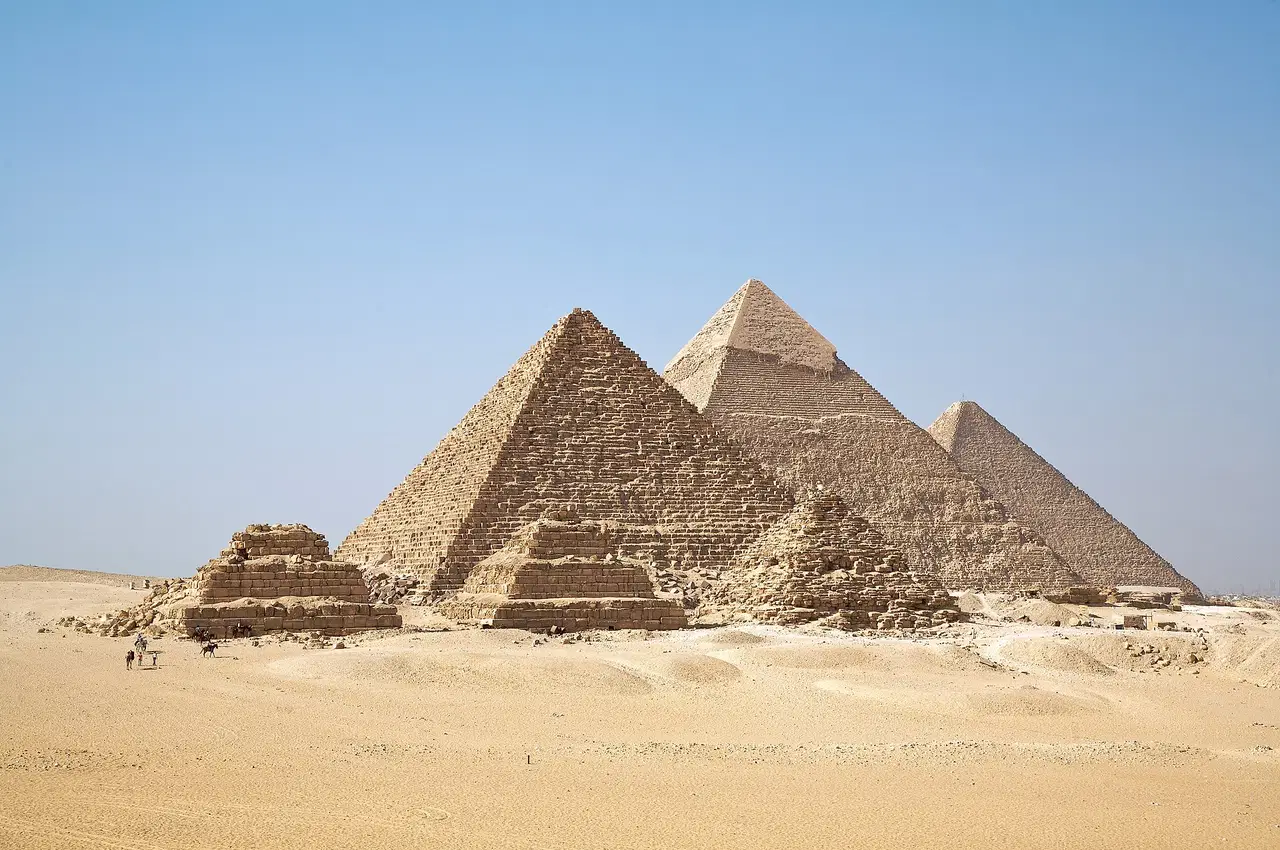
Image - Egyptian Pyramids (Source Wikipedia)
Ⅱ Textual Research on Culture of 【Other Nations】
1.Southeast Asian Elements
There is another type of layered roof that is commonly seen in Sumeru architecture. The style and design of these buildings do not belong to Islamic or Indian culture, but are more commonly found in countries in Southeast Asia such as Myanmar, Thailand, and Cambodia.
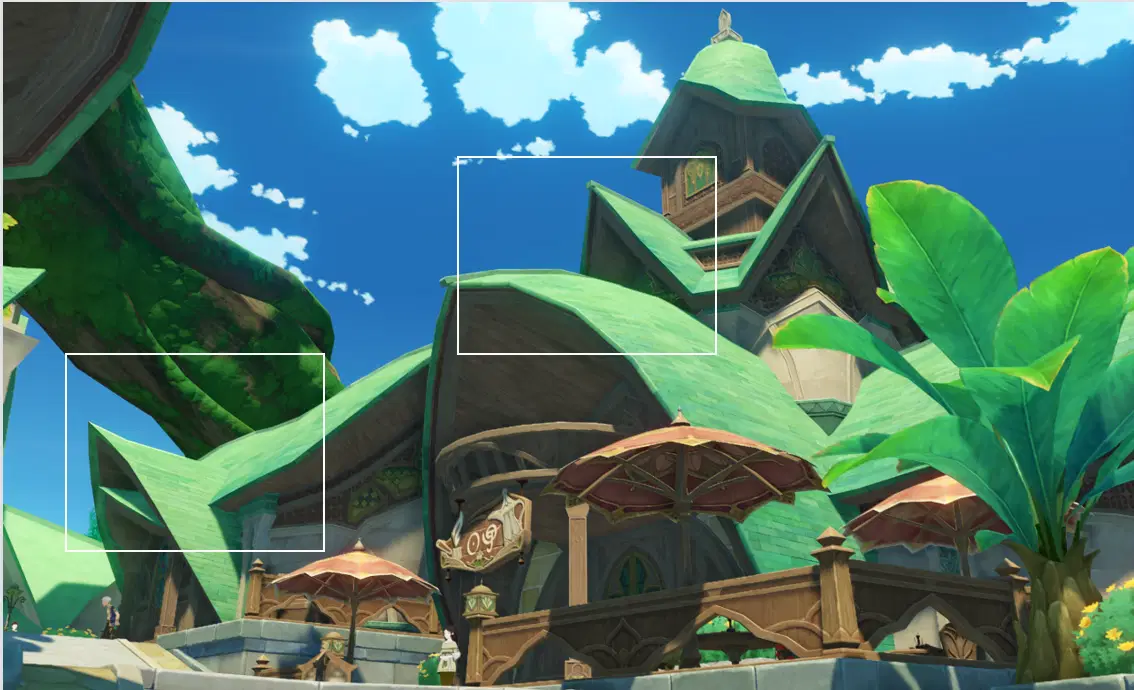
This style of architecture is called Jom-Hae in Thailand, and similar elements can be seen in other countries in the region such as Myanmar and Cambodia. The characteristic feature is the layered, cascading roofs, with each layer getting progressively larger or smaller. In Sumeru, this style of layered roofs can be frequently seen in residential buildings of which the roofs are mildly designed. Instead of single-layer roofs, layered roofs are designed to resemble folded banana leaves, making its shape closer to the leaves of the plant, which also echoes the theme of Sumeru, the Nation of Dendro.
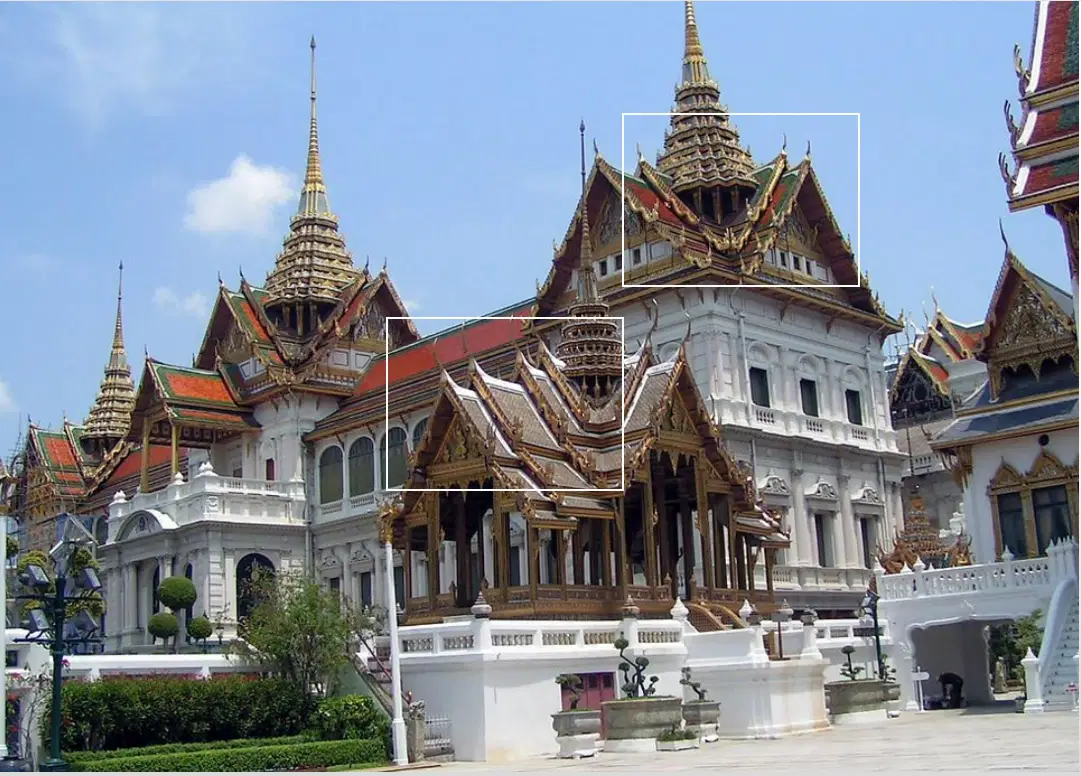
Image - The Grand Palace [Source Baidupedia]
2.Indian Elements
The rooftops of some buildings in Sumeru City include the Indian lotus-shaped top and the dome-like top in Indian temples.
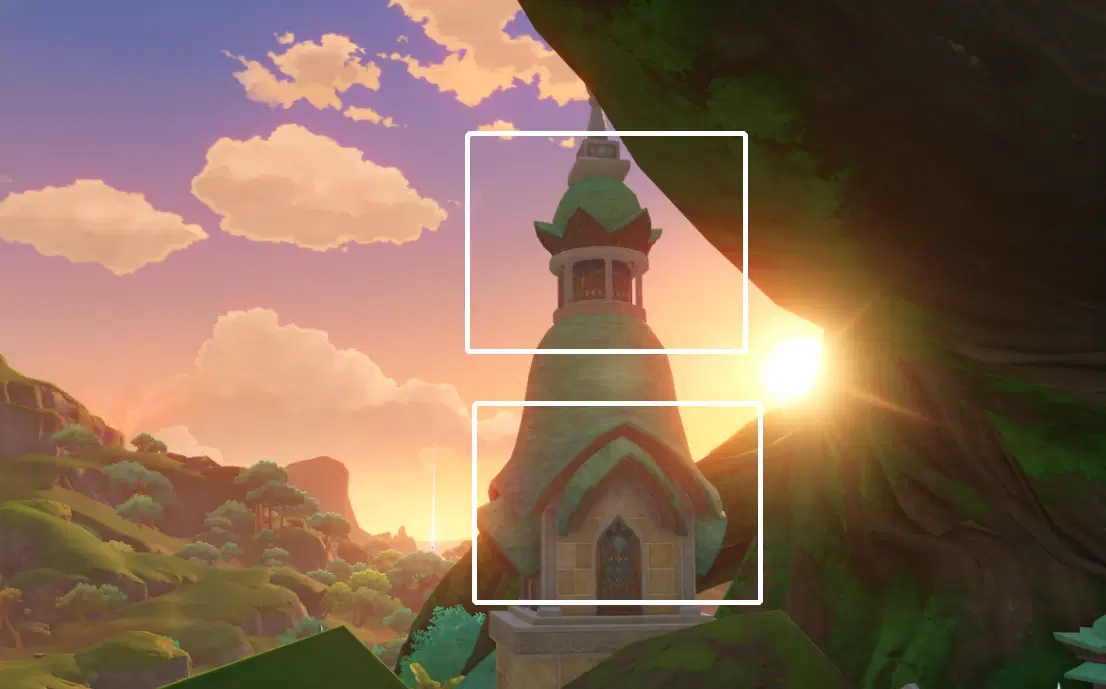
The real-life Indian temple domes and lotus domes are more subdued, while the petal-shaped roofs in Sumeru are somewhat exaggerated.
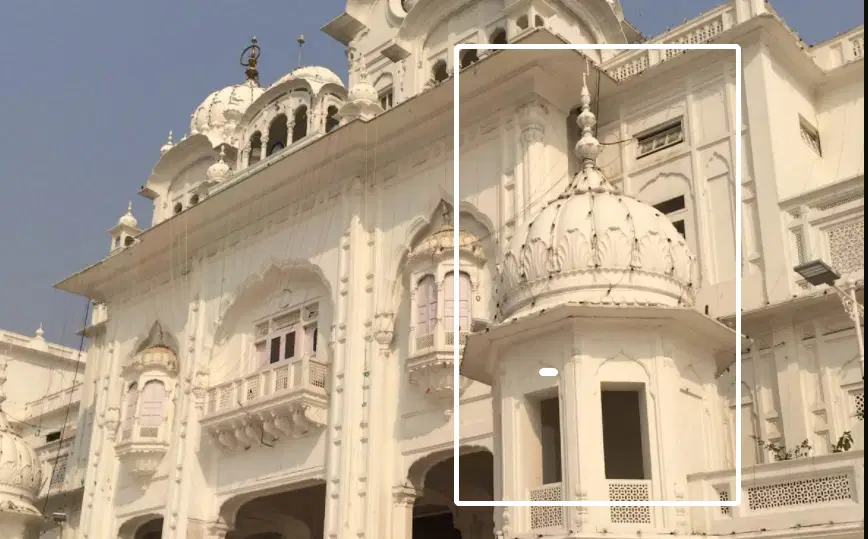
Image - Indian Temple [Source Baidupedia]
Conclusion
The above is the analysis of the cultural elements incorporated in Sumeru. The setting of Sumeru is a fusion of multiple cultures, making it very rich, with particularly close ties to the Middle East. The rainforest area of Sumeru is a prototype of the Persian-Indian binary, with Persian culture as the dominant element. The desert region of Sumeru is dominated by the Turan culture in opposition to Persian culture, as well as the ancient Egyptian culture, and also incorporates elements of Southeast Asian and Indian cultures. The perfect fusion of these cultures creates a brilliant and diverse world of Sumeru.
Do you have any thoughts on Sumeru? Please feel free to share them in the discussion forum!