[2.7k words, essay]
Yoimiya mentions in her second story quest that her ancestor came up with the idea for fireworks as a means to represent the past and the future, but this isn’t a new development in the story: it is precisely the theme that her first quest revolved around and one of the most important concepts in the narrative of the Inazuma chapter.
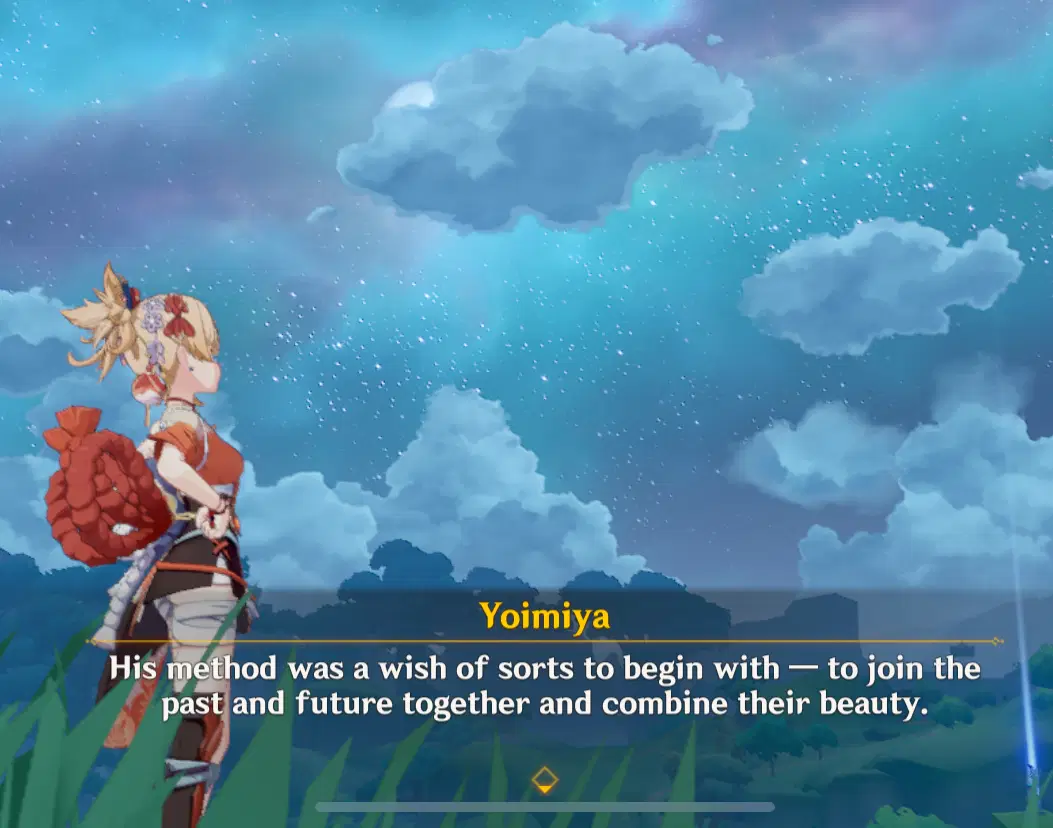
The eternity around transience is the core of Makoto’s ideals, and what Ei comes to terms with at the end of her arc. Thus, Naganohara Fireworks and Yoimiya as a character serve as the first element of insight into the narrative of Inazuma.

The Eternal Connection of Fireworks
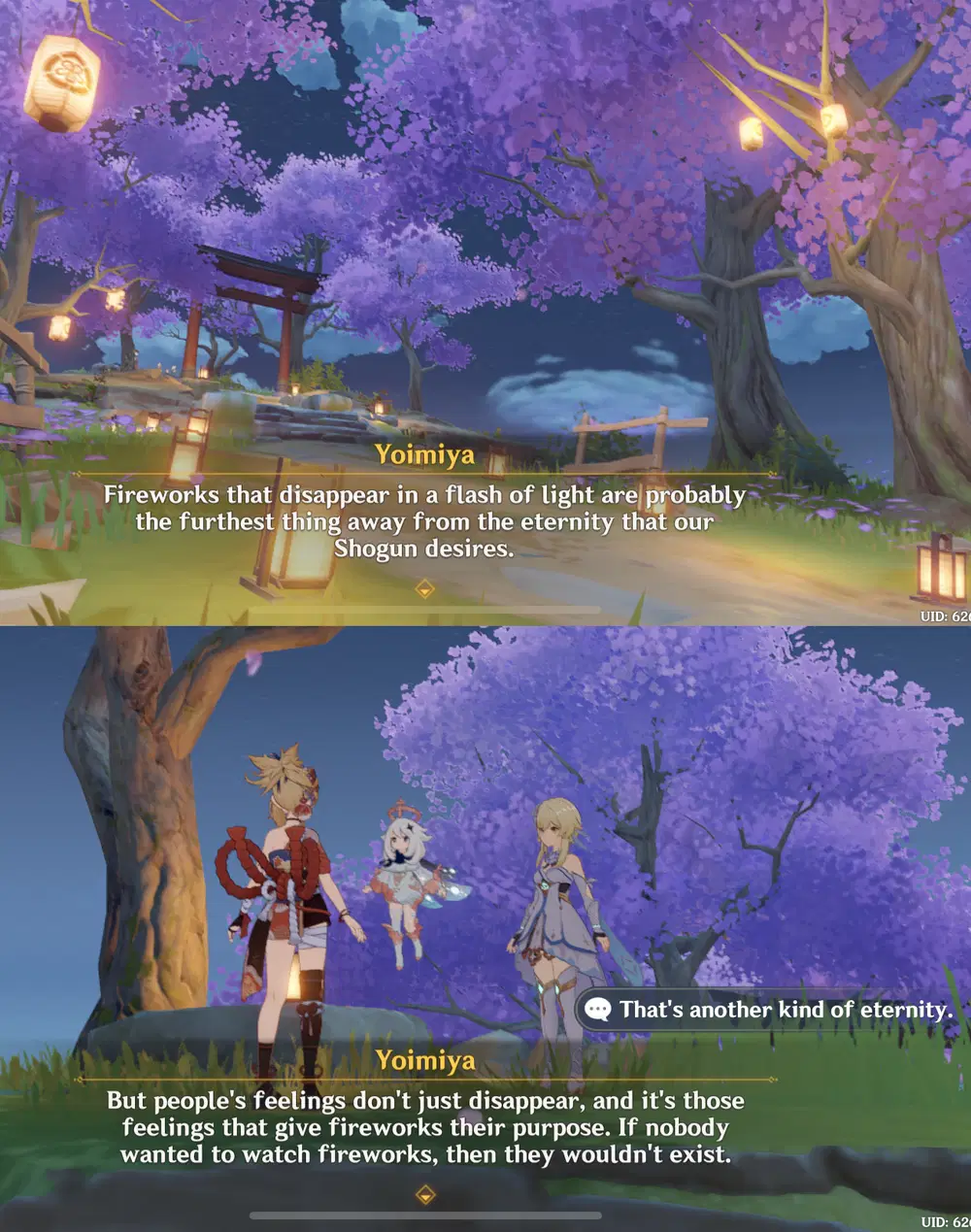
In Carassius Auratus act I, we learn that people use fireworks to commemorate special events in their lives, such as the old couple who set them off on the anniversary of their wedding; or to remember old times like the childhood friends who reunited every once in a while to catch up; or to keep promises to each other, like the couple who had been separated when one escaped Inazuma illegally on a boat.
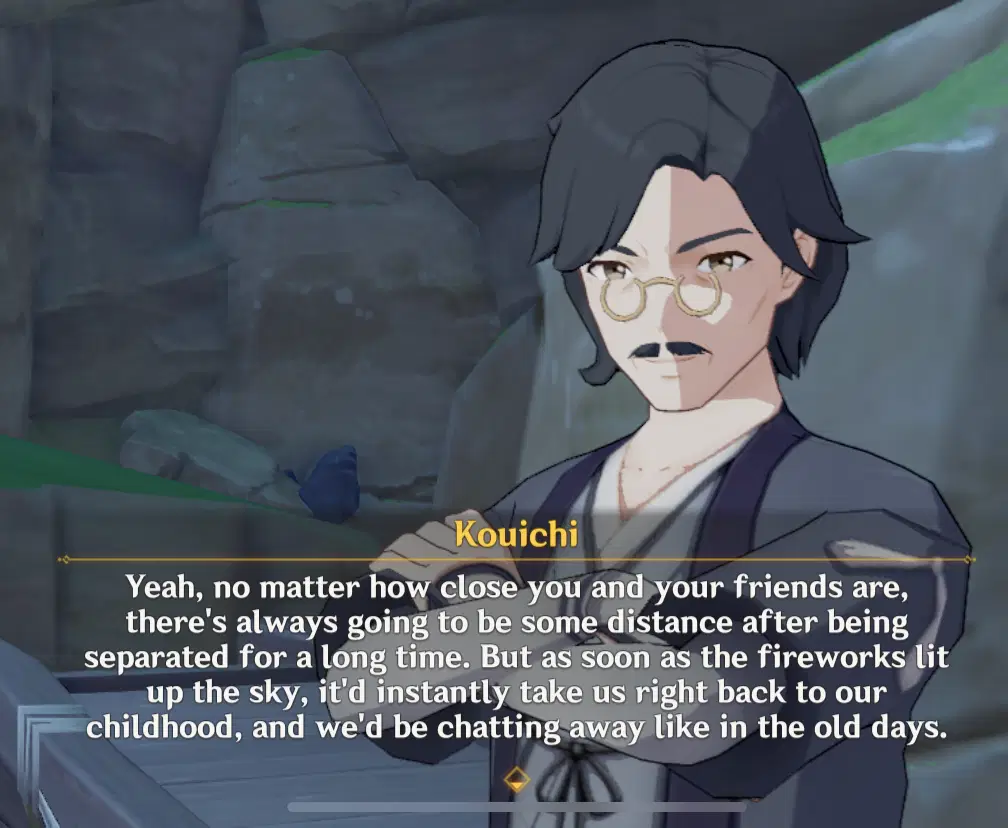
These fireworks were always the same kind, because Naganohara Fireworks gives their customers a special paper slip with their recipe. So no matter how long has passed, as long as they have the paper slip, a member of the Naganohara family of any generation will be able to replicate the exact same firework, and the intentions they were made for from the past can be remembered.
Yoimiya’s character as a whole is used to appreciate the worth and celebrating the transience of human life. She likes to talk to her neighbors more than anything else about their mundane lives, and even works late into the night to provide the fireworks they request. It isn’t precisely people whose lives change the world or belong to the upper class, just regular citizens and their regular joys and sorrows.
Fireworks are used to represent not just the beauty of transience, but also as a symbol of the eternal connection that gives meaning and worth to human life across time. A single person’s life might be a small fragment of history, but ideas —values, culture, purpose, dreams— are passed through each one of them, and they can only endure the passage of time when carried collectively through the generations. This is symbolized through the paper slips provided by Naganohara Fireworks.

Transience is Part of Eternity
Makoto’s ideal of transience wasn’t a superficial preference for temporary existence. She believed transience was part of eternity, of making insignificant human life part of something bigger, long-lasting, something that could outlive mortality.
This is further emphasized in the climax of the Inazuma archon quest, when Kazuha faces the Raiden Shogun’s Musou no Hitotachi. His friend’s wish was to witness and survive its strike, what the motivations for this ambition are we’re not told, but Kazuha realizes it himself beyond his friend’s death. It is at this moment precisely that the deactivated vision rekindles once more, proving that wishes can survive human mortality as long as they’re carried by the living.
(We can still call it the power of friendship for sentimental reasons, it’s okay)
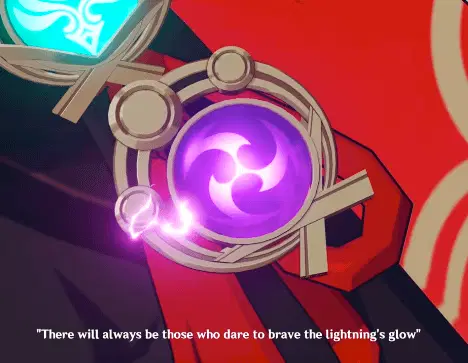
Makoto didn’t place transience above eternity, one is just a means to the other. The twin gods always shared the same goal of eternity for their nation, the difference is Ei was blinded by fear and couldn’t understand her sister’s approach, but they never held opposing views. They both wanted the same for their people: to survive and remain.
But why is eternity so important in Inazuma?
Because Inazuma is based on Japan, and eternity is a fundamental belief in Shinto, the native religion of Japanese people:
"Japanese mythology speaks of an eternity of history in the divine edict of Amaterasu. In its view of history, Shintō adheres to the cyclical approach, according to which there is a constant recurrence of historical patterns. Shintō does not have the concept of the “last day”: there is no end of the world or of history. One of the divine edicts of Amaterasu says:
This Reed-plain-1,500-autumns-fair-rice-ear Land is the region which my descendants shall be lords of. Do thou, my August Grandchild, proceed thither and govern it. Go! and may prosperity attend thy dynasty, and may it, like Heaven and Earth, endure forever.
Modern Shintōists interpret this edict as revealing the eternal development of history as well as the eternity of the dynasty. From the viewpoint of finite individuals, Shintōists also stress naka-ima (“middle present”), which repeatedly appears in the Imperial edicts of the 8th century. According to this point of view, the present moment is the very center in the middle of all conceivable times. In order to participate directly in the eternal development of the world, it is required of Shintōists to live fully each moment of life, making it as worthy as possible."
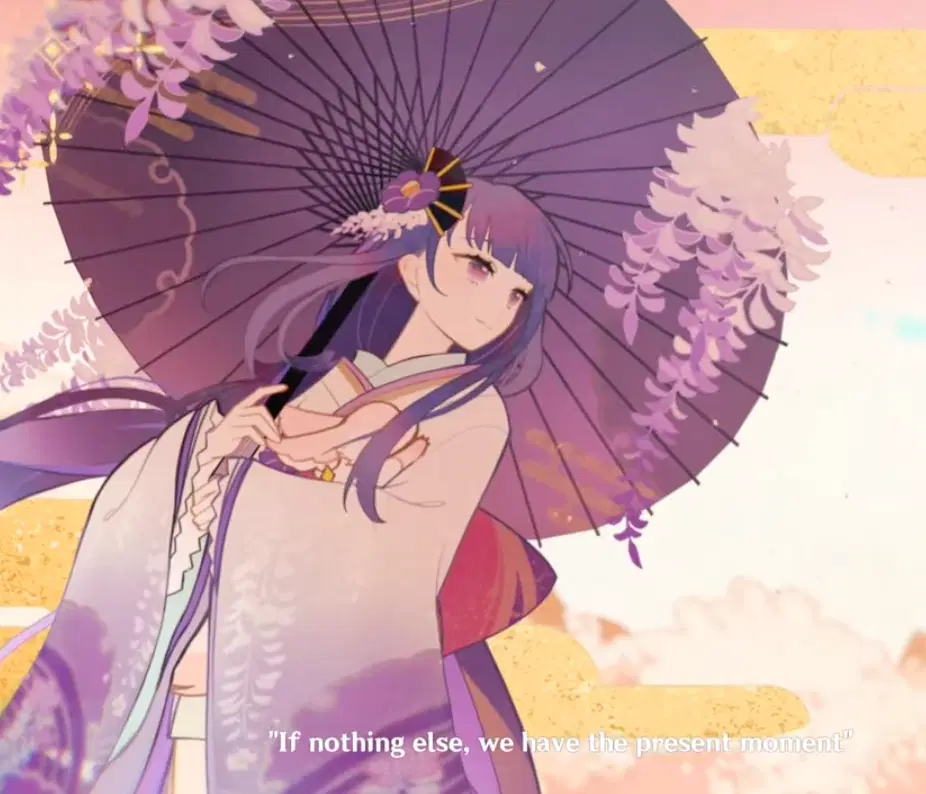
"If nothing else, we have the present moment"
Similarly, another core aspect of Shinto beliefs is the concept of “Makoto” (yes, like Ei’s sister):
"At the core of Shintō are beliefs in the mysterious creating and harmonizing power of kami and in the truthful way or will (makoto) of kami. The nature of kami cannot be fully explained in words, because kami transcends the cognitive faculty of humans.
The kami also reveals makoto to people and guides them to live in accordance with it. In traditional Japanese thought, truth manifests itself in empirical existence and undergoes transformation in infinite varieties in time and space. Makoto is not an abstract ideology. It can be recognized every moment in every individual thing in the encounter between humans and kami."
Kami (Shinto gods) don’t need to be worshiped the way traditional gods do, as performing tasks of regular life is a form of worship in itself, and the truth of kami manifests in it. It seems like a very chill religion.
Shinto doesn’t have a list of ethical rules like conventional religions either, but the concept of Makoto (“truth” or “sincerity”) can be found at the heart of its ethical values. A person who behaves truthfully therefore acts ethically.
"This is partly what is meant by the phrase kannagara-no-michi which, in the ethical context, refers to the idea that virtue is inseparable from the rest of life, especially life lived in harmony with the natural world (enlivened by kami). Beauty, truth, goodness, morality - these are all connected, inseparable from each other. Those who live life with the perspective outlined above - with an aesthetic sensitivity, an emotional sensibility toward the world, and with a sincere heart will behave morally almost naturally. List and rules are more important for training animals than for cultivating morality in humans, according to this view.
Having said this, purity rituals are common across Shinto practice, which points to the need for purity in one's heart. This purity of heart is a natural companion to makoto. Often, these activities are done at a shrine, and they symbolize the inner purity necessary for a truly human and spiritual life."
The Grand Narukami Shrine is inspired by these, where Yae Miko performs her duties as the Guuji (chief priestess) that Kitsune Saiguu entrusted to her before passing away.
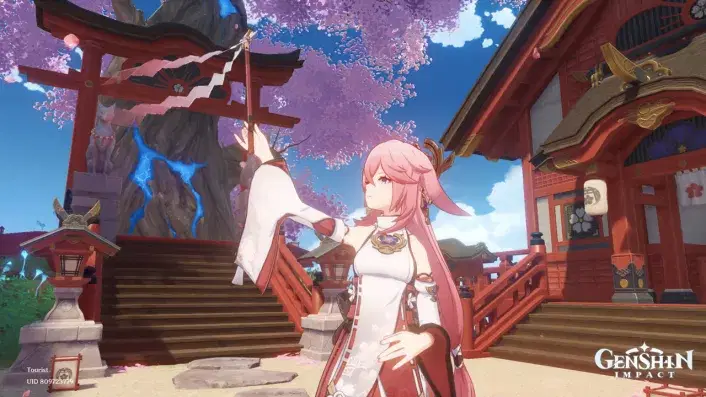
As a re-interpretation of Shinto within the world building of the game, the beliefs of the kitsune Guuji and Raiden Makoto are not meant to parallel exactly those of the real life religion, but the elements are used to shape up a cohesive narrative in the story.
Yae acknowledges she has more in common with Makoto, as the characters who embody the beliefs and practices of Shinto, and it is her who schemes her way into Ei’s Plane of Euthymia to talk her into finding another path towards this eternity that Makoto wanted.
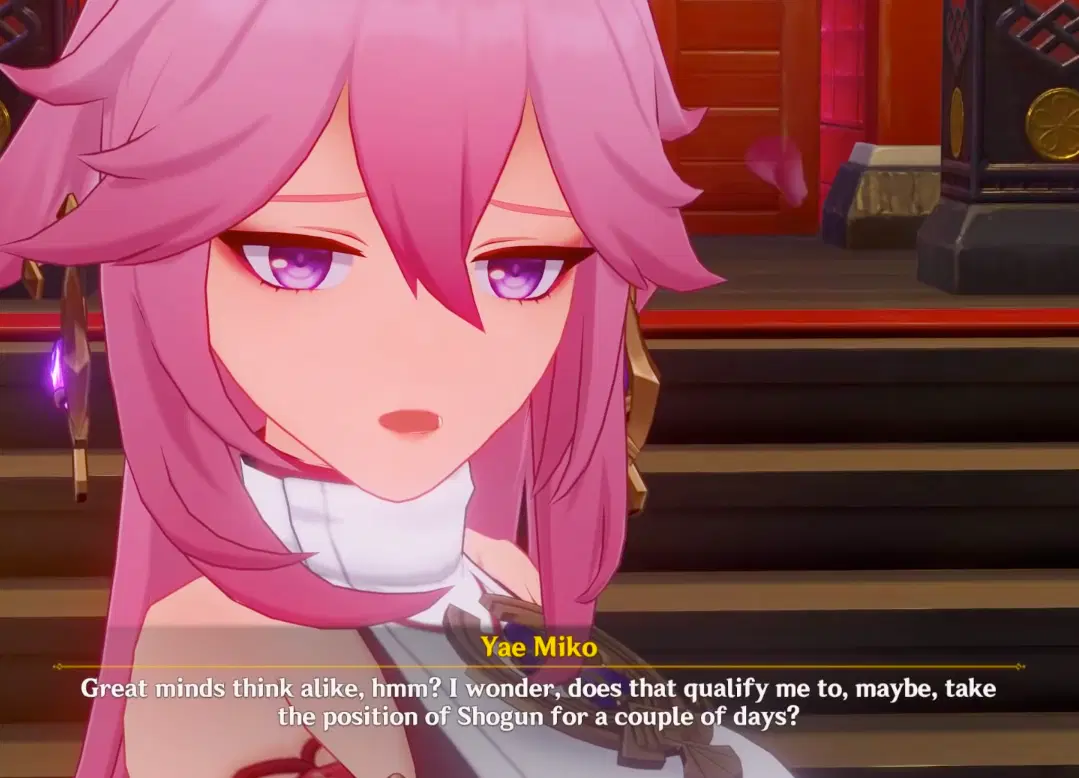
In response to Paimon comparing her to Makoto
So why does Ei, the archon of the nation, struggle to follow the eternity her sister and Yae Miko understood so well?
From the names in her kit, to her visual motifs, to her lore, Ei’s character is filled with Buddhist references, portraying her with bodhisattva imagery —an entity who has attained enlightenment but has delayed their entry into paradise to help those still suffering in the mortal world. And the original name for the Plane of Euthymia ("Pure Land of One Mind") is a reference to an alternative branch of Mahayana Buddhism that spread to Japan.
Buddhism stands on a completely different set of philosophies to the traditions of Shinto. For instance, one of its main beliefs is that people are trapped in a cycle (samsara) of suffering (dukkha) through multiple reincarnations, and the only way to be released from this illusory world is by following Buddhist doctrines. Life in the mortal world should be ideally finite, it must have an end to cease all suffering, yet Shinto believes in an eternal history that strives to focus on the present moment.
Despite how incompatible they look from the outside, both religions have coexisted in Japan for centuries, and they’re practiced simultaneously by regular people.
From this perspective, it is not odd that Ei would struggle to achieve a goal that is impossible to grasp through the Buddhist lens her character is inspired on.
What we know as “ambition” in the world building of the game (the trigger for obtaining a vision) is originally called “wish” in Chinese text. In Buddhism, there are two types of desire: Tanha and Chanda.
Tanha can be translated as “craving” and it’s a type of desire that on principle causes suffering. If you crave something, this in itself is painful when it cannot be fulfilled; but if it is satisfied, then it is only a matter of time for the good feeling it produces to eventually fade and leave pain behind.
“Taṇhā is the key origin of Dukkha. It reflects a mental state of craving. Greater the craving, more is the frustration because the world is always changing and innately unsatisfactory; craving also brings about pain through conflict and quarrels between individuals, which are all a state of Dukkha. It is such taṇhā that leads to rebirth and endless Samsara.”
This seems to be the origin of Ei’s need to quell desires (including her own) in order to hinder her people’s progress.
Ei realized early on, in her role of kagemusha and military general, that seeking victory against enemies also brought devastation upon herself and those she and Inazuma cared about. Her sister is who led the nation before she passed away, and Ei’s only contributions as the other half of the archon title were in the battlefield.
Craving for progress, after all, only brings suffering: the fleeting memory of a victory is overshadowed by the losses that follow.
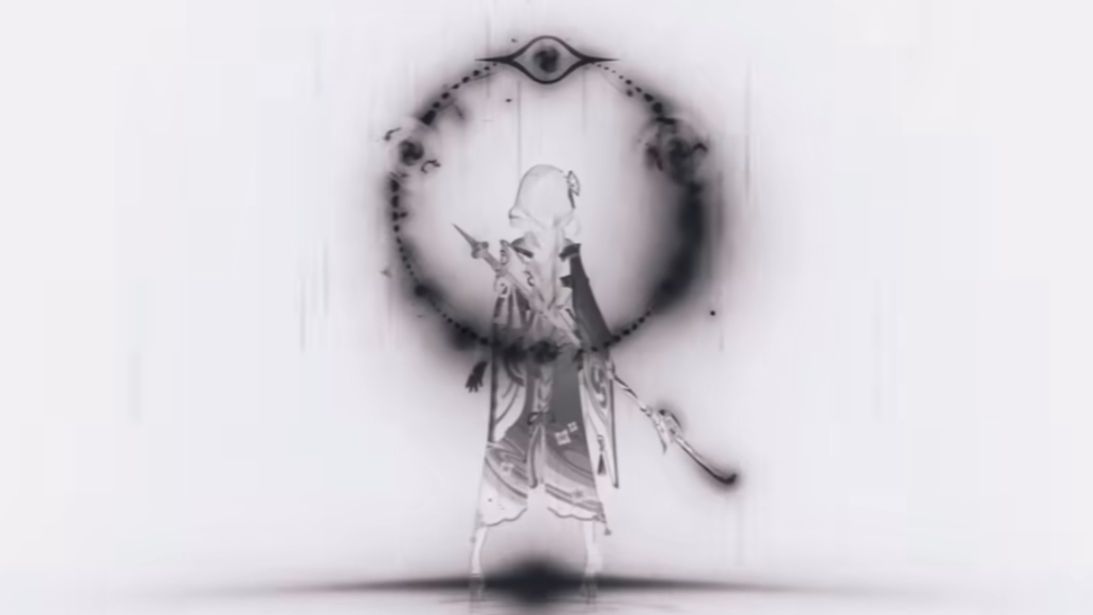
When lightning flashes, it casts a shadow; and her name means shadow. Her existence was defined by this shadow of loss under the victories of progress.
As she herself puts it:
"With my blade I purged all obstacles to progress
And yet... Something was lost with each step forward
In the end, I even lost her
I've seen a nation strive forward, and lose everything to the Heavenly Principles"
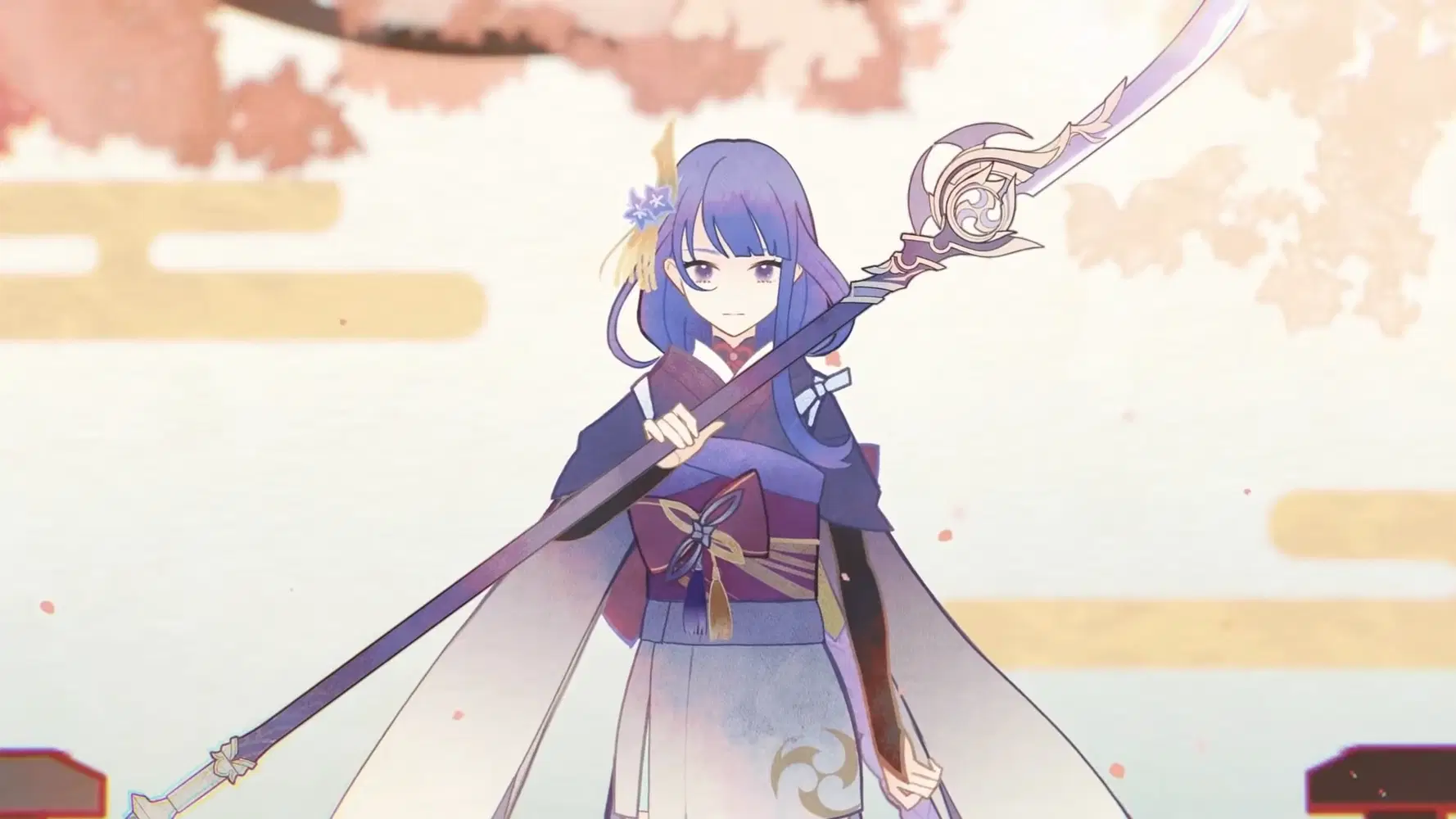
Khaenri’ah was a godless nation, and their demise is understood to be a consequence of their own actions, their own ambition to progress beyond the boundaries of the Heavenly Principles (whatever those are), so of course she grew afraid of what her people might become should they venture in the same direction. And the only way to keep them from meeting the same fate was to ensure her own permanence as a god, hence why she got rid of her physical form to preserve her consciousness in a perpetual meditative state in order to avoid the effects of erosion, and why she made an indestructible puppet that would never leave her nation defenseless.
In the archon quest we see Kujou Takayuki fall prey of his own desires for divine power —that of the Raiden Shogun’s martial prowess that folk tales praise but whose consequences Ei herself feels burdened by— and this is a narrative that repeats over and over again through Teyvat’s history. Watatsumi people, for instance, come from a nation that abused their political positions and manipulated their people through false faith to the artificial sun and the helpless ruling of the Sun Children.
Humans are prone to cause their own demise by indulging in this form of “tanha”, and Ei wanted to protect Inazuma from its dangers.
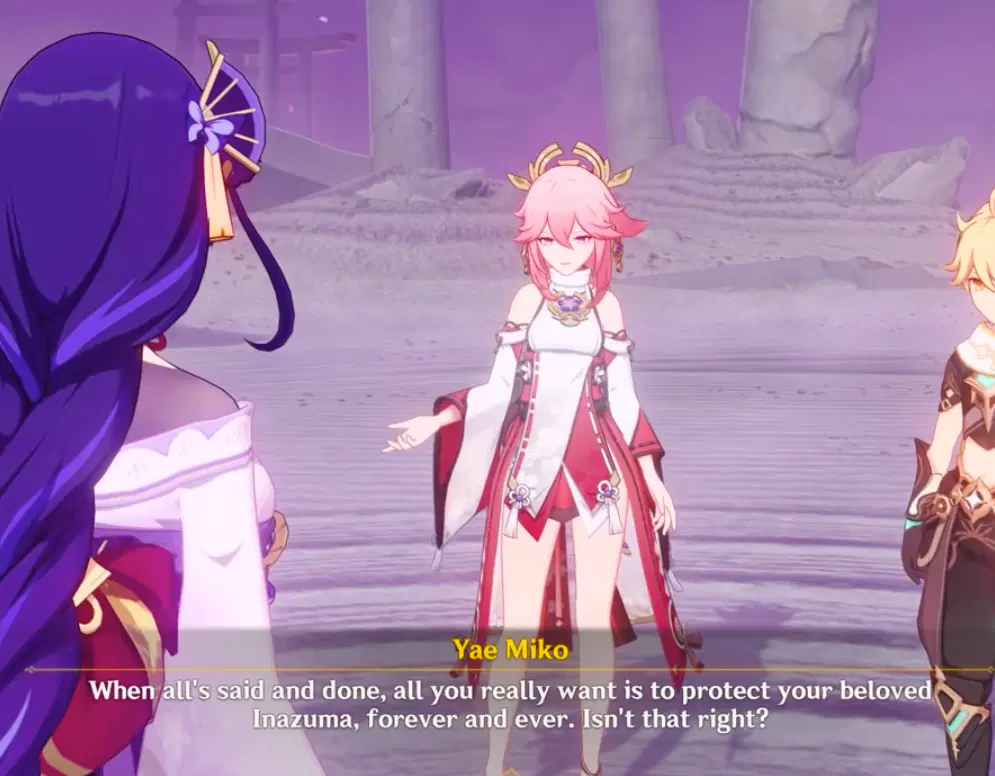
She never had trouble accepting her sister's death, it is because she understood the cycle of life and death so well that she grew fearful of losing what remained: Inazuma. People don't know Makoto existed, so her only legacy and proof of existence is the nation they both raised. As such, Ei vowed to protect it indefinitely by condemning herself to an eternity of stasis inside the Plane of Euthymia.
The Better Path Towards Eternity
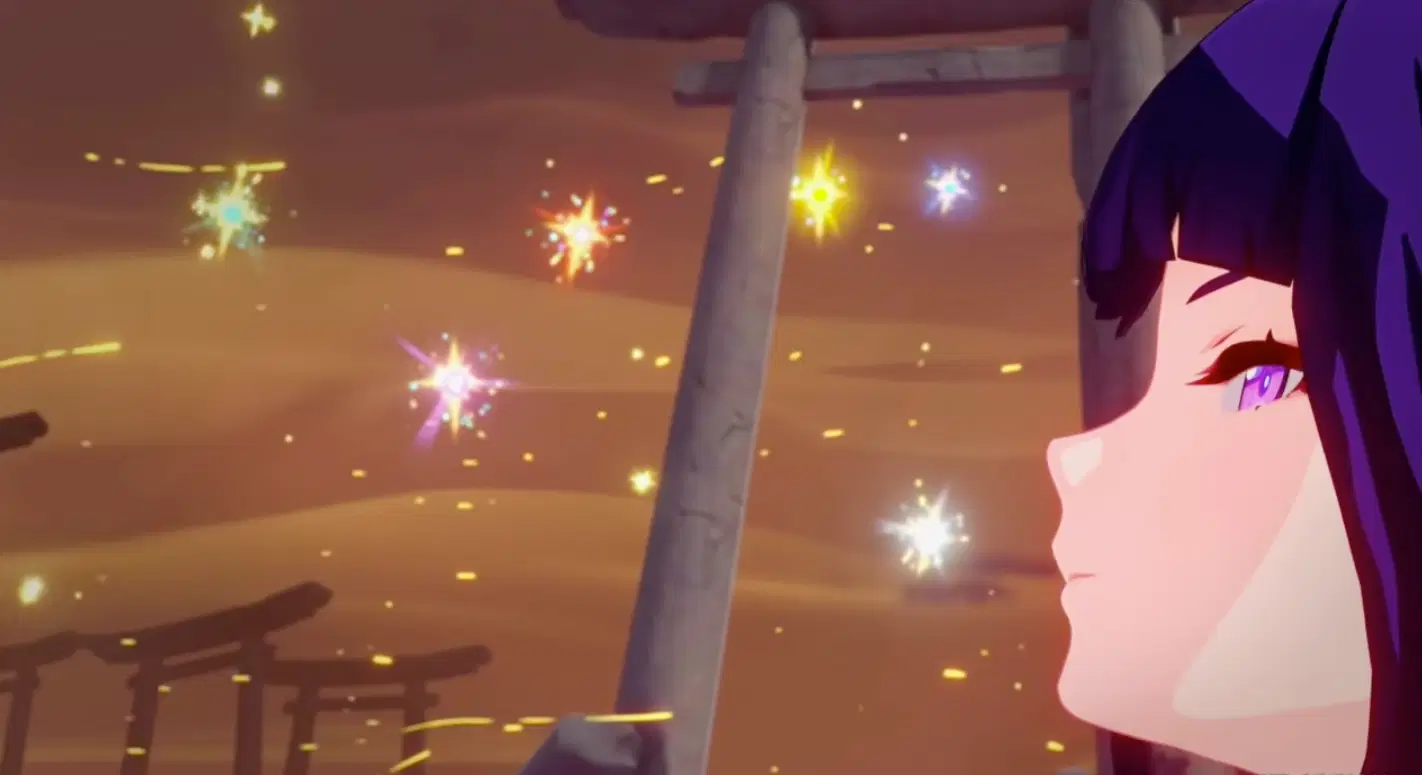
Ei’s commitment to this eternity, this indefinite protection of her nation, never wavered until she met the traveler during the archon quest.
She called him a threat to eternity, therefore, what she saw in our protagonist was a symbol of hope, a faint wish for her nation to progress without succumbing to the Heavenly Principles like Khaenri’ah.
But desires, even in the form of hope, are something she was depriving herself (and her nation) from.
Both times the traveler entered the Plane of Euthymia were right before the Shogun puppet (who is in charge of enforcing this vow to eternity and perpetual sacrifice) struck him with the Musou no Hitotachi, so what saved them was was rather Ei clinging to this hope. Both times she fights this metaphorical hope as well, the first one she wins, and this hope is rejected; and the second (where traveler is aided by Yae Miko) she admits defeat after witnessing the meteor shower of her people's wishes, because she’s accepted the possibility of a future where Inazuma can pursuit their ambitions freely and she doesn’t have to condemn herself to eternal sacrifice.
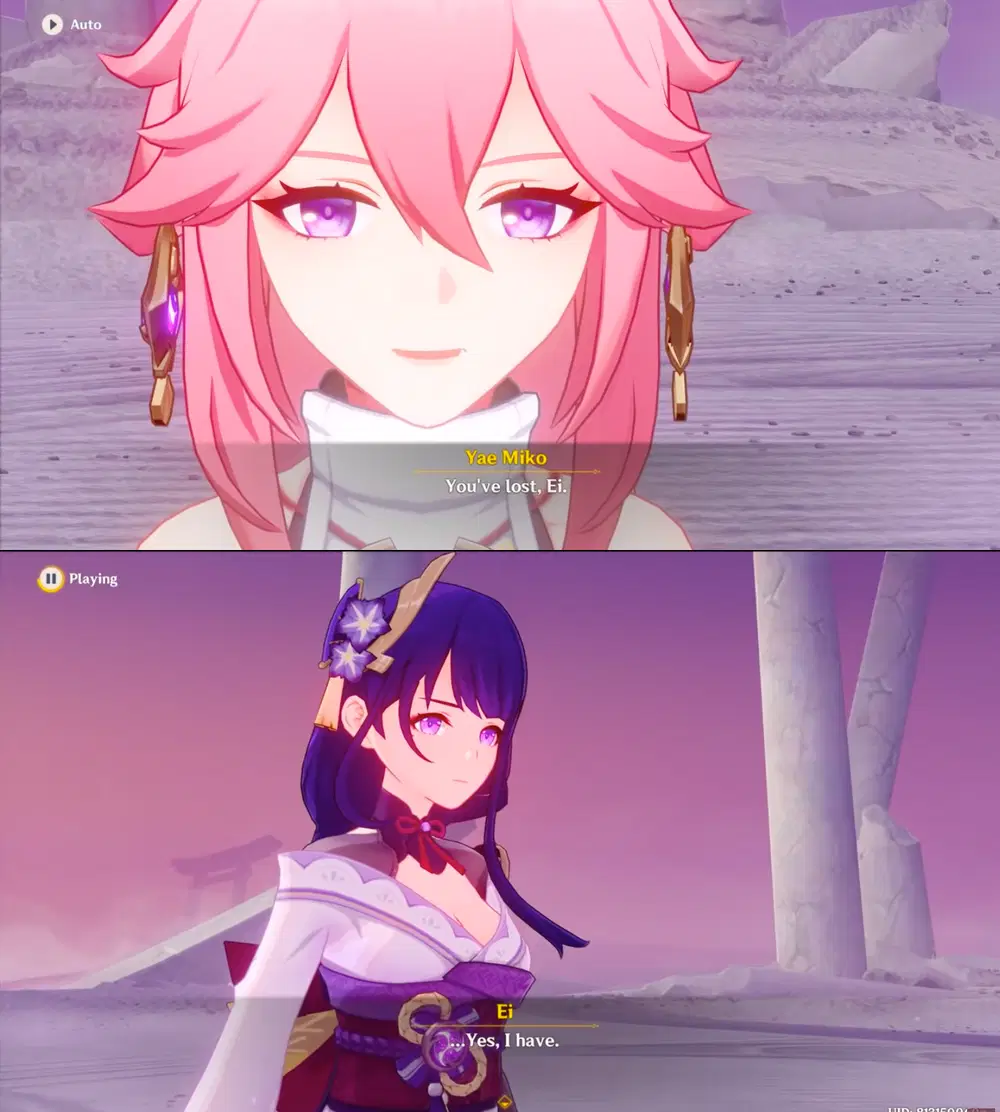
According to Buddhist beliefs, Tanha (the craving) is a type of desire that causes suffering, but the other form of desire, Chanda, is a path towards salvation:
“Sometimes taṇhā is translated as “desire,” but that gives rise to some crucial misinterpretations with reference to the way of Liberation. Some form of desire is essential in order to aspire to, and persist in, cultivating the path out of Dukkha.
Desire as an eagerness to offer, to commit, to apply oneself to meditation, is called Chanda. It’s a psychological “yes,” a choice, not a pathology. In fact, you could summarize Dhamma training as the transformation of taṇhā into Chanda. It’s a process whereby we guide volition, grab and hold on to the steering wheel, and travel with clarity toward our deeper well-being.
So we’re not trying to get rid of desire (which would take another kind of desire, wouldn’t it). Instead, we are trying to transmute it, take it out of the shadow of gratification and need, and use its aspiration and vigor to bring us into light and clarity."
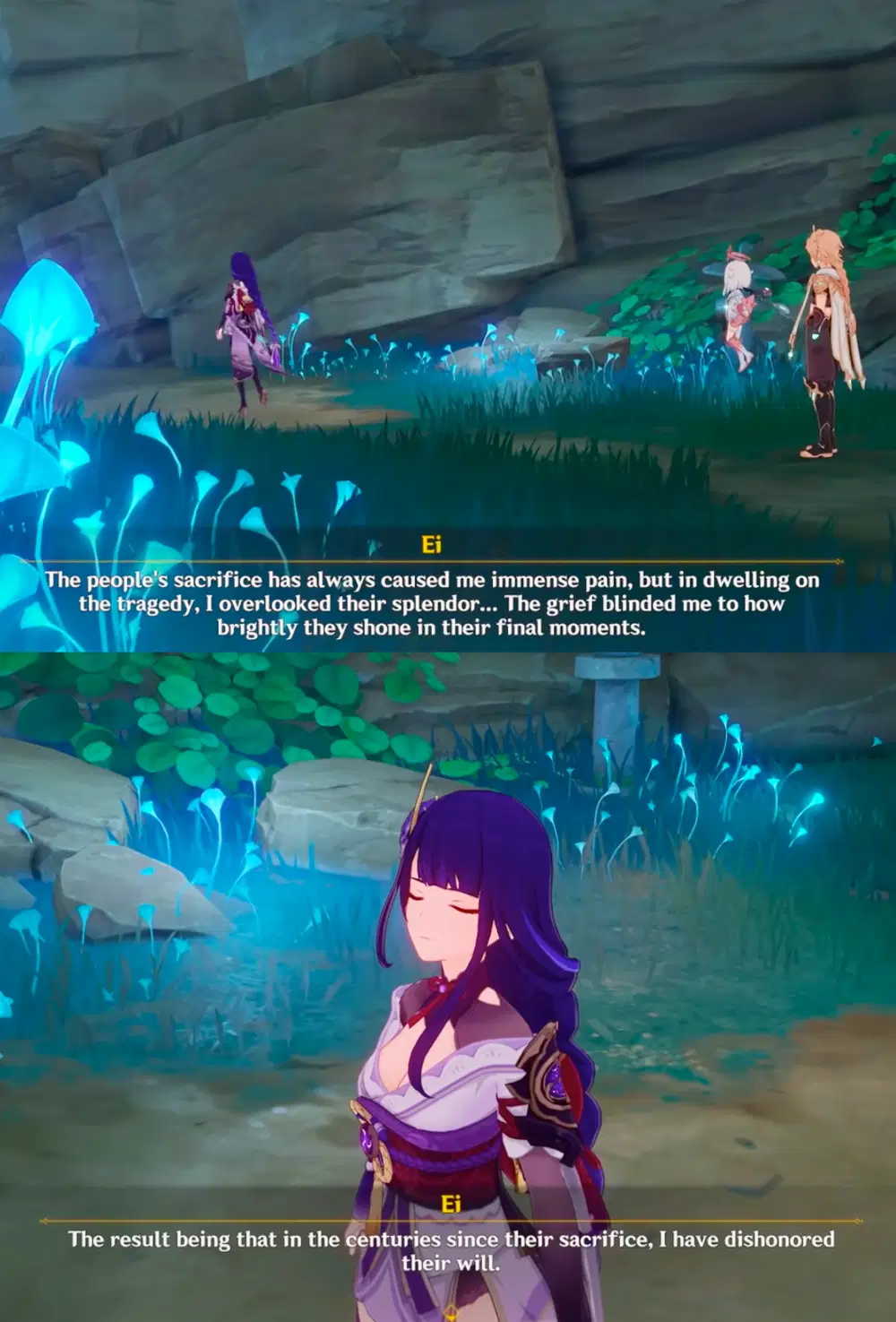
Makoto believed that eternity could be achieved by guiding the collective dreams of her nation into the right path, what matters is not physical survival or individual desires, but the collective force pushing for progress. And, in this sense, dreams could be understood as its own type of Chanda (within the narrative of the chapter, not the world building) that Ei came to terms with in her second story quest.
The losses Inazuma suffered —the shadow— are not meant to be grieved, but honored. They were all sacrifices intended for the survival and protection of the nation and its ideals and dreams, such as that of the soldiers who fought during the cataclysm, that of Kitsune Saiguu or the Tengu General, and that of Makoto as well.
Kazuha and his friend can be interpreted as an alternative exploration of this theme: Kazuha grieved his death and failed to understand the motivations behind his actions, but when he faces the Musou No Hitotachi himself he's able to comprehend and carry his friend's wishes as his own. After this, he is at peace and able to move on.
After all, life is akin to a firework that only lasts a couple of seconds, but what they symbolize and the ideas they preserve are what matters. This is the eternity of the nation of thunder.
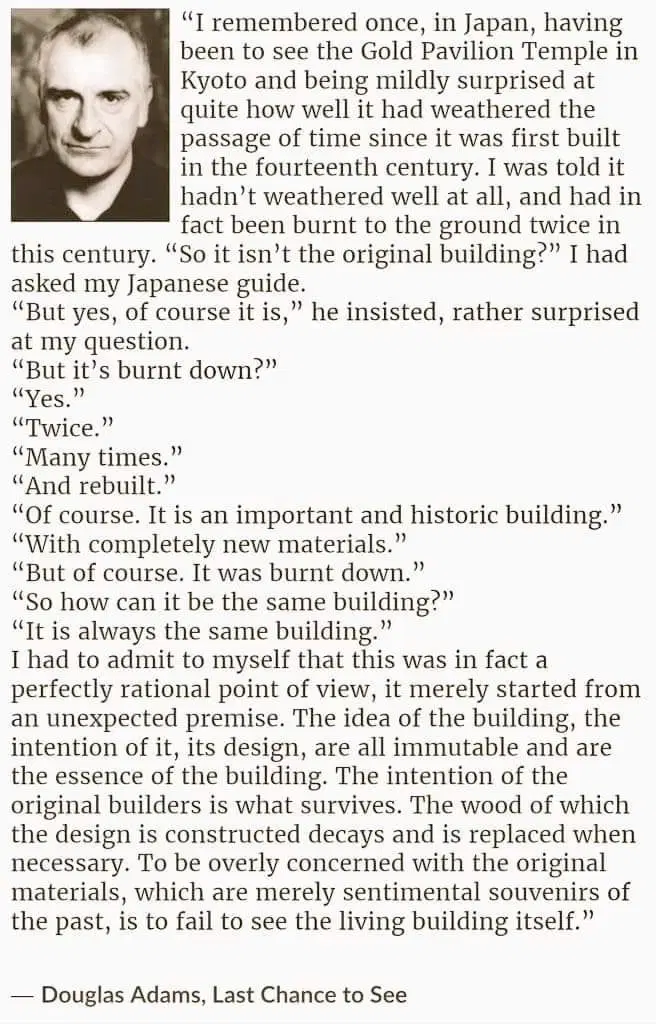
Whenever I think about the Inazuma chapter, I'm always reminded of this anecdote about the Gold Pavilion Temple that, in a way, summarizes what Makoto believed: