Purpose of This Guide
This post is a collection of common FAQs new players have when starting out in Honkai: Star Rail and aims to improve new player experience.
Trailblazers are welcome to post any questions encountered during gameplay in the comment section as we will be regularly updating the FAQ section of this post. Our goal is to provide comprehensive and clear guidance, so please let us know if there are any errors~
Tips: I'll also be updating this guide in other language regions at the same time, please check out the posts and leave a comment~

Table of Contents
Common FAQ
Q1: What type of game is Star Rail?
Q2: Is Star Rail an open world game? What type of setting and level design does the game have?
Q3: Is it necessary to learn about Honkai Impact 3 before starting Star Rail?
Q4: Is there multiplayer? Can I choose to play PVE only? How is the degree of freedom? How do I add friends?
Q5: How long are the quests in Star Rail? What about the rewards? Is the map large? Is the game grindy?
Q6: Will my choice of Trailblazer (MC) affect future dialogue options?
Q7: Is map exploration affected by the main questline by a lot?
Q8: Are the side missions complicated? How do I interact with characters?
Q9: Is there any content in the game that challenges player builds?
Q10: Is there any easy-to-use, quick tools for Star Rail?
Q11: Important advice for new players?
Beginner’s Guide
=Platform and Controls=
Q12: Is the game demanding on specs? What’s the Internet requirement?
Q13: What are the recommended specs for Star Rail PC, IOS, and Android?
Q14: On what platforms can I play Star Rail? Is the game data cross-platform? Does it transfer?
Q15: How do I change in-game language and voiceover settings before starting the game?
Q16: What are the controls on PC?
Q17: Can I use a controller for the PC client?
=Gacha and Monetization=
Q18: What’s the monetization scheme in this game? Are there subscription and Battle Pass options?
Q19: Which free 5-star character from the Regular Warp pool should I pick? How strong are they?
Q20: How to I obtain Star Rail Special Pass and Star Rail Pass? What are the free options?
Q21: Is there bad luck protection for Star Rail’s gacha system? What types of card pools are there?
Q22: What are some important tips on the gacha system for new players?
Q23: What items have the highest exchange value in the Embers Exchange Store in Honkai: Star Rail?
Q24: Should I keep pulling the Departure Warp after getting the 5-star early?
=Game Mechanics=
Q25: How many Paths are there in Star Rail? What’s the relationship between Paths and character roles?
Q26: What’s Combat Type in Star Rail? Is it the same as Elements in Genshin Impact?
Q27: What is the Weakness mechanic?
=World Exploration=
Q28: How to quickly increase Trailblaze Level?
Q29: What’s Equilibrium Level? What happens when I increase my Equilibrium Level? How does it affect the rewards from Daily Training and Simulated Universe?
Q30: What’s the use of Hertareum/Belobog Shield? Why do they drop from chests and missions?
Q31: Are there any exceptional early game items worth farming World Currency for?
Q32: For the crafting system, are there any good recipes? Something that can be used to challenge under-leveled content like the Adeptus' Temptation in Genshin Impact?
Q33: How to use the Photo Mode in Star Rail? Any recommended photo locations?
Q34: Will dialogue choices affect the story?
Q35: How do you revive fallen characters?
Q36: How are the dailies and weeklies in Star Rail? Are they grindy?
Q37: How does the Trailblaze Power (stamina) system work in Star Rail? How to effectively plan usage as a new player?
Q38: What should I prioritize for the Assignments?
=Combat=
Q39: How do you initiate combat in Star Rail?
Q40: When in combat, how is the Action Order determined for my characters? Can the order change during combat?
Q41: Why does stacking Break Effect not improve Toughness DMG?
Q42: How do you charge up the Ultimate?
Q43: Any combat tips?
=Character Leveling=
Q44: Which characters are F2P in Star Rail?
Q45: Are 5-stars always stronger than 4-stars? Is it enough to just level 5-star characters?
Q46: How do I decide who to level?
Q47: A lot of the 3-star Light Cones have good abilities, should I level them for use?
Q48: What are some must-level early game characters?
Q49: How do you build a team in Star Rail?
Q50: How do I check the effects of a Light Cone? How do I get one? How do I level it?
Q51: What’s the priority for Light Cones that can be exchanged in the Forgotten Hall store (Light Cone Manifest)?
Q52: What’s the priority for Light Cones that can be exchanged in the Simulated Universe (Herta’s Store)?
Q53: What’s the priority for Light Cones from the Battle Pass?
Q54: How do I check the effects of Relics and Planar Ornaments? How do I get them? How do I level them?
Q55: With limited resources in the early game, how should I level my Traces?
Q56: If my use up all my resources (Credit and leveling materials), where do I get more?
=Instanced Game Modes=
Q57: How do you play the Simulated Universe? What rewards do you get?
Q58: What instance is the Forgotten Hall? What rewards do you get?
Q59: What instance is the Echo of War? What rewards do you get?
Q60: What instance is the Cavern of Corrosion? What rewards do you get?
Q61: What instance is the Stagnant Shadow? What rewards do you get per Difficulty?
Q62: What instance is the Calyx? What rewards do you get?
TIPS: To quickly navigate to any question, click the article contents in the upper left corner~
Common FAQ
Q1: What type of game is Star Rail?
A1: Honkai: Star Rail is a space-themed RPG featuring Hakoniwa (“miniature” in Japanese) style exploration and turn-based combat encounters. It is a PVE game focusing on combat and exploration.
Q2: Is Star Rail an open world game? What type of setting and level design does the game have?
A2: Honkai: Star Rail is a “Hakoniwa” game, which is the name of a variation of open world and sandbox games instead of an independent genre. When the game developer divides game content into many different areas, or “Hakoniwas”, the new and fresh experience as a result of the clash and shift between areas of different design styles is referred to as the “Hakoniwa Theory”. In contrast, an open world game is where players are allowed to freely journey through a virtual world and choose when and how they go about completing game tasks.
The biggest difference between the two is:
Open world games seek “freedom of world exploration instead of exploration within a set framework”
Hakoniwa games aim to bring a relatively free and rich exploration experience through dedicated design and arrangement of a limited space, then seek to maintain the fun factor and variety of the game through the connection and change of these different Hakoniwa spaces.
Q3: Is it necessary to learn about Honkai Impact 3 before starting Star Rail?
A3: No. The two are parallel universes and have no strong connections.
Q4: Is there multiplayer? Can I choose to play PVE only? How is the degree of freedom? How do I add friends?
A4:
①There is no multiplayer in the current version and you can only add others as friends. You can’t enter another’s world and interact with them.
②There is no PVP content in the current version so you can relax and enjoy PVE to your hearts content.
③The degree of freedom is fairly low compared to Genshin Impact, but the story and character building is very engaging.
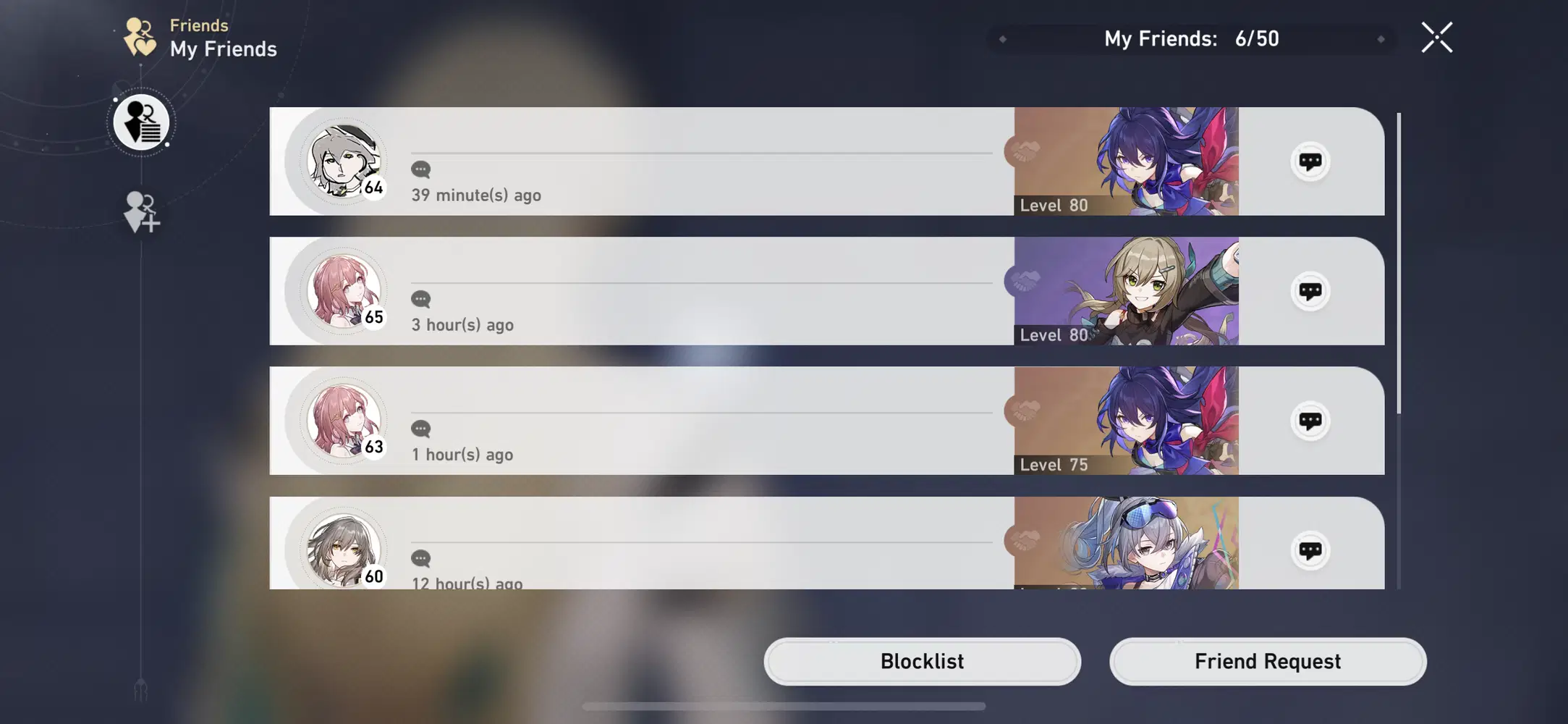
④Every player has a UID that can be searched up in the Friends page to be added. The system will also suggest currently online players to you on the Friends page, whom you can add directly from the page.
Q5: How long are the quests in Star Rail? What about the rewards? Is the map large? Is the game grindy?
A5: The quest length is shorter and the rewards greater than Genshin Impact;
The current greater world map is relatively small, similar to early Genshin Impact. It will grow in size as more contents are added with updates;
Once you’ve completed the main questline, you’ll spend about 10 minutes clearing Trailblaze Power and completing Daily Training every day. Your daily income of Stellar Jade is the same as in Genshin Impact.
Q6: Will my choice of Trailblazer (MC) affect future dialogue options?
A6: No. Unlike Genshin Impact, the Trailblazer has no siblings, thus it’s easier for the player to immerse themselves in the interstellar adventures in Honkai: Star Rail.
Q7: Is map exploration affected by the main questline by a lot?
A7: Yes. Unlocking new maps requires you to progress in Trailblaze Missions (main questline), otherwise you’ll be stuck in the already unlocked zones.
Q8: Are the side missions complicated? How do I interact with characters?
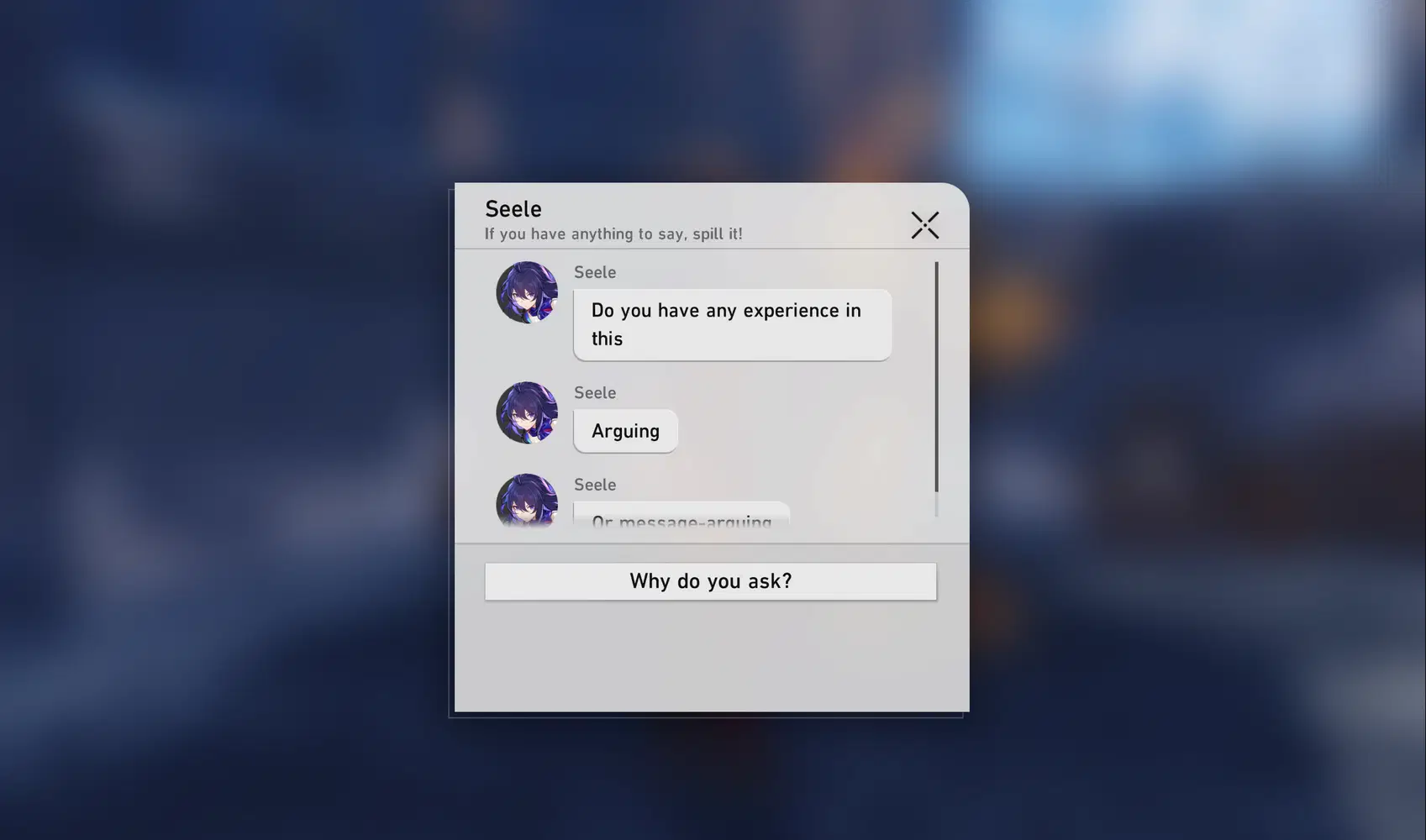
A8: The side missions are all fairly short, and though some of them have very demanding puzzles, you can look up guides for solutions to them. Interactions with characters mainly involve chatting to them aboard the Astral Express once you’ve completed their Companion Missions. Apart from that, there’s also a messaging system on the phone where characters will chat with you via messages.
Q9: Is there any content in the game that challenges player builds?
A9: There’s Memory of Chaos, which is similar to Floors 9-12 of the Spiral Abyss in Genshin Impact. Stellar Jade rewards are periodically reset.
Q10: Is there any easy-to-use, quick tools for Star Rail?
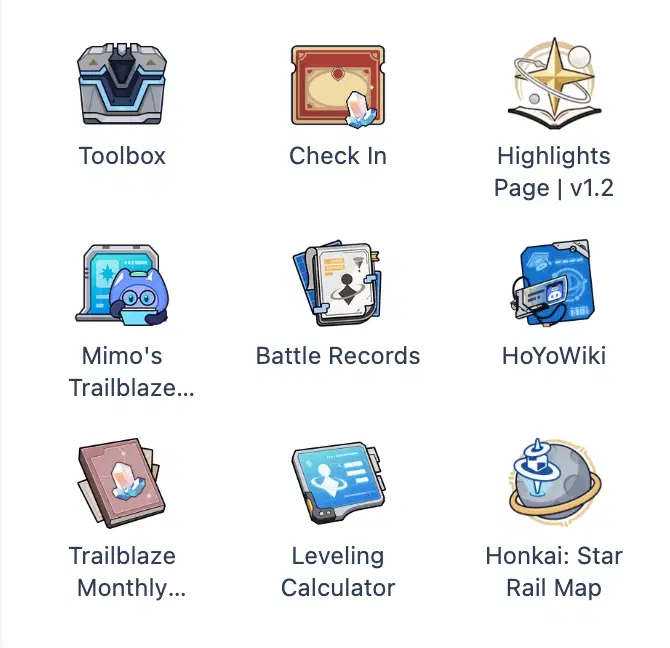
A10: HoYoLAB. You can check your Trailblaze Power on HoYoLAB on the go to avoid wasting even a single point; You can also freely filter out characters to check builds of multiple characters of your choice; The map tool can help you find locations of Treasures quickly.
Q11: Important advice for new players?
A11:
① It’s recommended to build characters of different Combat Type rather than tunneling one single Type. Since bosses possess different Weakness Types, if you only build characters of one Type, you won’t be able to deal Toughness DMG to the enemy. Therefore, when choosing which characters to build, you should consider 1. Character strength; 2. Role of character you’re missing in your current team; 3. Character Combat Type.
② Relic instances between Lv. 1-40 drop at best purple quality Relics; Relic instances between Lv. 40-50 drop one guaranteed golden quality Relic, and Relic instances at Lv. 50+ has a chance/are guaranteed to drop two golden quality Relics. We recommend only farming golden Relics with the correct Main Stats for your characters prior to Lv. 50 and enhancing the Relics to Lv. 12. After hitting Lv. 50, you can start farming BiS Relics for your characters.
③ For Daily Training tasks, prioritize farming materials you need
④ Prioritize pulling in the Departure Warp with your Stellar Jades and stop once you’ve pulled your first 5-star.
⑤ Prioritize farming Trace materials for your Main DPS.
⑥ Make sure to clear Simulated Universe weekly.
⑦ Prioritize trading the Lucent Afterglow from Memory of Chaos for Light Cones that you need. Clear as much as you can.
⑧ Remember to clear Echo of War weekly.
⑨ Nameless Honor (Battle Pass) gives a lot of resources and is very cost efficient if you convert them into Trailblaze Power. For custom material choices, it’s best to save them for times of need. For the custom Light Cone choice, we recommend holding off on choosing. Check your roster first then pick the most suitable Light Cone. Nameless Honor also gifts custom-make Relics (you can customize the Main Stat of the Relic). You can save it for use when you really can’t seem to get the Relic with the correct Main Stat to save some resources.
Beginner’s Guide
=Platform and Controls=
Q12: Is the game demanding on specs? What’s the Internet requirement?
A12: All mainstream mobile phones within the last two years can easily run the game. Star Rail takes up 7.6G space on mobile. Phones with a Snapdragon 765G processor can run the game on medium settings.
You’ll need internet connection to play the game.
Q13: What are the recommended specs for Star Rail PC, IOS, and Android?
A13:
PC: Storage space: Reserve 20GB or above free space; Specs: i7/8G RAM/dGPU, GTX1060 or above; System: win10 64-bit or above.
Android: Storage space: Reserve 8.5GB or above free space; Model: Androids with Snapdragon 855, Dimensity 1000, Kirin 990 and above processors; RAM: 6G and above; System: Android 9 and above.
iOS: Storage space: Reserve 9GB or above free space; Model: iPhoneX, iPhoneXR and above; iPad with A12 and above processor; System: iOS 11.0 or above.
Q14: On what platforms can I play Star Rail? Is the game data cross-platform? Does it transfer?
A14: You can play it on PC, iOS, and Android. Once you’ve entered a server, you can switch between PC and mobile platforms anytime with your login details, the game data is synced.
Q15: How do I change in-game language and voiceover settings before starting the game?
A15:
Before starting the game:
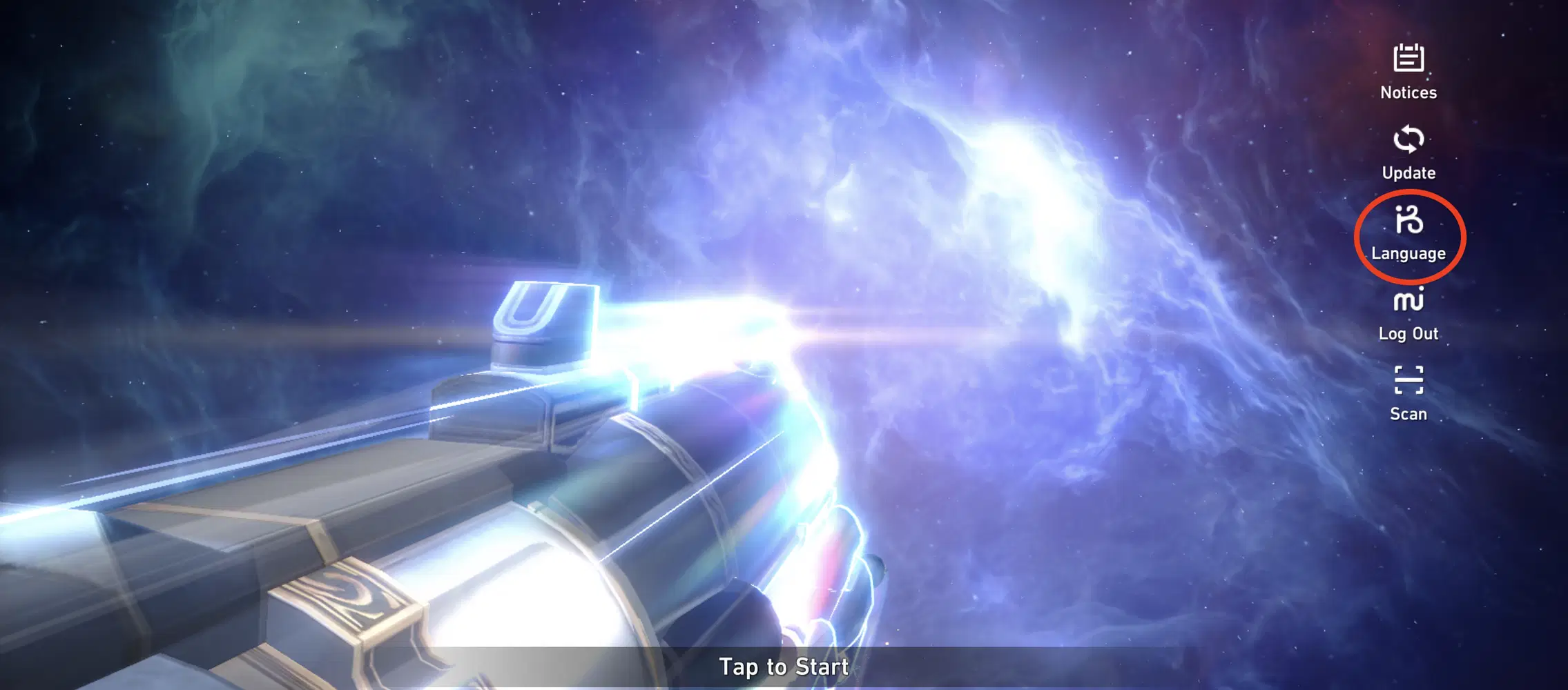
When you start the app for the first time after logging in, you’ll see a window that says “Start Game” in the middle and five icons to the right side; the third icon is language settings. Open the language setting and you’ll find one drop-down menu each for Text and Voice options. You can click on the drop-down arrows for a list of available languages, simply click on the language you want to start.
During the game:
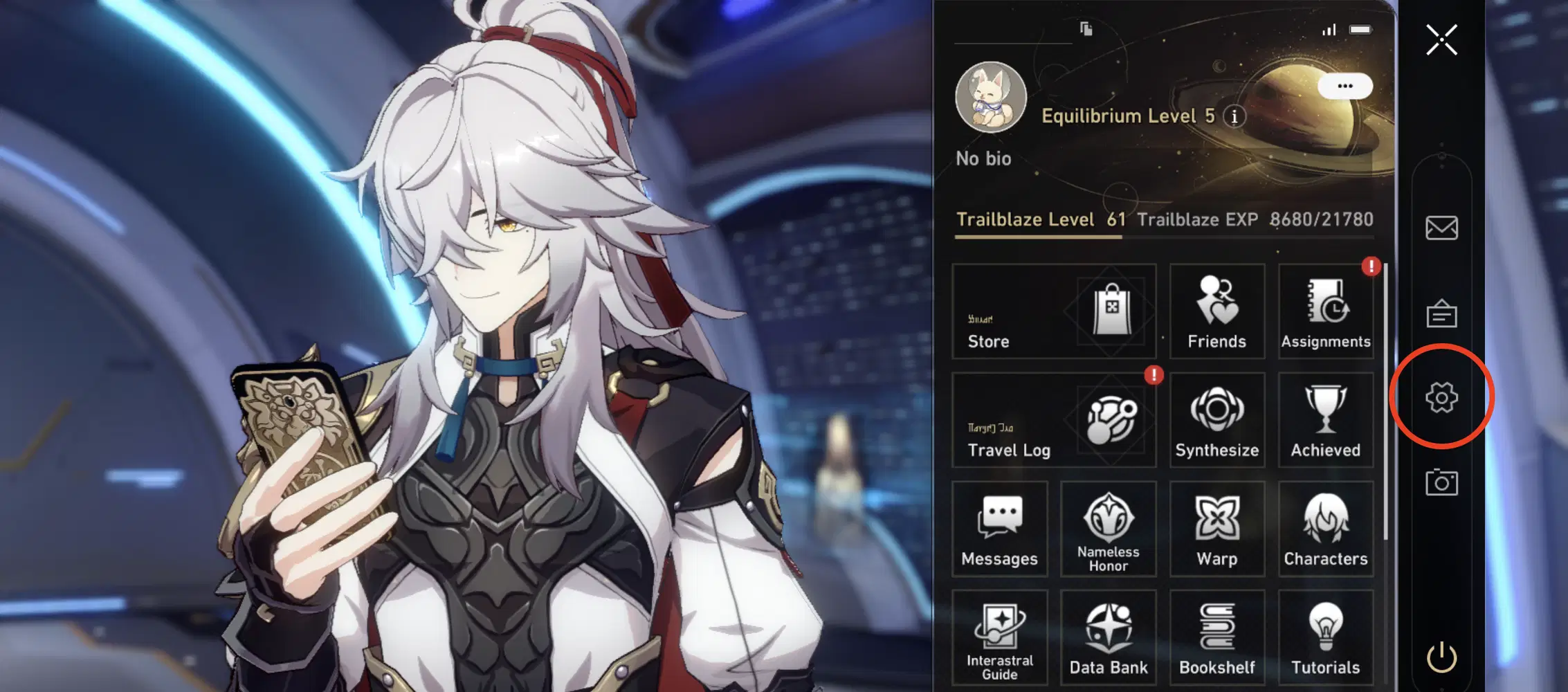
During the game, you can click the phone icon on the upper left corner then click on the “Settings” button. Switch to “Language Settings” to change in-game language.
Q16: What are the controls on PC?
A16: The game comes with a default set of mouse and keyboard control layout. The details are as follows:
l Out-of-Battle Controls:
[LeftAlt]: Show Cursor
[C]: Character Screen
[T]: Team Setup
[M]: Navigation
[B]: Inventory
[J]: Missions
[G]: Tutorials
[F1, F2, F3, F4, F5]: Events, Nameless Honor, Warp, Interastral Peace Guide, Store
[ESC]: Phone/Exit
[P]: Message Hub
l In-Battle Keys
[LeftShift]: Sprint
[R]: Mission Item
[W]: Move Character - Forward
[A]: Move Character - Backward
[S]: Move Character - Left
[D]: Move Character - Right
[E]: Technique
[G]: Beginner Tips
[F]: Interact
[V]: Navigate to Mission
[I]: Reset Maze
[1, 2, 3, 4]: Switch to Character 1, 2, 3, 4
Q17: Can I use a controller for the PC client?
A17: Yes. You can’t use a controller on mobile yet, it’s only supported on PC and consoles.
=Gacha and Monetization=
Q18: What’s the monetization scheme in this game? Are there subscription and Battle Pass options?
A18: For casual players, buying the sub and BP is enough.
l You will gain 300 Oneiric Shards on subscription purchase (Express Supply Pass), which can be exchanged into 300 Stellar Jades. For the next 30 days, you’ll receive 90 Stellar Jades every day for a total of 3000 Stellar Jades, a highly cost-effective option.
l At Trailblaze Level 13, players will unlock Nameless Gift and the option to purchase Nameless Glory, which is the Battle Pass. You can gain Nameless EXP through completing Daily/Weekly/Event Missions and level up your BP. As you level the BP, you’ll gain access to different rewards at each level.
Q19: Which free 5-star character from the Regular Warp pool should I pick? How strong are they?
A19: Among the 5-star characters available in the Regular Warp pool, you have Bronya, Welt, and Gepard for Support characters; Clara, Yanqing, and Himeko for DPS characters, and Bailu for Healer. Himeko has excellent AoE due to her passive, but she has trouble against single-target entities, so her strength is limited. All other characters are fairly strong, you can pick and choose based on your roster.
Q20: How to I obtain Star Rail Special Pass and Star Rail Pass? What are the free options?
A20:
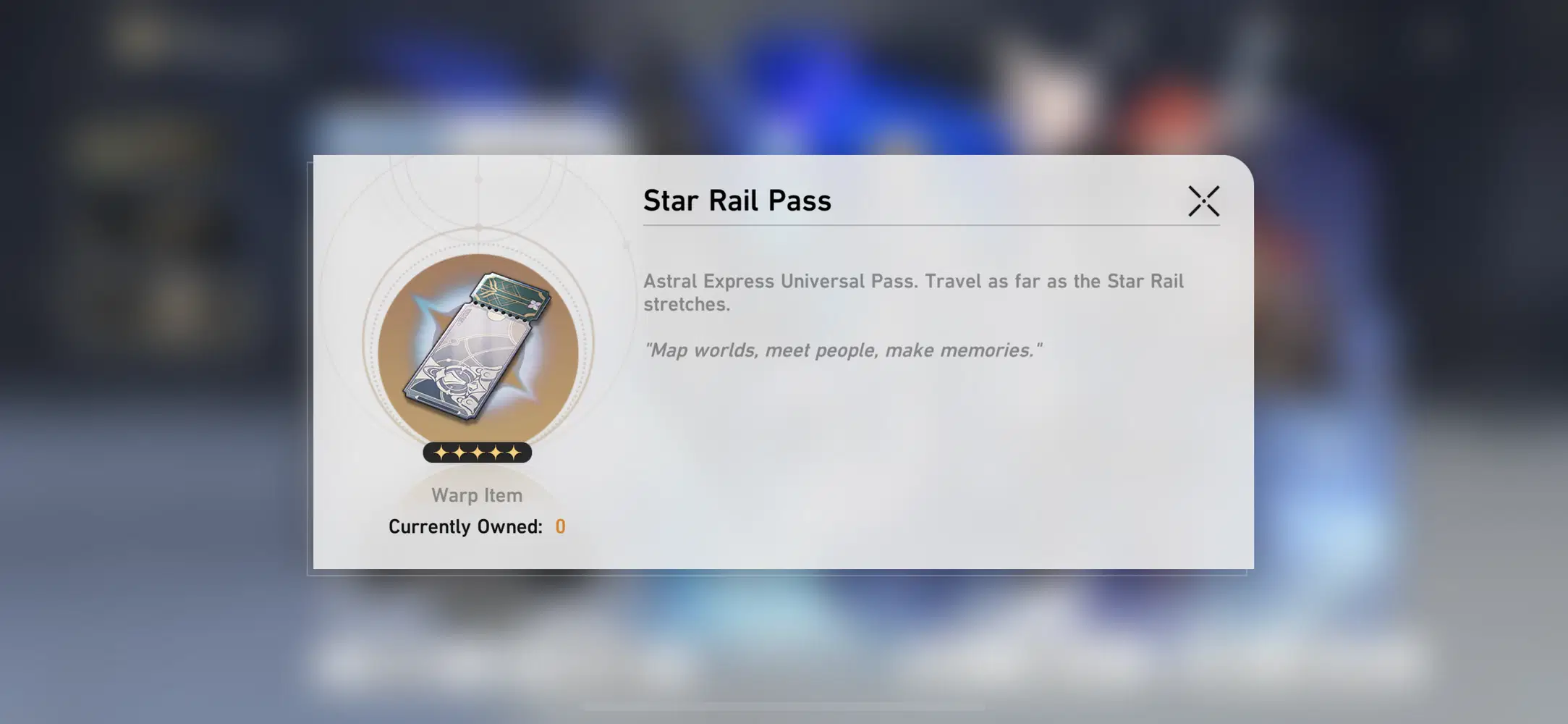
Ways of obtaining Star Rail Pass: Starlight Exchange, Embers Exchange, and purchasing with Stellar Jade in the Store;
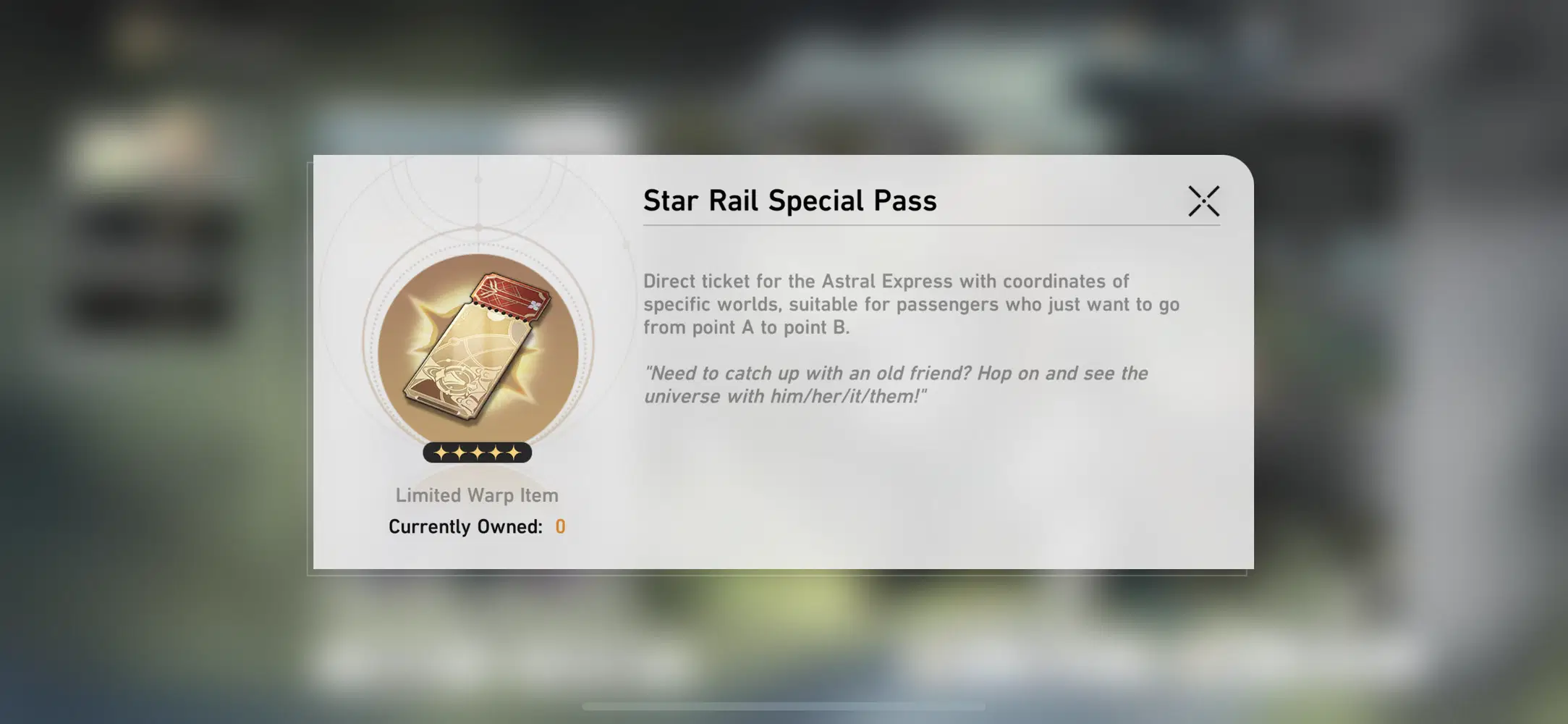
Ways of obtaining Star Rail Special Pass: Starlight Exchange, Embers Exchange, and purchasing with Stellar Jade in the Store.
You can earn Stellar Jade by completing Daily Training. Story and map exploration will also reward Stellar Jade.
Q21: Is there bad luck protection for Star Rail’s gacha system? What types of card pools are there?
A21:
There is bad luck protection, and currently there are four types of card pools (Warps).
Character Event Warp: When pulling under the Character Event banner, you’ll receive a guaranteed 5-star character within 90 pulls. However, there is a 50% chance for this 5-star character to be from the Standard Warp pool instead of the character of the banner (known as “50/50” or soft pity).
If you lose your 50/50, you are then under “hard pity”, meaning that within the next 90 pulls after your previous 5-star, you are guaranteed to find the banner character.
4-star items are guaranteed within 10 pulls. If your 4-star character drop isn’t a part of the active banner, then you are guaranteed to receive one of the 4-star banner characters in the next 10-pull.
Pull count from the previous version of the game will be carried into the newer version until you pull a 5-star to reset the counter.
Departure Warp: Departure Warp guarantees a 5-star within 50 pulls, and pulls are 20% off. We recommend stop investing into the Departure Warp after getting your first 5-star to save some Star Rail Pass for the Standard Warp, because the pulls from Departure Warp are calculated separately from the Standard Warp. We recommend putting your Star Rail Passes into the Standard Warp as early as possible to start working towards the 300 pull reward~
Standard Warp: There’s no pity mechanic or pull count preservation mechanic for the Standard Warp. You are guaranteed a Standard Warp 5-star character or Light Cone within 90 pulls, and you can have a 5-star Standard Warp character of your choice at 300 pulls. We recommend not trading your Stellar Jades for Star Rail Passes just to get the custom 5-star character unless you really like a character or you whale, since there is a difference in power level between Standard and Event characters.
Light Cone Event Warp: The current Light Cone Event Warp works in a similar way as the Character Event Warp, except that soft pity hits within 80 pulls for the Light Cone Event Warp, giving you a guaranteed 5-star Light Cone, and the chance to receive non-banner Light Cones is 25%. Other systems such as the hard pity, pull count preservation, multi 5-star chance, and the pity for 4-star Light Cones remain the same.
Q22: What are some important tips on the gacha system for new players?
A22: Trade all your Stellar Jade into Star Rail Special Passes instead of Star Rail Passes. With the Event Warps, you can pick and choose when and who to pull based on your pull count.
Q23: What items have the highest exchange value in the Embers Exchange Store in Honkai: Star Rail?
A23: From calculation results, we recommend exchanging Undying Embers for Star Rail Special Pass and Star Rail Pass first, then [Tracks of Destiny], and then Credit > Condensed Aether > Trace Material > Others.
Q24: Should I keep pulling the Departure Warp after getting the 5-star early?
A24: We recommend stopping as soon as you’ve pulled the 5-star.
=Game Mechanics=
Q25: How many Paths are there in Star Rail? What’s the relationship between Paths and character roles?
A25: Currently there are seven Paths and they correspond to the seven Aeons – Destruction, The Hunt, Erudition, Harmony, Nihility, Preservation, and Abundance.
Path of Destruction (Warrior): Balanced character that can tank as well as DPS. Typically possess both single and multi-target DPS abilities;
Path of The Hunt (ADC): Single-target DPS, specializes in dealing focused DMG;
Path of Erudition (AoE): AoE DPS that has AoE DMG abilities;
Path of Harmony (Buffer): Provides all kinds of buffs for allies;
Path of Nihility (Debuffer): Applies debuffs on enemy units, or provides unique status effects and crowd control (CC) effects;
Path of Preservation (Tank): Provides shields for allies, usually has the ability to taunt;
Path of Abundance (Healer): Heals allies and provides sustain.
Q26: What’s Combat Type in Star Rail? Is it the same as Elements in Genshin Impact?
A26: There’s no Elemental Reaction system in Star Rail, none of the Fire/Ice/Lightning/Wind Types can generate Elemental Reactions! When an enemy is engaged, they have a Toughness bar (shield), attacking the enemy with attacks that match their Weakness Type above their heads will reduce their Toughness and cause Weakness Break. Once Weakness Broken, enemies will receive more DMG and their actions will be delayed. Weakness Breaking with characters of different Combat Types will result in different Break Effects.
Star Rail currently has seven Combat Types, they are: Wind, Lightning, Fire, Ice, Physical, Quantum, and Imaginary. The use of these Combat Types is to Weakness Break enemies of the matching Type. It’s fairly different from the Elemental system from Genshin Impact.
Q27: What is the Weakness mechanic?
A27: Every enemy has a Toughness bar (shield) that can be reduced by attacking the enemy with a character of the corresponding Weakness Type above their heads. Weakness Break occurs when Toughness is depleted. In this state, the enemy receives additional DMG and has their action delayed. Weakness Breaking with characters of different Combat Types will result in different Break Effects.
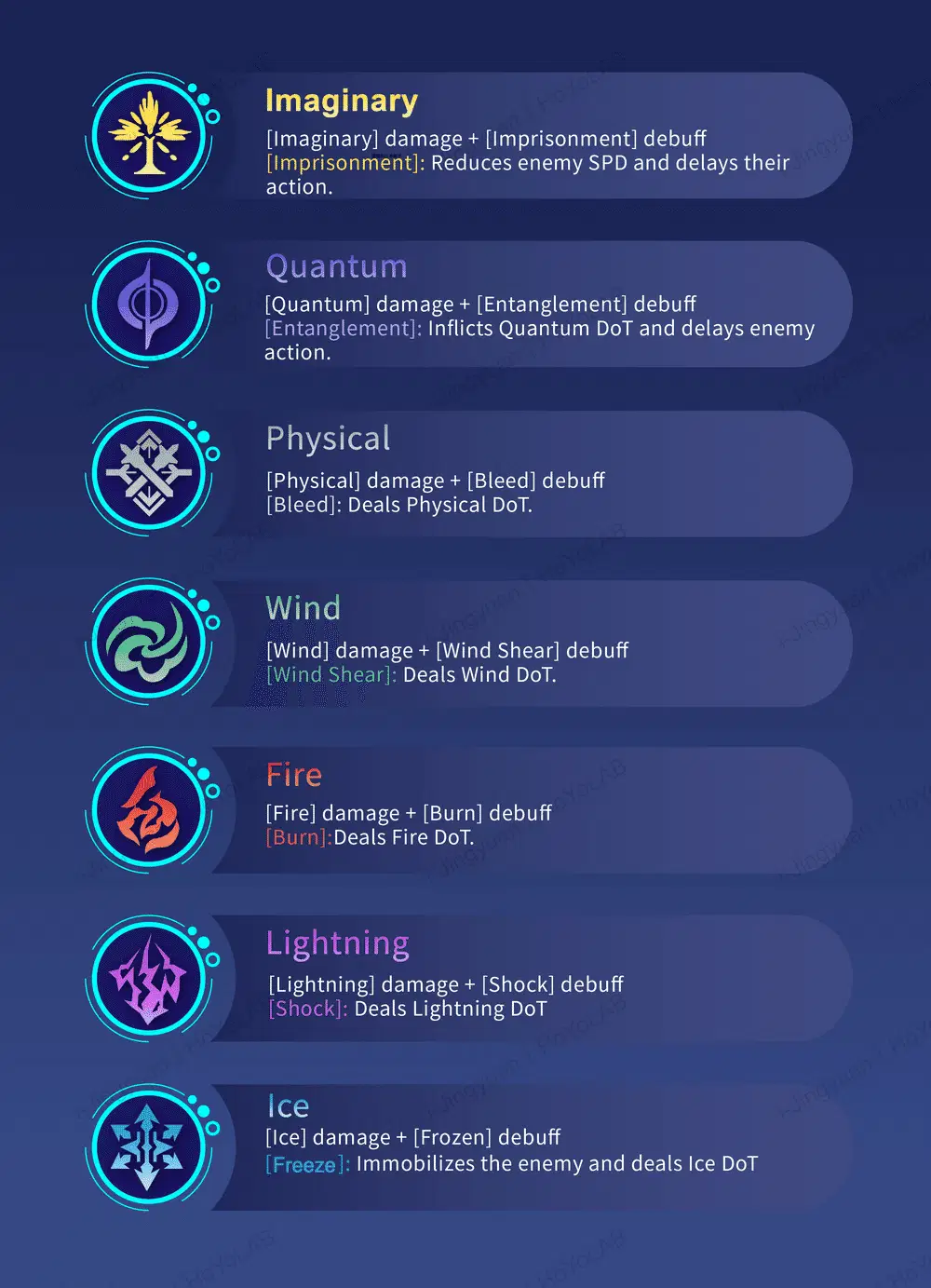
l When a Wind Type character inflicts Weakness Break on an enemy, they will deal Wind DMG and apply the Wind Shear effect. Wind Shear effect deals Wind DoT.
l When a Lightning Type character inflicts Weakness Break on an enemy, they will deal Lightning DMG and apply the Shock effect. Shock effect deals Lightning DoT.
l When a Fire Type character inflicts Weakness Break on an enemy, they will deal Fire DMG and apply the Burn effect. Burn effect deals Fire DoT.
l When an Ice Type character inflicts Weakness Break on an enemy, they will deal Ice DMG and apply the Freeze effect. Freeze effect immobilizes the enemy and deals Ice DoT.
l When a Physical Type character inflicts Weakness Break on an enemy, they will deal Physical DMG and apply the Bleed effect. Bleed effect deals Physical DoT.
l When a Quantum Type character inflicts Weakness Break on an enemy, they will deal Quantum DMG and apply the Entanglement effect. Entanglement effect further delays the enemy’s action and deals Quantum DoT.
l When an Imaginary Type character inflicts Weakness Break on an enemy, they will deal Imaginary DMG and apply the Imprisonment effect. Imprisonment effect further delays the enemy’s action and reduces their SPD.
=World Exploration=
Q28: How to quickly increase Trailblaze Level?
A28: In Star Rail, main story progression is dependent on your Trailblaze Level. You can earn Trailblaze EXP by running instances using Trailblaze Power (stamina), collecting Treasures on the map (chests), and completing all types of missions.
If you’re locked out of the main story (Trailblaze Mission) because of your Trailblaze Level, the most effective way to obtain EXP is to complete side missions. Side missions give much more EXP and rewards compared to map exploration and instances, you’ll also receive Stellar Jade and World Currency, making them very worth doing.
Other than side missions, Daily Training (daily missions) also rewards massive amounts of EXP.
Q29: What’s Equilibrium Level? What happens when I increase my Equilibrium Level? How does it affect the rewards from Daily Training and Simulated Universe?
A29: When you reach Trailblaze Level 20/30/40/50/60/65, you need to pass the [Equilibrium] Trial to continue increasing your Trailblaze Level and Equilibrium Level.
The Daily Training rewards include: Trailblaze EXP, Stellar Jade, Credit, Lost Gold Fragment, and Adventure Log. Once you’ve increased your Equilibrium Level, all Daily Training rewards except the Stellar Jade will be increased.
Simulated Universe rewards will also increase based on your Equilibrium Level.
Q30: What’s the use of Hertareum/Belobog Shield? Why do they drop from chests and missions?
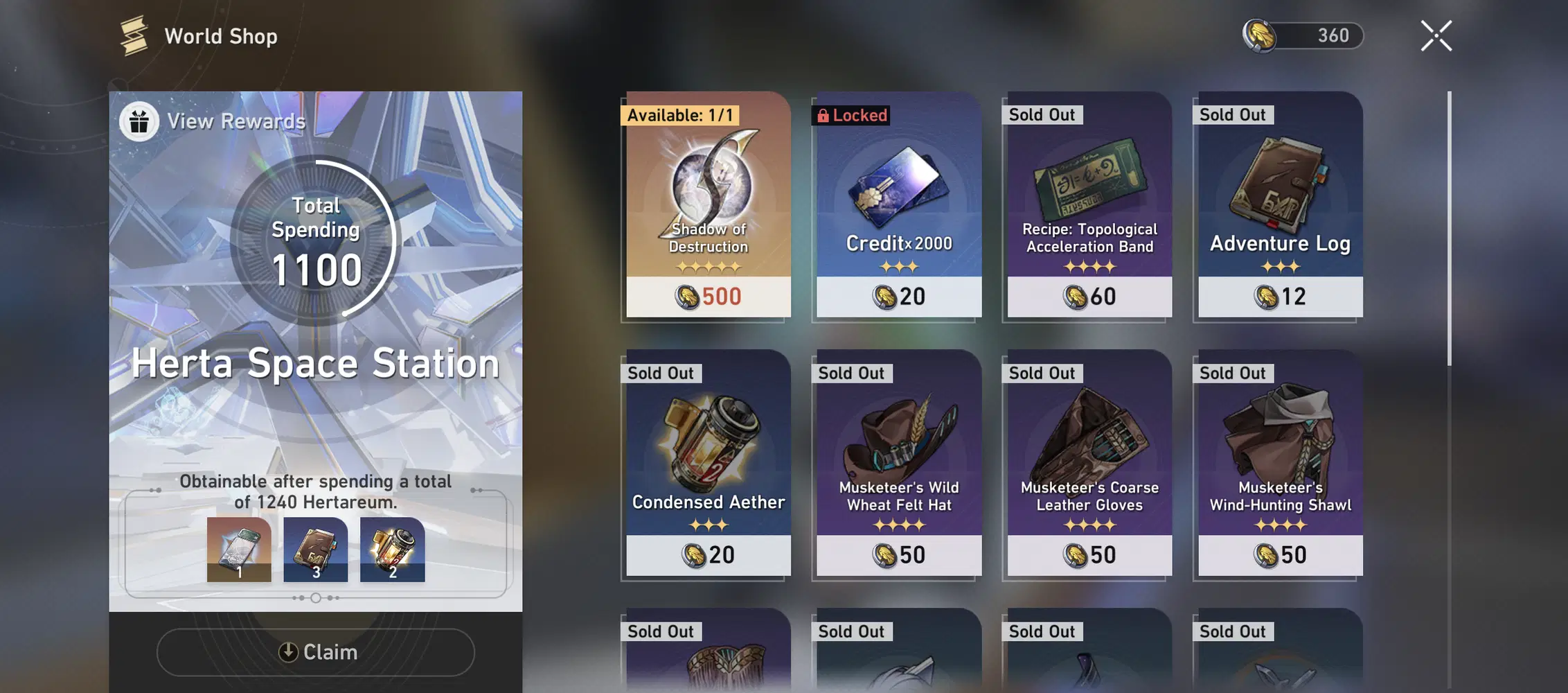
A30: Hertareum, Belobog Shield, and similar special currencies are referred to as World Currenies. These are unique currencies found in every major world (such as Herta Space Station). You will find them through completing missions on the world and map exploration.
World Currency can only be spent in special World Shops. You’ll find all types of purchasable resources, including EXP tomes, Relics, and Trace Materials. They are great help to new players who don’t have a lot of resources.
Q31: Are there any exceptional early game items worth farming World Currency for?
A31: In the Herta Space Station World Shop, at the fourth spending level you will receive a 4-star Light Cone compatible with the Trailblazer, [Woof! Walk Time!]. There’s also a 4-star Musketeer set for sale in the shop that can be used as transitional gear.
In the Jarilo-VI World Shop, at the fourth spending level you will receive a 4-star Preservation Light Cone, [We Are Wildfire], and you can use it on March 7th. There’s also a 4-star Champion’s set for sale in the shop that can be used as early game transitional gear for the Trailblazer. The shop also sells the recipe for the powerful consumable [Antimatter Field Generator]. You can prioritize exchanging for any of the above items and exchange for the remaining leveling materials based on demand.
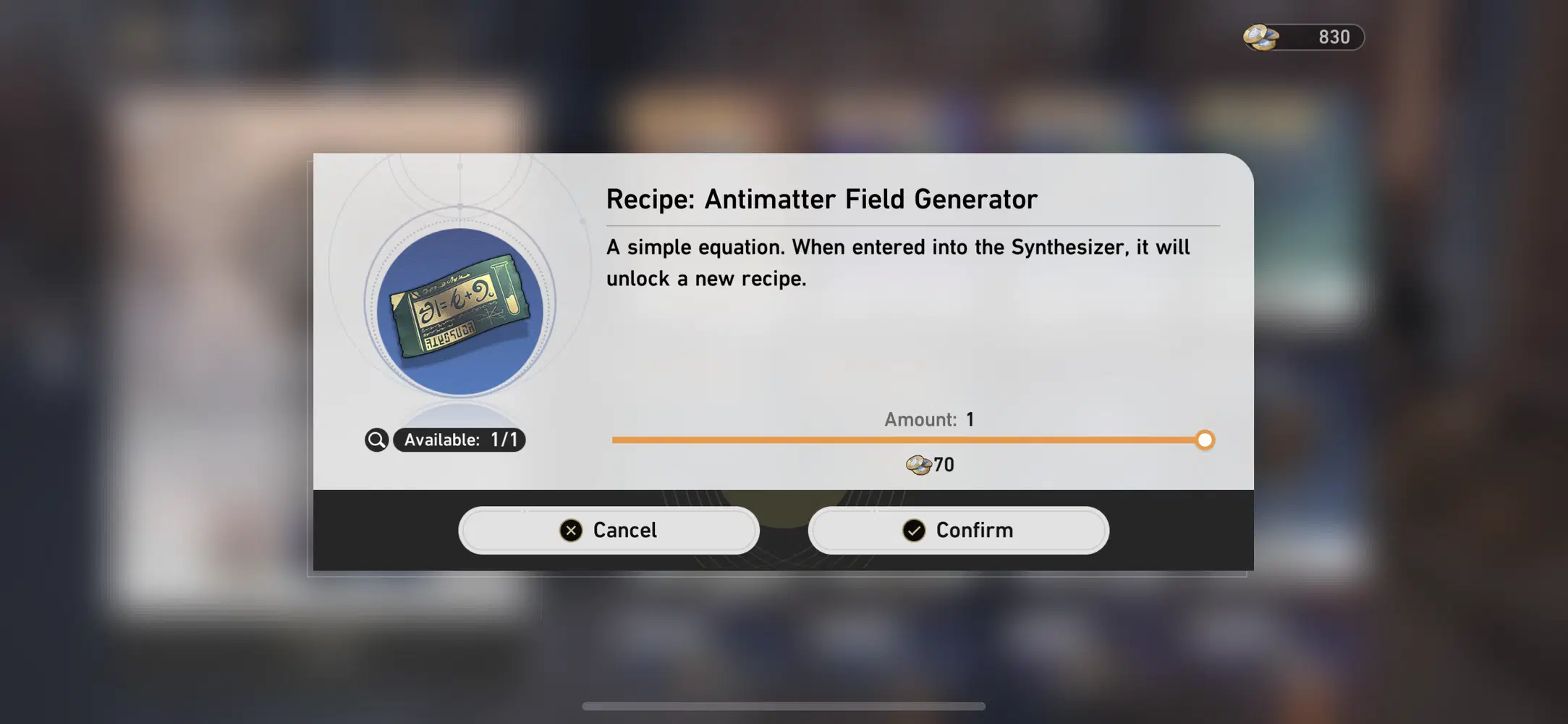
Q32: For the crafting system, are there any good recipes? Something that can be used to challenge under-leveled content like the Adeptus' Temptation in Genshin Impact?
A32: [Antimatter Field Generator] is one of the more handy consumables in the early game. It increases ATK and CRIT Rate, which is a good boost to your team DPS. Other recipes are either too difficult to get in the early game or lean towards survival and utility uses, which aren’t significant changes to the gaming experience.
Q33: How to use the Photo Mode in Star Rail? Any recommended photo locations?
A33: The Camera function is in the Phone menu to the upper left corner. Click to open then locate the bottom-most icon on the bar to the right side.
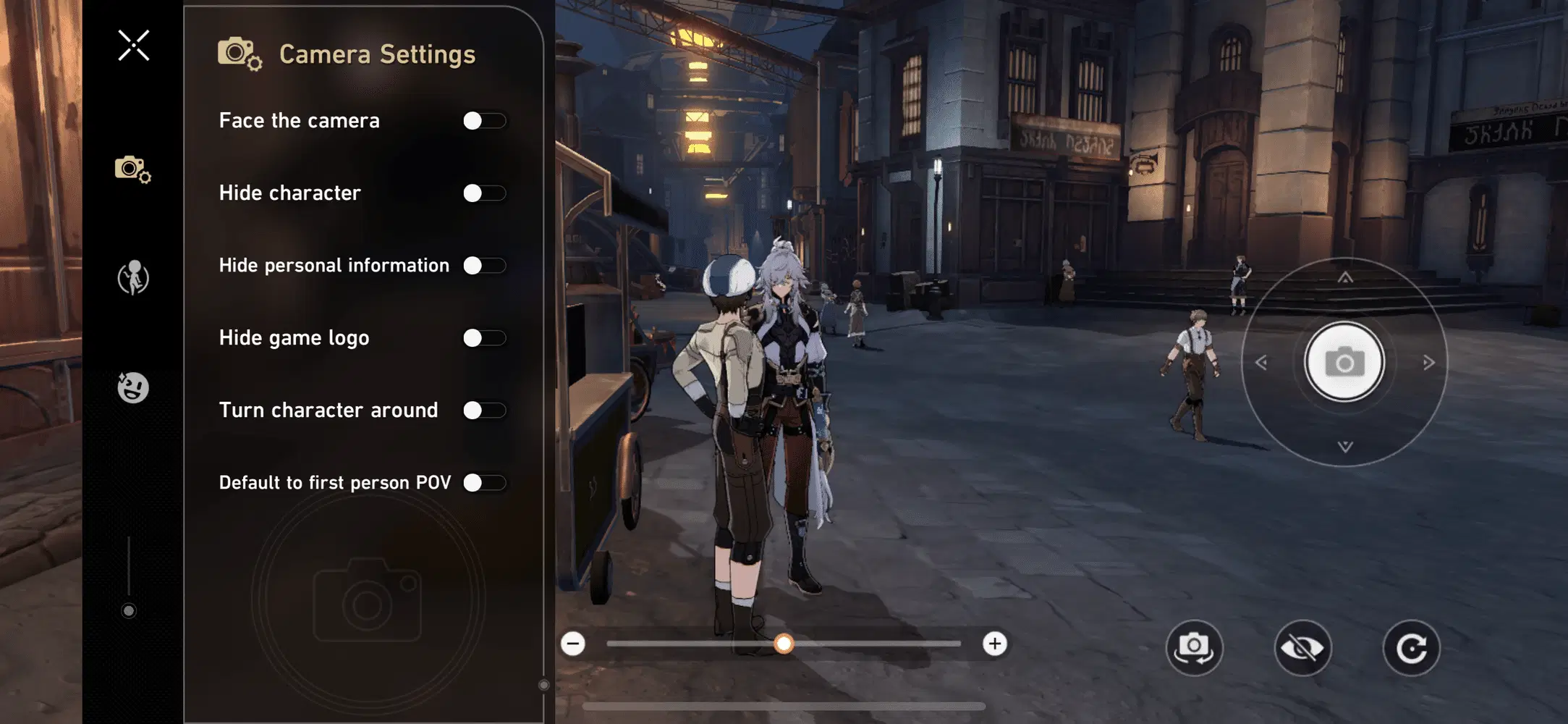
With the Camera UI open, you’ll see an interface very similar to the camera app in your phone. The main [Take Picture] function key is to the right side in the middle, using the shortcut [F] key. On the bottom right corner, you’ll see three other assisting functions, they are:
① [Rotate View]: Basically the camera switch function on a phone, switching between front and back camera;
② [Hide UI]: Clicking on this will hide all the UI for a better view. Click on it again to restore UI;
③ [Reset Camera]: Click on it to re-center the camera on your character and reset your view (very handy for when you want to shoot symmetrical shots that need the photo to be centered);
Other functions:
① [Camera Settings]: A very helpful bundle of functions, here we’ll go over the main three: You can hide the character for a pure scenic shot; you can hide personal information, which is the UID on the bottom right corner and nickname, and you can hide the game logo, which is the Star Rail logo on the upper left corner of the picture;
② [Actions]: Actions are the two idle animations of the character; when shooting static shots, it helps getting the right pose in the right location and adds more flavor and life to the photo~
③ [Expressions]: As the name suggests, the Expressions function is used to change character expression~
Recommended Photo Locations:
March’s room: March’s room is just the cutest place ever! Most importantly, there’s a huge photo wall in there!
Master Control Zone – Watcher Zone: If you teleport to the [Watcher Zone] space anchor, you’ll see a huge hologram planet in the center?
This is one of the best locations for photoshoots on Herta Space Station~ It seems that every character fits right in with the datapunk and sci-fi vibe!
Railway Platform: You have the teleport toilet, as well as breath-taking stars and planet!
This location is very suitable for back and silhouette shots. The atmosphere is ideal for setting up a pose.
Everwinter Monument + Qlipoth Fort: Landmarks of Belobog.
Q34: Will dialogue choices affect the story?
A34: Some story will change depending on your dialogue choices and affect the direction of story progress. However, don’t worry too much because the final outcome of the story won’t be affected, so really it’s only the progress that’s affected.
Q35: How do you revive fallen characters?
A35: You’ll see blue space anchors on the map that can be teleported to anytime, anywhere.
Apart from serving as waypoints, these space anchors also help restore your team’s HP.
Q36: How are the dailies and weeklies in Star Rail? Are they grindy?
A36: Once you’ve completed the main questline, you’ll spend about 10 minutes clearing Trailblaze Power and completing Daily Training every day. Your daily income of Stellar Jade is the same as in Genshin Impact.
The big weekly task is Simulated Universe, and to receive full rewards, you’ll need to clear it three times. With a standard build, it takes about 20 minutes to do one run, so three runs will take an hour.
Memory of Chaos refreshes once every two weeks and clear progress is different from player to player.
Taking everything into consideration, you’d spend on average less than 20 minutes in the game every day. It’s an even sweeter deal when you consider the auto-battle feature.
Q37: How does the Trailblaze Power (stamina) system work in Star Rail? How to effectively plan usage as a new player?
A37: Trailblaze Power is maxed out at 180 and you will recover 1 point every 6 minutes. A total of 240 Trailblaze Power can be regenerated within the span of 24 hours.
Here’s a brief related note on purchasing Trailblaze Power: 50-75-75-100-100-150-150-200 = doing full purchase requires 900 Stellar Jades a day, so this is not recommended unless you whale~
l Prioritize farming Credits, Light Cone EXP and Character EXP Materials with your Trailblaze Power before Lv.40;
l Prioritize farming Trace Materials at Lv.40-50;
l You can choose to farm missing Relics at Lv.50-60;
l At Lv.60 and above, the highest tier of rewards for all contents is unlocked, so you can choose freely.
Q38: What should I prioritize for the Assignments?
A38: First priority is getting EXP materials and Credits, second priority is Gaseous Liquid and Seed.
Star Rail has a serious case of early game leveling stagnation, especially after Lv.40. So it isn’t a surprise that you would prioritize assignments that give materials which normally require Trailblaze Power to get. Early game, you can simply send your characters out for Credits. Once you have a second slot, send them out for Character EXP materials, and once you have the third slot unlocked, send them out for Light Cone EXP materials.
The most cost-effective Technique Point restoring consumable is the common quality Trick Snack, instantly restoring two Technique Points for the character with no strings attached. The materials used to synthesize Trick Snacks are Gaseous Liquid*1 and Seed*1.
This way, you’ll never have problems with Technique Points again.
=Combat=
Q39: How do you initiate combat in Star Rail?
A39: Enemies are scattered throughout the map, approach and attack them to enter combat.
Before combat begins, we can strike with the character’s Basic ATK for the upper hand. Some characters with damaging Techniques can even deal additional DMG.
When attacked by the enemy instead, combat will also begin, except that enemies will gain additional SPD and Trailblazer will lose the advantage. So remember to avoid enemy line-of-sight and actively start fights when roaming in the map~
Typical enemies will have two Weakness Types; Boss enemies will have three. The white bar above the enemy’s red HP bar is the Toughness bar. When you’ve depleted the enemy’s Toughness bar with the matching DMG Type, you will inflict Weakness Break effects. Different Types have different Weakness Break effects:
Q40: When in combat, how is the Action Order determined for my characters? Can the order change during combat?
A40: Turn on “Display the character’s action value” in combat settings to see the action value of characters in the Action Order.
When combat starts, there is a 10000m long track. The “time” characters need to complete the track in their own SPD is called the action value. The action values of all characters are displayed in a ascending order in combat, which is the Action Order. In plain English: The higher the character’s SPD, the further up in the Action Order they act.
Outside combat, you can increase character SPD through Relic and Light Cone effects to move them up in the Action Order.
During combat, you can also cast buffs and debuffs to change ally and enemy Action Order for the next Cycle (turn).
For example: Welt casts a Slow debuff on the enemy after the enemy’s move. In the next Cycle, the enemy’s Action Order has a chance to be pushed back.
Asta casts her Ultimate for a SPD buff as the last character on the Action Order of the current Cycle. In the next Cycle, allied Action Order has a chance to be moved up.
Q41: Why does stacking Break Effect not improve Toughness DMG?
A41: What you get from stacking Break Effect is the DMG dealt (including DoT DMG) and the Action Order delay effect when inflicting Weakness Break. It has no effect on the efficiency of dealing Toughness DMG.
Effects that can increase Toughness DMG are usually described as “Toughness-reducing efficiency”. They appear in the Simulated Universe but currently there are no reliable way of gaining Toughness DMG buffs.
Q42: How do you charge up the Ultimate?
A42: Detailed recharge data is as follows:
20 on Basic ATK, 30 on Skill cast, 5 on Ultimate cast, 10 on Follow-up ATK trigger, 10 on hit by single-target ability, 5 on hit by AoE ability, and 10 on defeating an enemy.
Some of the characters only recharge 5 energy on Follow-up ATKs. Jing Yuan’s Follow-up ATKs do not recharge energy.
Q43: Any combat tips?
A43:
1. (PC Client) You can press C/Z keys in combat to check ally or enemy details. This can be very helpful when encountering a new enemy type.
2. After the enemy’s move, you can immediately interject with an Ultimate and Weakness Break them. This is to avoid Weakness Breaking the enemy just as the enemy is about to have their turn, therefore wasting the reduced DEF debuff they have.
3. Plan your Skill Point expenditure while setting up your team. Bring characters that do not overly rely on Skill Points (such as Tingyun and Arlan).
4. You can place characters that have taunt or are likely to be attacked (such as Fire Trailblazer, Gepard, and Clara) to the sides of the team to minimize impact of spread skills on your teammates.
=Character Leveling=
Q44: Which characters are F2P in Star Rail?
A44: Here are the nine F2P characters and a brief summary of each:
l Trailblazer: MC who can switch between different Paths and Combat Types, which are unlocked with main story progression. Currently the Physical Type Destruction Path and Fire Type Preservation Path are unlocked.
l March 7th: 4-star Ice Type Preservation character, one of the starting characters from the main story;
l Dan Heng: 4-star Wind Type The Hunt character, one of the starting characters from the main story;
l Serval: 4-star Lightning Type Erudition character, reward for pre-registration, received via in-game mail;
l Asta: 4-star Fire Type Harmony character, reward for the Gacha system tutorial;
l Natasha: 4-star Physical Type Abundance character, obtained after completing the Trailblaze Mission “Lying in Rust”;
l Herta: 4-star Ice Type Erudition character, obtained after completing the Trailblaze Mission “Simulated Universe: First Closed Beta”. One Eidolon (Constellation) each is rewarded after clearing Simulated Universe II, IV, and VI, giving you free E3 Herta.
l Qingque: 4-star Quantum Type Erudition character, obtained from clearing Forgotten Hall Memory Stage 3.
l Yukong: 4-star Imaginary Type Harmony character, obtained from clearing Forgotten Hall: Memory of Xianzhou Stage 1 in V1.2.
Q45: Are 5-stars always stronger than 4-stars? Is it enough to just level 5-star characters?
A45: As of now, the more obvious difference between a 5-star and 4-star character is reflected in their base stats. 5-star characters tend to have better stats than 4-star characters of the same Path, but there’s no big difference between their ability sets. Some 4-star characters even have better ability sets in certain aspects than 5-star characters.
Therefore, it’s not right to think you can focus purely on 5-star characters and neglect leveling 4-star characters. When building characters, you should consider their abilities, roles, amount of investment needed for them to become viable, as well as their compatibility with characters that you’re already leveling. If you’re just leveling 5-stars indiscriminately, you might run yourself into the awkward position of characters having no synergy whatsoever with each other.
Early game, we get the Healer Natasha for free, who has a very high leveling priority. Hook and Tingyun are also 4-star characters with great build value, so if you pulled them, consider focusing on leveling them.
Q46: How do I decide who to level?
A46: The current popular team setup in Star Rail is: Main DPS + Sub-DPS/Support + Support (Multipurpose) + Shield/Healer
When building a character, you must first understand the specific role of the character (you can refer to the character’s Path for their role), then plug the character into this formula based on their role.
Take an early game example, most players can form a team like this: Physical MC + Dan Heng + March 7th + Natasha. Here, the MC is the Main DPS, Dan Heng is the Sub-DPS, Natasha is the Healer, and March 7th has CC (Freeze), survival support (shields), and some DPS (follow-up attacks), therefore she fills the multipurpose role.
Since in later Forgotten Hall stages you’ll need two teams, you can start working on the second team when the first team is good enough to handle daily challenges. When putting the second team together, try to pick characters with different Combat Types, this way you’ll have alternatives even when facing enemies with different Weakness Types.
Official Character Guides Page:
Q47: A lot of the 3-star Light Cones have good abilities, should I level them for use?
A47: Since Light Cones have a big difference in base stat across quality levels, typically you wouldn’t consider leveling 3-star Light Cones. You can use 3-star Light Cones for transition in the early game, but we advise against spending too much resources on leveling them. New player missions and in-game stores all have 4-star Light Cone rewards. You can also trade for the Standard 4-star Light Cones in the Forgotten Hall, so stick to using 3-star Light Cones for transition only.
Q48: What are some must-level early game characters?
A48: For characters worth leveling in the early game, check out this guide:

Q49: How do you build a team in Star Rail?
A49: For team setup strategy and method, check out this guide:
Q50: How do I check the effects of a Light Cone? How do I get one? How do I level it?
A50:
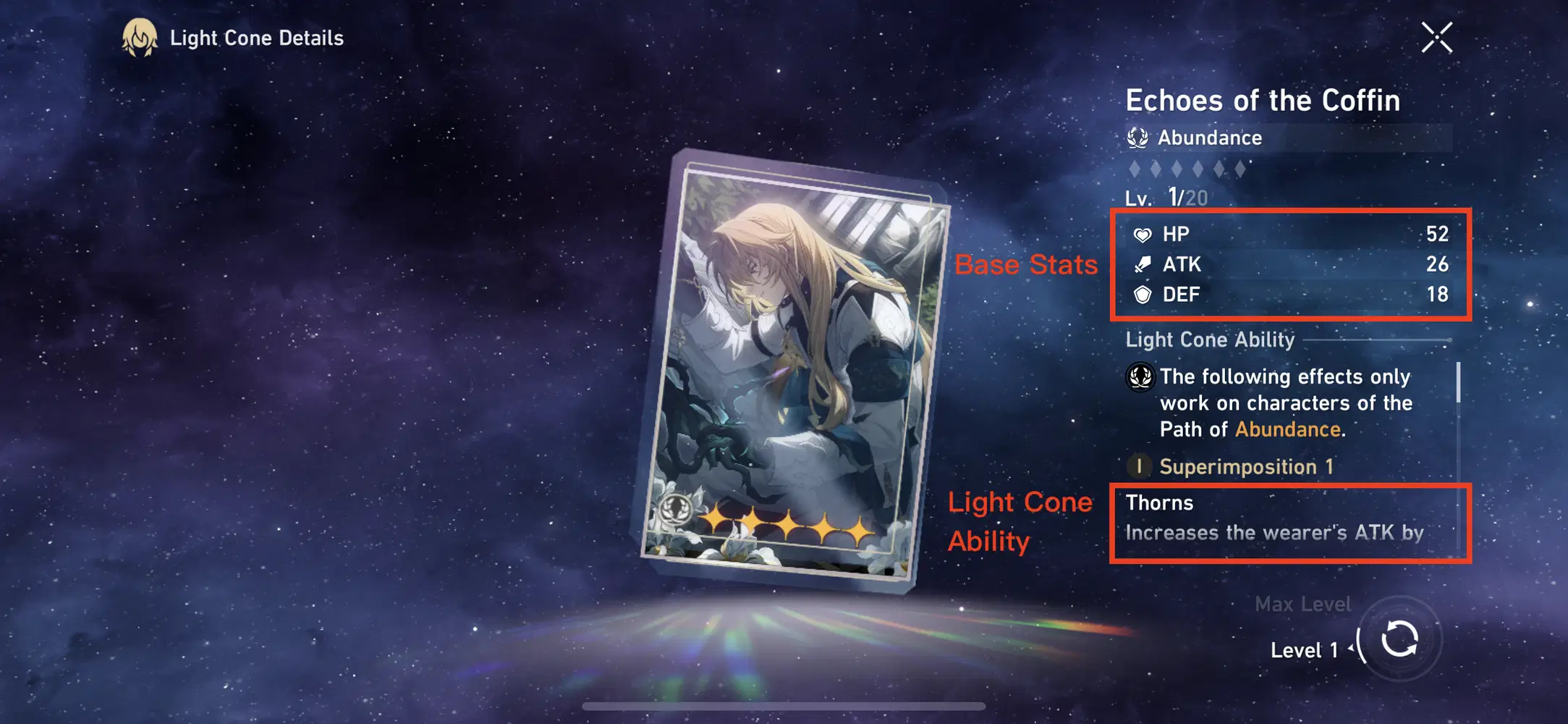
You can see the details and effects of the Light Cone in the Inventory or Character page.
Light Cones are categorized by Path. Characters of a specific Path can only equip Light Cones with a matching Path.
The Base Stats are the same – HP, ATK, and DEF. However, different Light Cones have different stat values.
The Light Cone Ability is the biggest factor distinguishing the effectiveness of these Light Cones.
Leveling a Light Cone will increase its Base Stats (HP/ATK/DEF), but Superimposition increases the effectiveness of the Light Cone Ability.
Light Cones are mainly obtained through gacha, currency exchange, and events.
Light Cones consume Aether items to level (you can use other Light Cones too). Aethers are mainly obtained through challenging Bud of Aether*Calyx on the map with Trailblaze Power.
Q51: What’s the priority for Light Cones that can be exchanged in the Forgotten Hall store (Light Cone Manifest)?
A51:
Recommended: [Quid Pro Quo]
Situational: [Past and Future], [We Are Wildfire], [The Seriousness of Breakfast]
Not Recommended: [Fermata], [River Flows in Spring], [Woof! Walk Time!]
Q52: What’s the priority for Light Cones that can be exchanged in the Simulated Universe (Herta’s Store)?
A52: The current Herta’s Store exchange priority: [On the Fall of an Aeon (Destruction)] ≈ [Cruising in the Stellar Sea (The Hunt)] > [Texture of Memories (Preservation)].
Q53: What’s the priority for Light Cones from the Battle Pass?
A53: This depends on what character you are leveling. [Harmony Light Cone: Carve the Moon, Weave the Clouds] [Erudition Light Cone: Today Is Another Peaceful Day] are very powerful, worth recommending; [Abundance Light Cone: Warmth Shortens Cold Nights] [The Hunt Light Cone: Return to Darkness] [Destruction Light Cone: Nowhere to Run] [Nihility Light Cone: We Will Meet Again] [Preservation Light Cone: This Is Me!] all have their strengths and are worth considering.
Q54: How do I check the effects of Relics and Planar Ornaments? How do I get them? How do I level them?
A54:
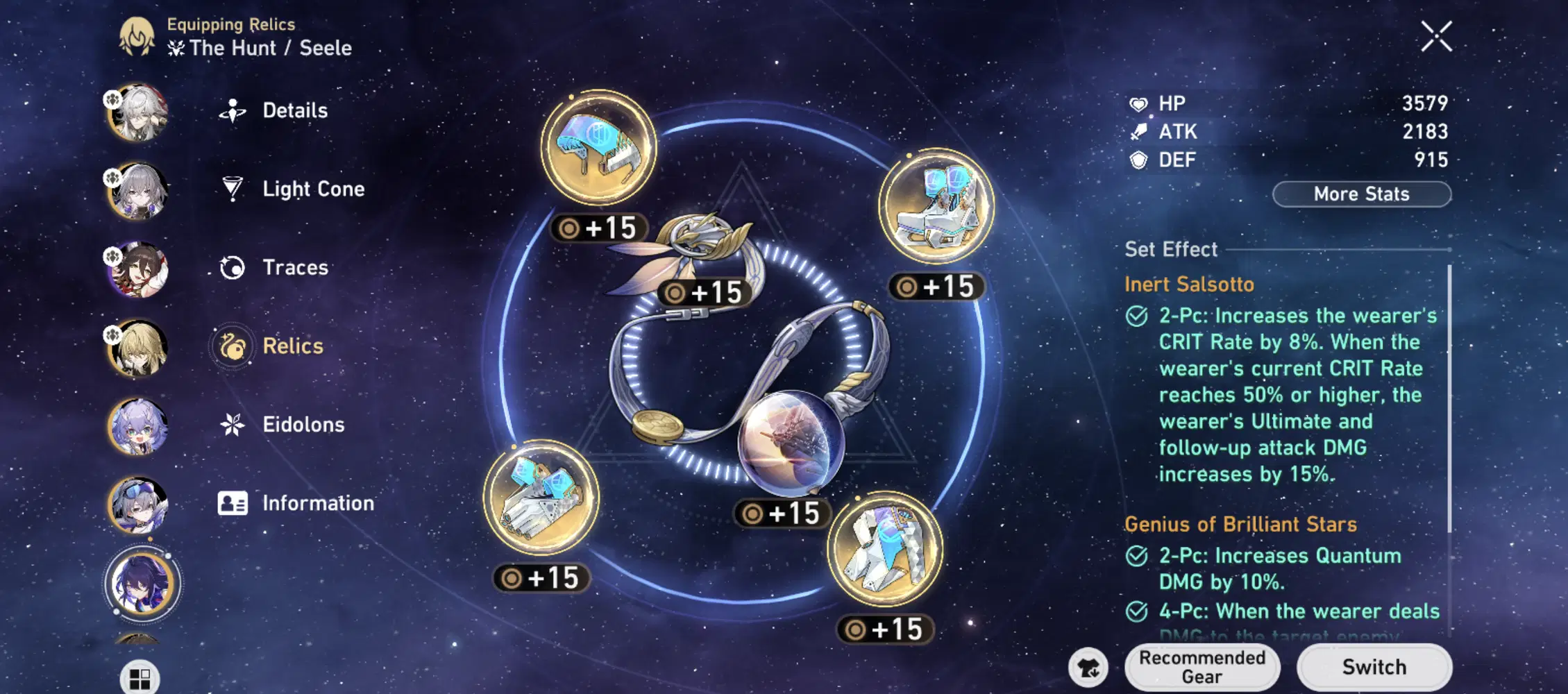
You can see the details and effects of the Relic and Planar Ornament in the Inventory or Character page.
There are two types of Relics:
Cavern Relics. There are four pieces (Head, Hand, Body, Feet) and they are laid out on the outer circle on the character Relic page. You unlock Caverns of Corrosion at Lv.24 (you need to unlock the Trailblaze Mission [In the Sweltering Morning Sun] on Jarilo-VI).
Planar Ornaments. There are two pieces (Planar Sphere, Link Rope) and they are in the center circle on the character Relic page. Planar Ornaments are from [World 3] and above difficulties in the [Simulated Universe]. [World 3] Difficulty I unlocks [at the end of Chapter I of Trailblaze Missions], Difficulty II unlocks at Equilibrium Level 3, Difficulty III unlocks at Equilibrium Level 4, Difficulty IV unlocks at Equilibrium Level 5, and Difficulty V unlocks at Equilibrium Level 6.
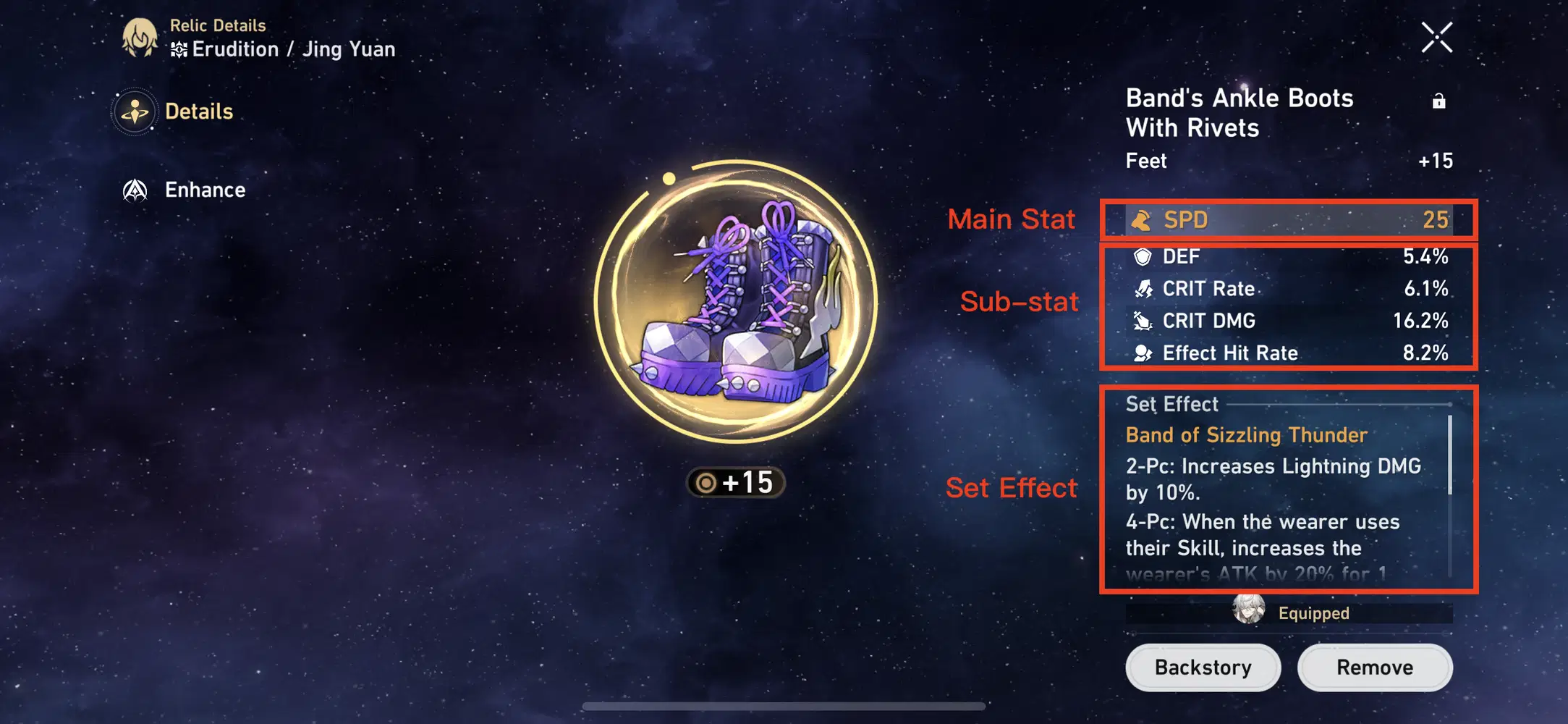
The same type of Relic offers the same Set Effect, but the Main and Sub Stats will differ (With the exception of Head pieces, which always have HP for Main Stat, and Hand pieces, which always have ATK for Main Stat).
Consume other Relics and Planar Ornaments, or use Relic EXP Materials (Lost Gold Fragment) to level up your Relics.
Q55: With limited resources in the early game, how should I level my Traces?
A55: Some characters don’t have as high priority for some of their Traces and levels, so it’s not worth investing into those and there’s no rush in maxing them out. We recommend leveling the Traces of your Main DPS first, and for your Supports, prioritize leveling their core Traces over non-essential Traces.
Q56: If my use up all my resources (Credit and leveling materials), where do I get more?
A56:
l Farm the corresponding material instances (such as Calyx and Stagnant Shadow)
l Exchange from World Shops (such as from the Internal Purchase Officer on Herta Space Station)
l Live off the land: Clear out all enemy spawns and destructibles on the map. This is one way of obtaining Credits and leveling materials without consuming Trailblaze Power
=Instanced Game Modes=
Q57: How do you play the Simulated Universe? What rewards do you get?
A57: This game mode can be found in the Herta Space Station, at Herta’s Office in the lower left corner of the Master Control Zone. The Simulated Universe system does its best to recreate scenarios and characters from reality. The fun of this game mode lies in:
①. Randomly generated layout and enemies in Domains
②. Freedom to choose the type of the next Domain
③. Receive random Blessings (buff) and Curios that empower your characters after defeating enemies.
All in all: The Simulated Universe has a very simple map design. Each Domain is an area map randomly picked from the larger world, and the player will progress through the Domains by combating random enemies or deciding outcomes for events. Players need to pick the appropriate Blessings based on their team and aim to complete all Domains.
Points:
A certain amount of Points and Ability Points can be earned upon completion. You can see this on the results screen.
Points can be used to trade for leveling materials, Stellar Jades, and premium item exchange currency (Herta Bond). This catalogue resets every Monday at 4:00, allowing you to repeatedly obtain these items. This is what makes Simulated Universe a weekly content.
Ability Points:
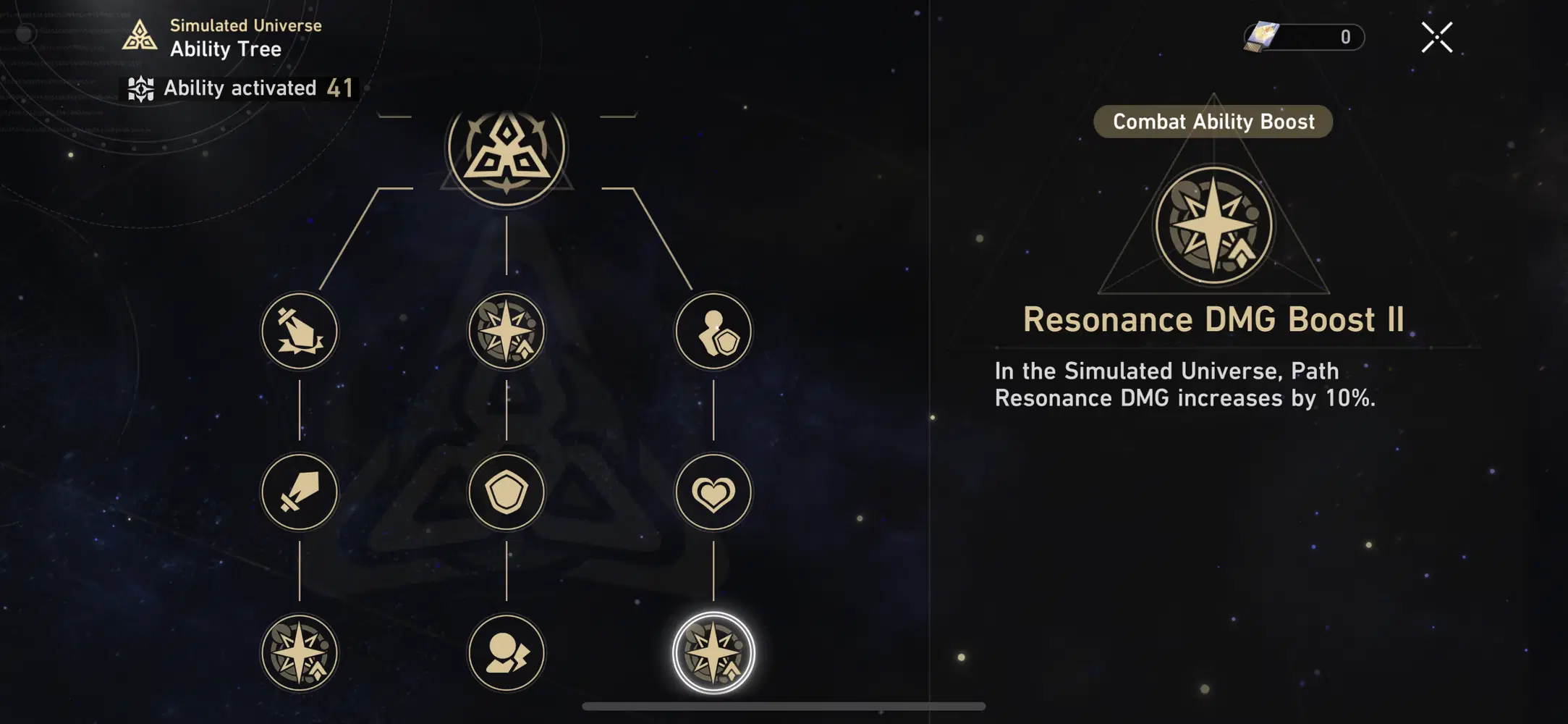
We obtain Ability Points from challenging the Simulated Universe, which is used to activate nodes on the Ability Tree.
PS: When struggling with clearing the Simulated Universe in the early game, you can try it multiple times to get as many Ability Points as possible to quickly level up the Ability Tree, which will greatly reduce the difficulty of Simulated Universe stages in the future.
Reward:
1. The Simulated Universe will expand into World 7 in the V1.2 update. The higher the difficulty level of the World we clear, the more Points and Ability Points we receive upon clearing. We’ll also receive a one-time reward on our first clear: Herta Bond, Stellar Jade, and Herta (first clear on Worlds 2, 4, and 6).
2. The Herta Bond we receive as first-time rewards and from the weekly Point exchange can be used to trade for 5-star Light Cones, special Superimposers, and Star Rail Passes in Herta’s Store.
3. You will earn Stellar Jade by unlocking Blessings, Events, and Curios in the Simulated Universe Index. This is a motivation to try out different Blessings, Events, and Curios in the Simulated Universe, so you can complete the index collection.
Official Simulated Universe Guides Page:
Q58: What instance is the Forgotten Hall? What rewards do you get?
A58: The purpose of the Forgotten Hall is to test the player’s builds and decision-making ability. It offers a generous one-off reward based on your completion status and a small amount of recurring rewards.
It’s divided into Memory and Memory of Chaos stages. The prior is a set of increasingly difficult, one-time stages, and the latter is a set of more difficult stages that are updated periodically (twice every month).
l Memory Stages (Jarilo-VI, 15 Stages): For every 3 stars earned, you receive: 200 Stellar Jade + 20000 Credits;
Memory Reward (no star requirement) for the first 5 Stages: Mostly consumable materials;
Memory Reward (no star requirement) for Stages 6-15: Better and more rewards than previous Stages.
Rewards include materials, Lucent Afterglow, and Credits. Lucent Afterglow can be obtained through Echo of War as well, and can be traded into 4-star Light Cones at the Messenger.
l Memory Stages (V1.2 Update The Xianzhou Luofu, 6 Stages): For every 3 stars earned, you receive: 200 Stellar Jade + 20000 Credits;
Memory Reward (no star requirement) for Stages 1-3: Includes materials, Lucent Afterglow, and Credits;
Memory Reward (no star requirement) for Stages 4-6: Better and more rewards than previous Stages.
l Memory of Chaos Stages (Last 10 Stages): For every 3 stars earned, you receive: 60 Stellar Jade + 20000 Credits;
The Memory Reward is the same for each Stage and they include materials, Stellar Jade, and Lucent Afterglow. Lucent Afterglow can be obtained through Echo of War as well, and can be traded into 4-star Light Cones at the Messenger.
Official Forgotten Hall Guides Page:
Q59: What instance is the Echo of War? What rewards do you get?
A59: Echo of War is a weekly instance in Star Rail that can be challenged three times per week, resetting every Monday. The rewards will increase with your Equilibrium Level.
l Difficulty I: Enemy Level 38
Drops: 1 Advanced Trace Material, 5 Lucent Afterglow, 2 Purple Relics, 6 Blue Relics, chance to drop 4-star Light Cone.
l Difficulty II: Enemy Level 47
Drops: 1-2 Advanced Trace Material, 6 Lucent Afterglow, 3 Purple Relics, 5 Blue Relics, chance to drop 4-star Light Cone.
l Difficulty III: Enemy Level 57
Drops: 2 Advanced Trace Material, 1 Golden Relic, 7 Lucent Afterglow, 3-4 Purple Relics, 3-4 Blue Relics, chance to drop 4-star Light Cone.
l Difficulty IV: Enemy Level 66
Drops: 2 Advanced Trace Material, 1-2 Golden Relics, 8 Lucent Afterglow, 3-4 Purple Relics, 3 Blue Relics, chance to drop 4-star Light Cone.
l Difficulty V: Enemy Level 75
Drops: 2-3 Advanced Trace Material, 2 Golden Relics, 9 Lucent Afterglow, 3-4 Purple Relics, 2-3 Blue Relics, chance to drop 4-star Light Cone.
l Difficulty VI: Enemy Level 82
Drops: Unknown (Pending update)
Q60: What instance is the Cavern of Corrosion? What rewards do you get?
A60: It’s the Relic instance.
l Difficulty I: Enemy Level 38
Drops: 1 Purple Relic, 2-3 Blue Relics, 6 Green Relics
l Difficulty II: Enemy Level 47
Drops: 2-3 Purple Relics, 4 Blue Relics, 2 Green Relics
l Difficulty III: Enemy Level 57
Drops: 0-1 Golden Relic, 3-4 Purple Relics, 4 Blue Relics
l Difficulty IV: Enemy Level 66
Drops: 1 Golden Relic, 5-6 Purple Relics
l Difficulty V: Enemy Level 75
Drops: 1-2 Golden Relics, 5-6 Purple Relics
l Difficulty VI: Enemy Level 82
Drops: Unknown (Pending update)
Q61: What instance is the Stagnant Shadow? What rewards do you get per Difficulty?
A61: It’s a Material Instance where you can find Character Ascension Materials.
l Difficulty I: Enemy Level 40
Drops: 2-3*Character Ascension Materials
l Difficulty II: Enemy Level 50
Drops: 3*Character Ascension Materials
l Difficulty III: Enemy Level 60
Drops: 3-4*Character Ascension Materials
l Difficulty IV: Enemy Level 70
Drops: 4-5*Character Ascension Materials
Q62: What instance is the Calyx? What rewards do you get?
A62: It’s where you find Character EXP Materials, Light Cone EXP Materials, Credits, as well as Character Trace Materials.
Using the Bud of Aether: Calyx as an example, the rewards are as follows:
l Difficulty I: Enemy Level 16
Drops: Sparse Aether*5, Condensed Aether*1
Around 4500 Light Cone EXP
l Difficulty II: Enemy Level 32
Drops: Sparse Aether*4, Condensed Aether*2
Around 6000 Light Cone EXP
l Difficulty III: Enemy Level 42
Drops: Sparse Aether*3, Condensed Aether*3
Around 7500 Light Cone EXP
l Difficulty IV: Enemy Level 52
Drops: Sparse Aether*2-3, Condensed Aether*1, Refined Aether*1
Around 9000 Light Cone EXP
l Difficulty V: Enemy Level 62
Drops: Sparse Aether*2-3, Condensed Aether*2, Refined Aether*1
Around 11000 Light Cone EXP