The End of Third-Party TopUps?
Just wanted to drop a quick but honest post about something that's been buzzing around the community lately—especially for us players on Asia/SEA servers.
Is HoYoverse really cracking down on all third-party top-ups? The region lock making it impossible to use cheap sites?
From what I've seen and experienced since late 2025, and it's gotten way stricter into 2026: Yes, it's happening. Accounts are now permanently locked to the region where they were created (Asia, NA, EU, SAR, TW/HK/MO, etc.). Co-op only works with players on the same server region, you can't switch regions, and using VPN to bypass? It's against the rules and can flag your account for suspicious activity.
Even more critically for top-ups: Purchases must match the registered region of your account, not just the server you're playing on right now. For example:
- If your account was registered in Europe but you're playing on Asia server? Top-up still has to go through Europe region methods.
- Same applies to NA, SEA, and others.
A ton of popular third-party sites (like Lootbar, LDShop, and others) are now hitting "Region Lock Error" or "UID could not be processed due to restriction from the game provider." Orders get auto-refunded, and players are receiving warning emails from HoYoverse labeling those transactions as "suspicious." This isn't random—it's a deliberate system change to shut down gray-market top-ups that exploited currency differences for huge discounts.
Here's a direct paraphrase from HoYo staff responses I've seen on HoYoLAB (and similar official statements):
"If your payment was blocked on third-party payment platforms, it’s likely due to the payment provider's own risk filters or the site itself. HoYoverse doesn't step in to block these, and we don't have control over how third-party payment platforms handle their security. [...] For a safe experience, we always recommend the HoYoverse Top-Up Center as the sole officially certified platform for all your top-ups."
They're not outright saying "we're banning everyone who uses third-party," but by enforcing region-locked payments, the cheap routes are effectively dying out. The official Terms of Service (updated as of January 2026) also clearly prohibit unapproved payment methods and third-party channels, reserving the right to take action—including account termination without refund.
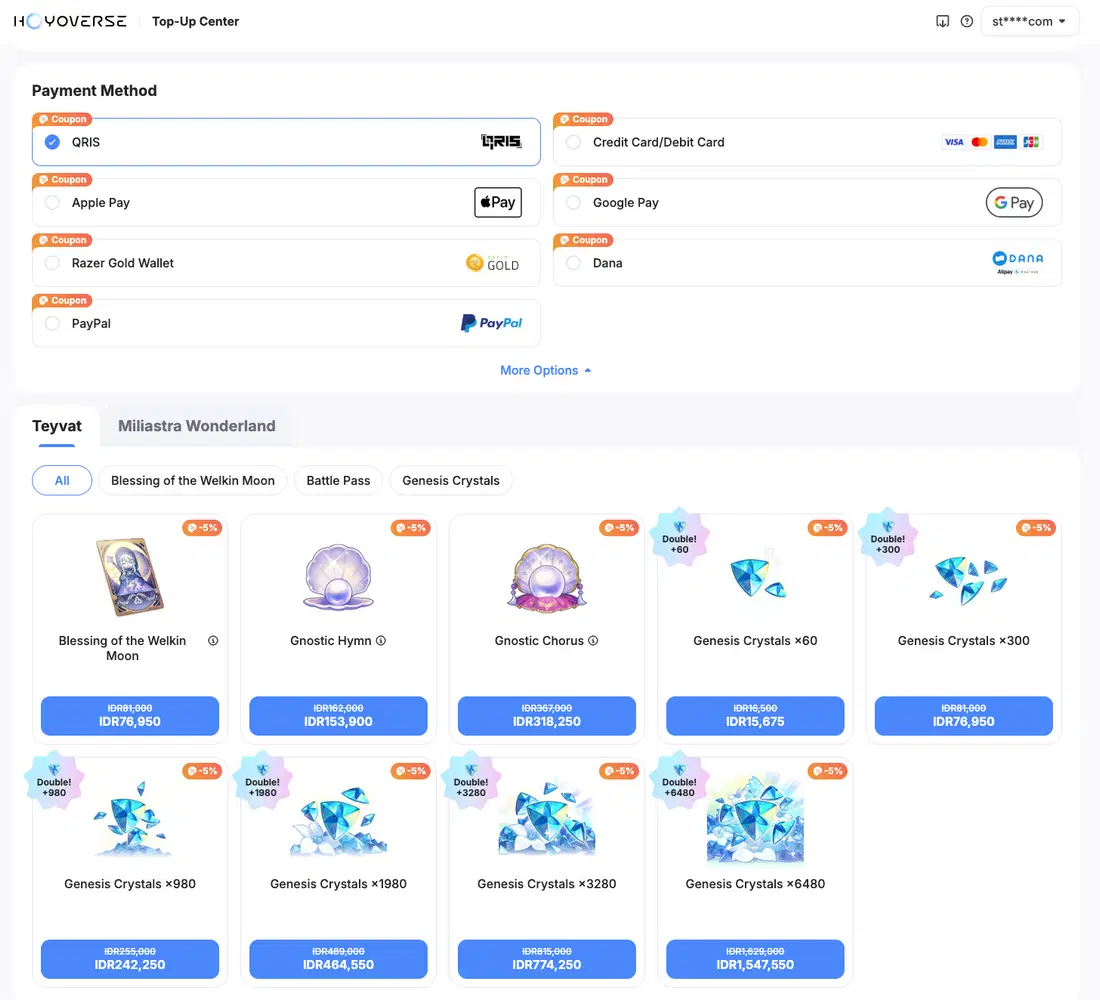
But the big question everyone’s asking: Is the extra 30rb (about US$1.78–1.80) really worth it to go official?
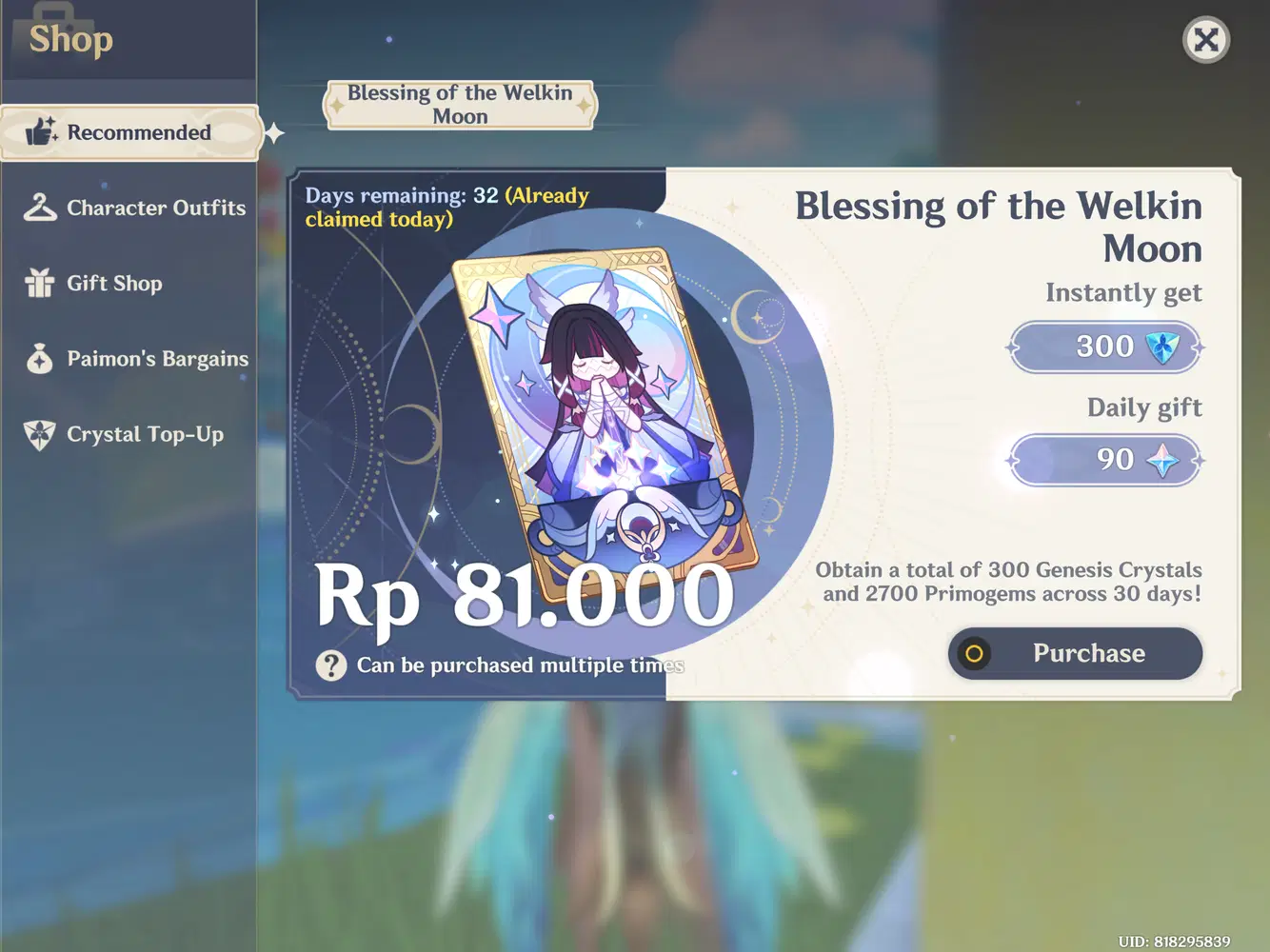
That 30,000 IDR is basically the cost of one bowl of noddles plus ice tea from a street vendor. When you're topping up Welkin Moon (Rp81k official), Battle Pass, or a big Genesis Crystal pack, you are under the protection of these risks:
- Account restrictions or permanent bans, especially if the site uses shady methods or triggers chargebacks later.
- Negative Primogem balances—you end up owing HoYoverse hundreds of thousands (or even dollars), with a short deadline (like 7–14 days) to pay it back or lose the account forever.
- Refund scams: Some sites deliver cheap crystals, then refund their own payment weeks later → negative balance → account at risk.
- Zero real support if things go wrong. The official HoYoverse Top-Up Center has actual email support (genshin_payment@hoyoverse.com). Third-party? You're on your own.
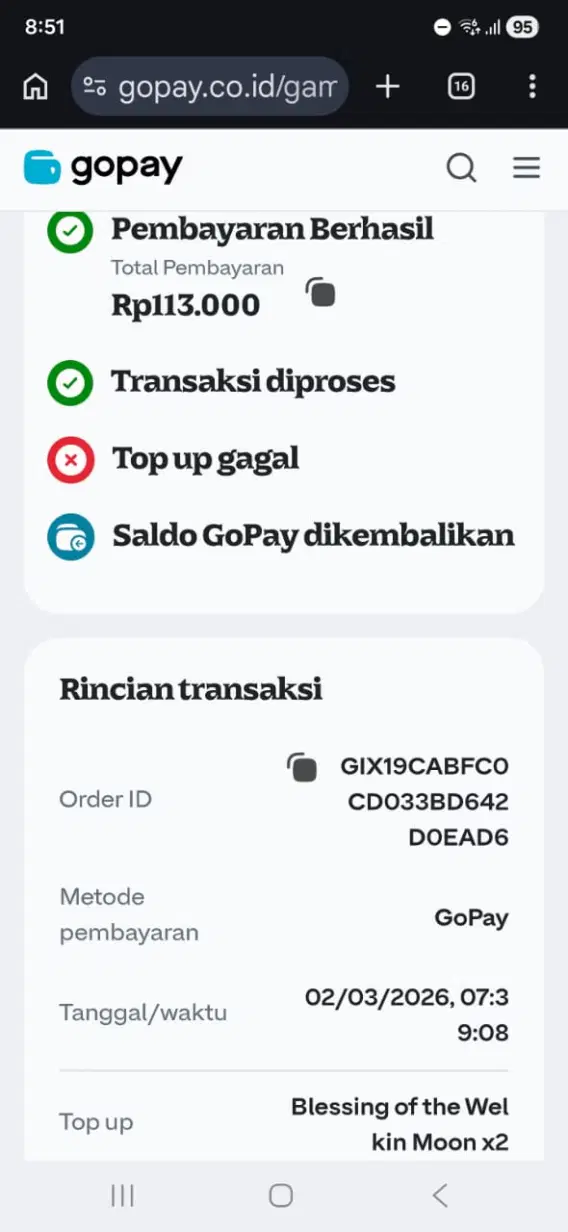
My Welkin happens to be running low these past few days, when I tried to use my regular topup site, Gopay (one of Indonesia's #1 ewallet, equal to how Alipay is China's #1).
But guess what happened? The payment bounced, for multiple times. I tried to report it to Gopay and Mihoyo both, yet nobody can give a solid answer so far. Has anyone else experienced this? 😧
So the real question isn't if it's worth the markup or not, but the fact is, there is no any other avenue besides the official marked up price, or you get nothing at all.
If the block is going for real, and not just me experiencing it, this means Mihoyo is trying to create scarcity by blocking any other avenues of obtaining welkin, except for the marked up price. Those who wants to get the item at a more affordable pricing will be forced to stop, and perhaps someday succumb to the pressure of affording the real marked up pricing. Or perhaps even create even more scarcity that forces customers to be even more careful with which well-known third-party they're choosing.
I do find it strange why Mihoyo's pricing is not lower than third-party, but in fact the opposite. Is it because they are being charged with a way higher tax for each micro-transaction?
I tried Gopay, Tokopedia, Codashop. All blocked. No welkin topup. The moment I paid the marked up price, instant insertion. But if this block is permanent, I think I'd rather go grab the few cents reduced price before that too is gone forever.
That's my personal experience so far. How about yours?
Just to be clear: Gopay isn't some shady third-party—it's literally Indonesia's go-to e-wallet, like Alipay in China or GrabPay in other SEA countries. Millions use it daily for legit transactions everywhere, including game top-ups on platforms like Codashop (which HoYoverse has partnered with in the past for regional payments). The issue isn't Gopay's legitimacy; it's HoYoverse's stricter region-lock enforcement on payments. Even when routing through popular/local authorized partners, if the transaction doesn't perfectly align with your account's registered region (Asia/SEA for most of us here), it bounces with errors like "Region Lock Error" or gets flagged as suspicious. That's why my Gopay attempts failed repeatedly, but switching to the official HoYoverse Top-Up Center (with matching payment) went through instantly. It's extra frustrating because these were convenient, reasonably priced local options that felt safe and reliable before. Now, with the changes, the "affordable local avenue" is shrinking fast—not because Gopay or Codashop suddenly became invalid, but because HoYoverse is tightening the screws to ensure they capture the full intended revenue per region (taxes, fees, anti-arbitrage, etc.). I'm saddened by it, especially when the price difference is just everyday spending money, but realistically, this seems like the new normal unless something shifts on their end.
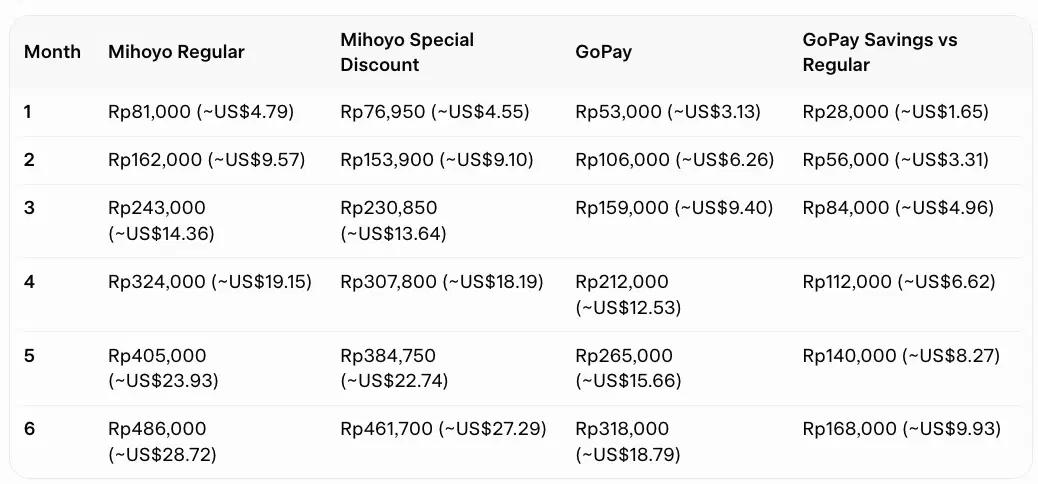
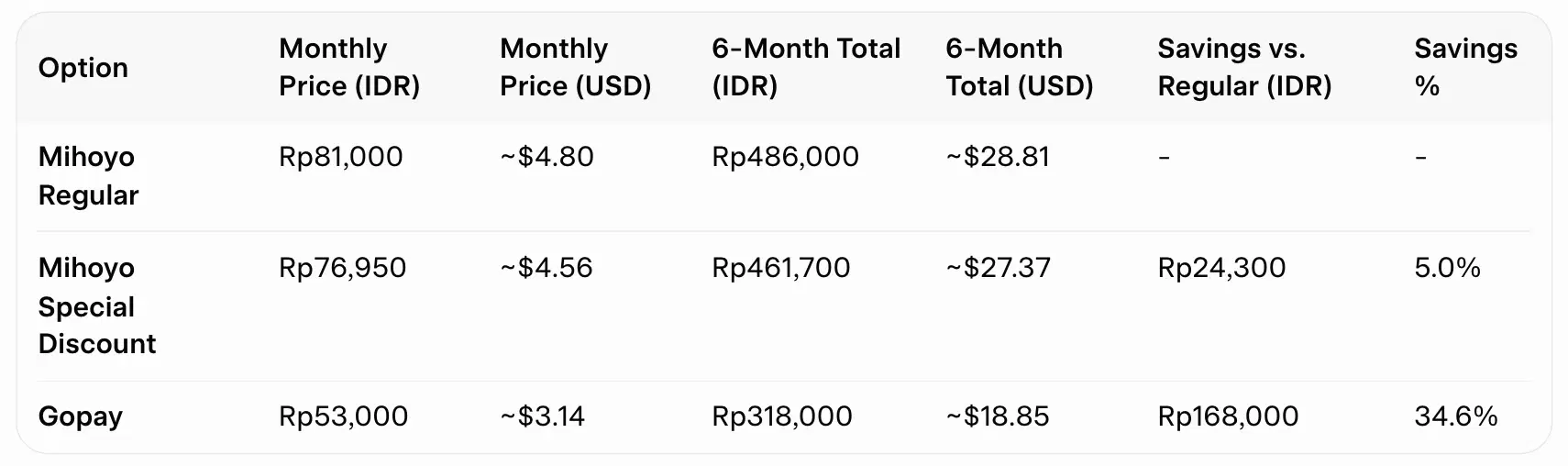
I also wanted to follow up on my previous post about switching to official top-ups and prioritizing safety. First off, a quick acknowledgement: I totally get why so many of you pushed back or "hated" on the advice to go official-only. Of course everyone wants the cheaper option—who wouldn't? Seeing that Rp53,000 GoPay deal vs. the official Rp81,000 (or even Rp76,950 with discount) feels like a no-brainer at first glance. The savings add up fast over months, and it's frustrating when something that used to work smoothly now gets blocked or flagged.
So why can't HoYoverse just accommodate cheaper prices or make official top-ups more competitive across regions? Here's the honest breakdown from what I've pieced together (based on community discussions, official statements, and how gacha games generally work):
- Regional pricing is tied to economics and regulations: HoYoverse sets prices based on local purchasing power, taxes, currency strength, and platform fees (Apple/Google take ~30% cuts on mobile). In places like Indonesia/SEA, official prices are already adjusted higher compared to some lower-cost regions (e.g., historical arbitrage from Ukraine or Turkey gave big discounts via third-parties). They can't uniformly slash prices globally without hurting revenue in higher-value markets or violating local laws/tax rules.
- Third-party gray-market exploits hurt the bottom line: Sites offering 30-60% off often buy in bulk from cheaper regions (using VPNs, proxies, or resellers) and resell. HoYoverse loses out on full revenue, plus they face risks from chargebacks, fraud, or stolen payment methods that third-parties sometimes enable. The region lock on payments (enforced since late 2025/early 2026) is their way to close that loophole—ensuring payments match the account's registered region so they get the intended cut.
- Safety and fairness for everyone: Official channels mean no negative balances from sneaky refunds, no scam risks, and direct support if issues arise. HoYoverse has to protect against abuse (including scams that could lead to bans or lost accounts for players). They push the Top-Up Center because it's the only way they can guarantee 100% legitimacy—no middleman skimming or shady tactics.
That said, I hear you: the extra ~Rp28,000 per month stings when you're already supporting the game. Some players try workarounds like official site purchases via VPN to cheaper regions (e.g., Japan pricing for ~25% off), but that's still against ToS and risky (potential flags). Others stick to authorized partners like Codashop when region-matched for slight savings.
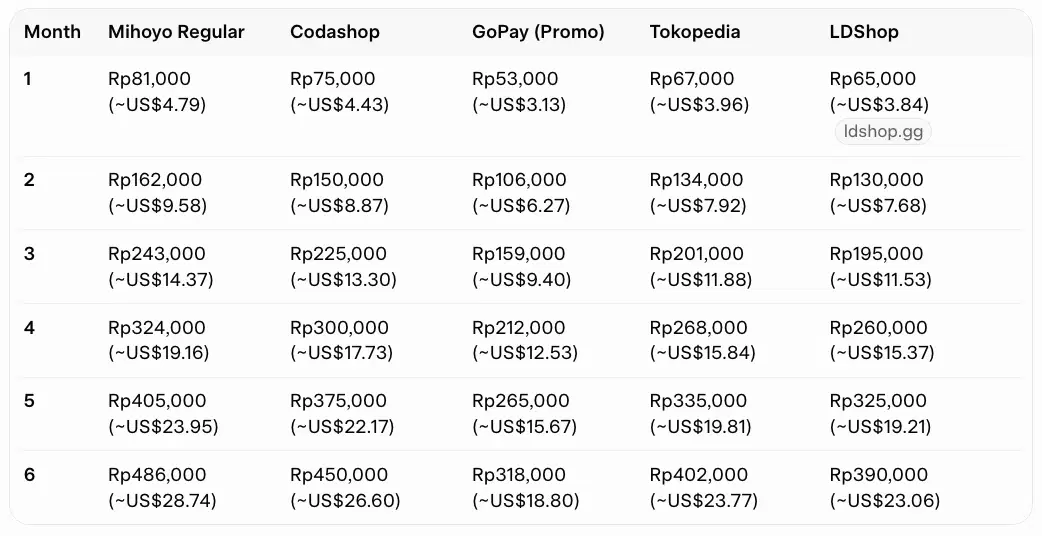
Honestly, I am saddened that they're blocking legitimate third-party purchases, especially with one with such reasonable pricing, just because they can't lower their fees, which by the end of the day, such fees don't land in mihoyo's own pocket anyway.
Bribed Staff Re-enforcing Crackdown?
The February 2026 confirmation from miHoYo itself—that four former employees received prison sentences (6 months to 1 year 4 months) for bribery and embezzlement—probably felt like another quiet ripple in an already tightening ecosystem. The Weixin post laid it out plainly: internal audit uncovered kickbacks from suppliers/partners in supply-chain and maintenance roles (possibly touching marketing functions too). miHoYo fired them, blacklisted the suppliers, cooperated with police, and doubled down on "fair, honest, transparent" operations.
No drama, no names leaked widely, no direct player impact—just a clean-up of internal corruption that aligns with the company's long-standing zero-tolerance for anything that exploits its name or resources.
The Silence on "Legitimate" Third-Party Top-Up Bounces
What feels more relevant (and frustrating) to many of us is the parallel escalation against third-party recharge channels. By early 2026, community reports (Reddit, HoYoLAB, Facebook groups, YouTube shorts) show a clear pattern: even sites that once felt "safe" or semi-legitimate (e.g., those using regional pricing arbitrage, UID delivery without direct account access, or previously tolerated partners) started bouncing transactions outright. Orders process, then get refunded hours later with vague "suspicious activity" emails or no explanation at all.
When players ask point-blank—why does a seemingly legitimate third-party still bounce, even if it's not a blatant scam?—the silence is deafening. Official support rarely gives specifics beyond "use only authorized channels" or "contact the platform." HoYoLAB threads and Reddit discussions often circle the same points without firm answers:
- Some bounces tie to payment providers' risk filters (e.g., fraud detection kicking in on high-volume or unusual regional patterns).
- Others stem from HoYoverse's backend restrictions: region locks, IP/payment mismatches, or blacklisting of certain merchant IDs/suppliers.
- In extreme cases, repeated failed attempts flag the account for review, leading to warnings, negative Primogem balances (from disputed refunds), or worse.
HoYoverse's Help Center and announcements emphasize: unauthorized channels risk account security, unreceived recharges, disputes, and penalties—even if the site claims legitimacy or "works for others." They direct players to the official Top-Up Center (sdk.hoyoverse.com) or verified partners (e.g., Codashop/Razorgold in select regions), but they don't publicly explain why specific "gray-area" sites suddenly fail while others limp along.
This opacity fuels the curiosity: if it's truly about protecting players from scams/chargebacks/money laundering, why not name the blocked ones or clarify thresholds? The lack of transparency leaves players guessing—perhaps to avoid giving workarounds, or because the enforcement is semi-automated and evolving.
Broader Picture
Combined with the employee bribery case, it paints HoYoverse as a company in full lockdown mode: internal house-cleaning + external monetization control. The goal seems clear—centralize revenue, minimize fraud vectors, and reduce support overhead from disputes/refunds/chargebacks (which third-party paths amplify).
For those of us who already stick to official in-game/PlayStation/HoYoLAB top-ups: it's business as usual, just with extra confirmation that the "iron fist" isn't limited to cheats/leaks. Discount hunters face more friction, but the ecosystem stays (mostly) stable.