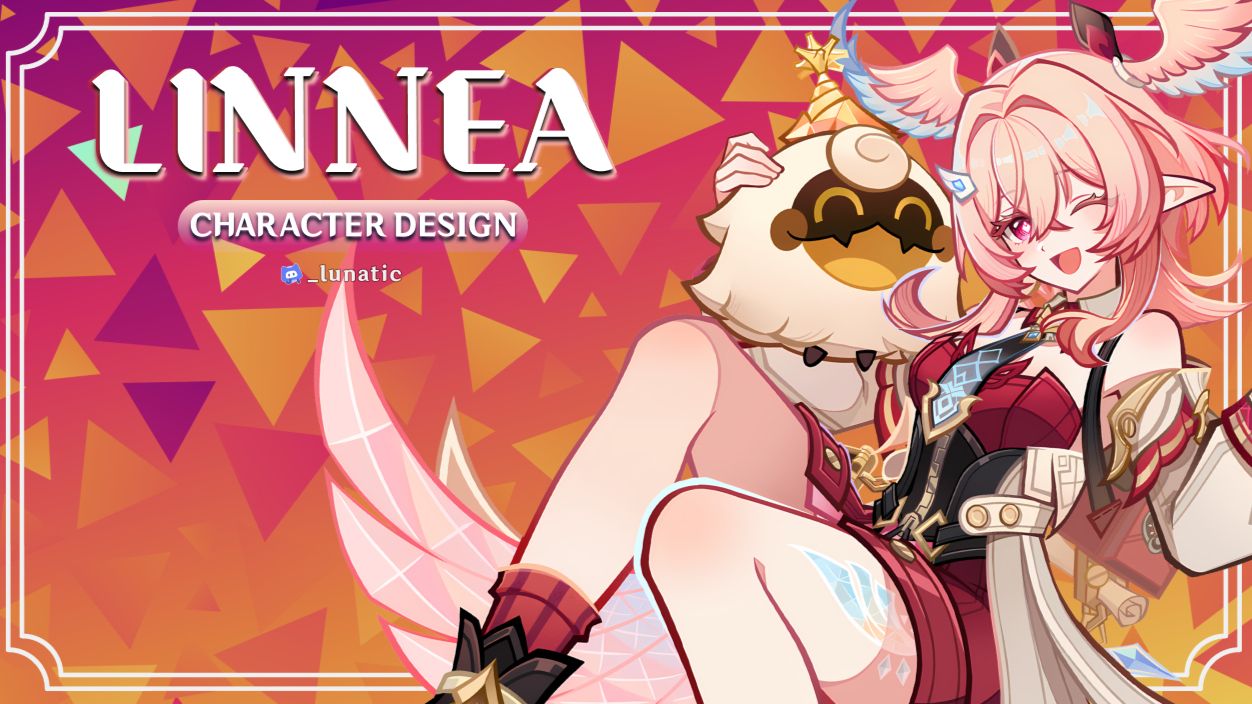
Hello, travelers! Ready to talk about Linnea?
When I first saw her, I thought she was just a cute design. Then I started pulling at the threads. Her name, her colors, her title - it all connects into something that feels genuinely intentional. This article is my attempt to lay that out, piece by piece.

Getting to Know Linnea - Name Origin
As usual, let’s start with a name that is already telling us a story. It's most likely tied to a small forest flower called the twinflower - or Linnaea borealis in scientific terms. This plant was named in honor of Carl Linnaeus, the 18th century Swedish biologist who basically created the system we still use today to name and organize all living things.
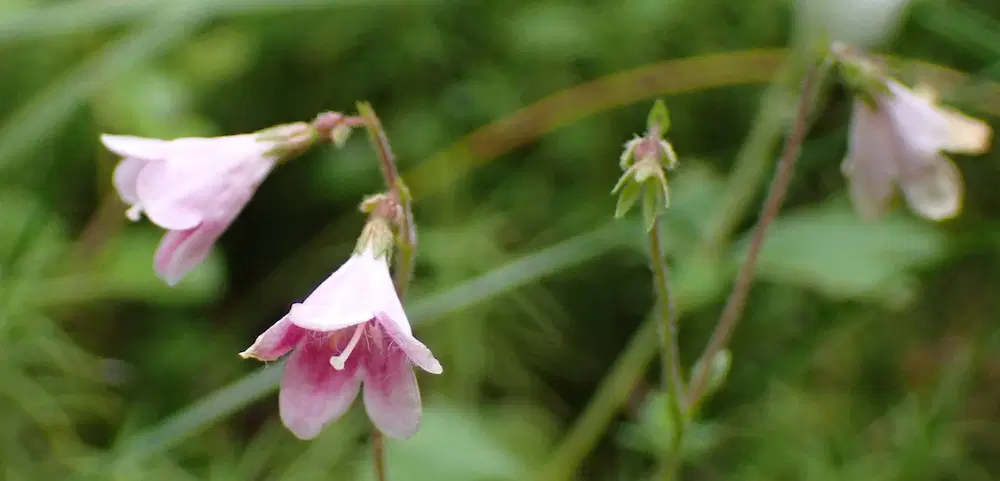
The image of the twinflower.
The connection to this flower is not just a fun Easter egg. Linnaeus himself described the twinflower as a "small and humble flower" - and that says a lot about the kind of character we are about to meet. Linnea can be someone who finds meaning in the small and overlooked, rather than the grand and obvious.
Visual References
Color Palette
One of the first things we notice about Linnea's design is that she has a color scheme deliberately breaking from Geo's usual golden-brown tones. Every Geo character from Zhongli to Navia has leaned into amber, ochre, and warm yellows - the colors of stone, gold, and earth. Linnea's palette of pink, crimson, and white evokes the twinflower itself: the flowers of Linnaea borealis are pink to white bell-like blooms.
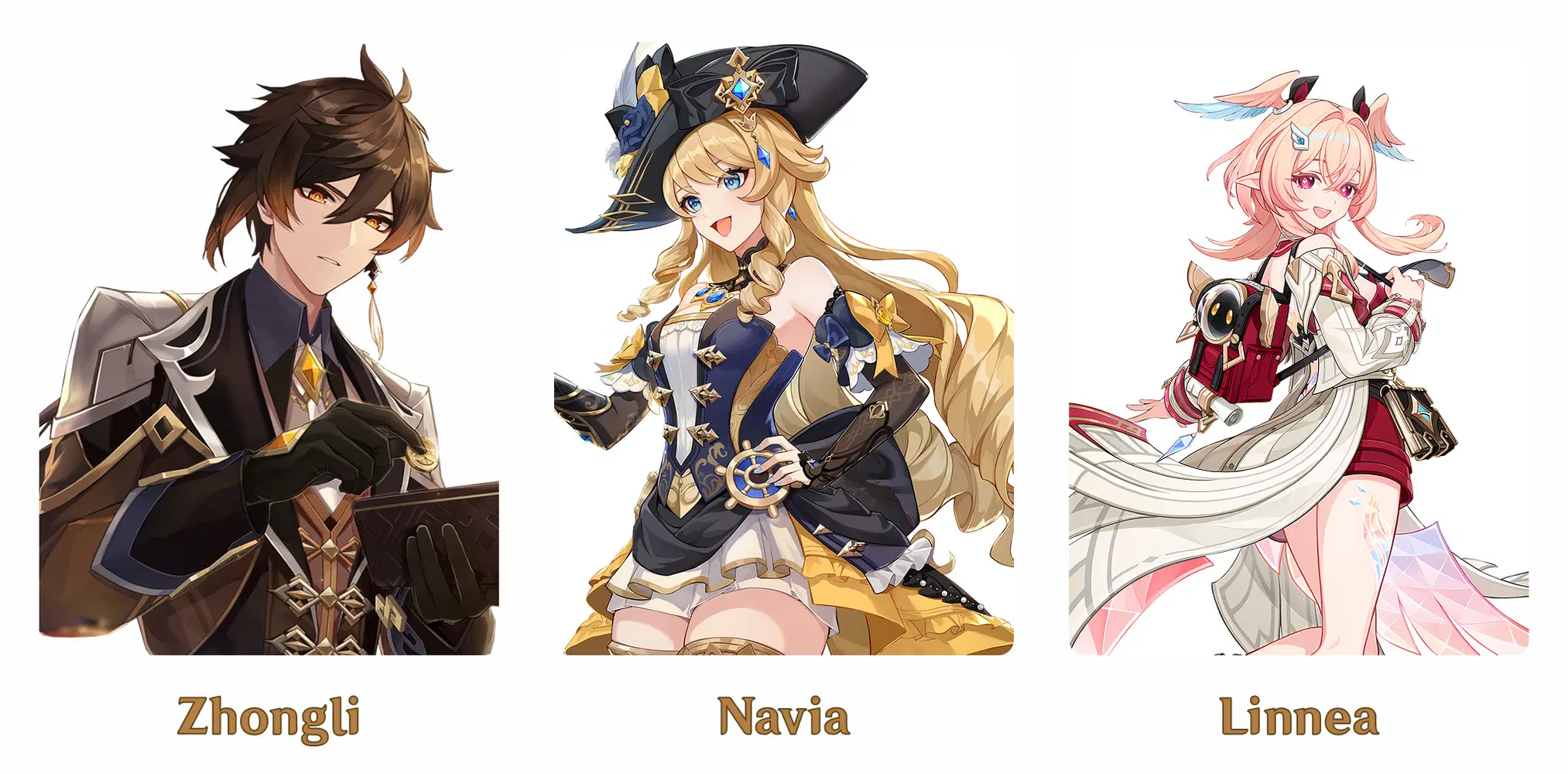
Pink says love, softness, warmth; and white says truth, something almost sacred. Put them together and you get exactly the vibe Linnea gives off: she's not tough like a rock (sorry, Zhongli), she's bright because she genuinely cares about every weird creature she encounters.
And then there's a crimson shade of red. It's easy to read it as just a bold accent, but I think it's doing something sneakier - it's a quiet reminder that Linnea isn't human. Not dangerous, not villainous, just... other. Behind all that cheerfulness is a Fae who has existed long enough to see things we can't imagine.
The Wings
Unlike Flins, who passes as basically human at a glance, Linnea's Fae blood is written all over her - in the form of a wing ornament that is described as real, not decorative. Flins keeps his true nature buttoned up behind polite, careful manners. Linnea just has her wings out for everyone to see. She is not hiding a single thing about what she is.
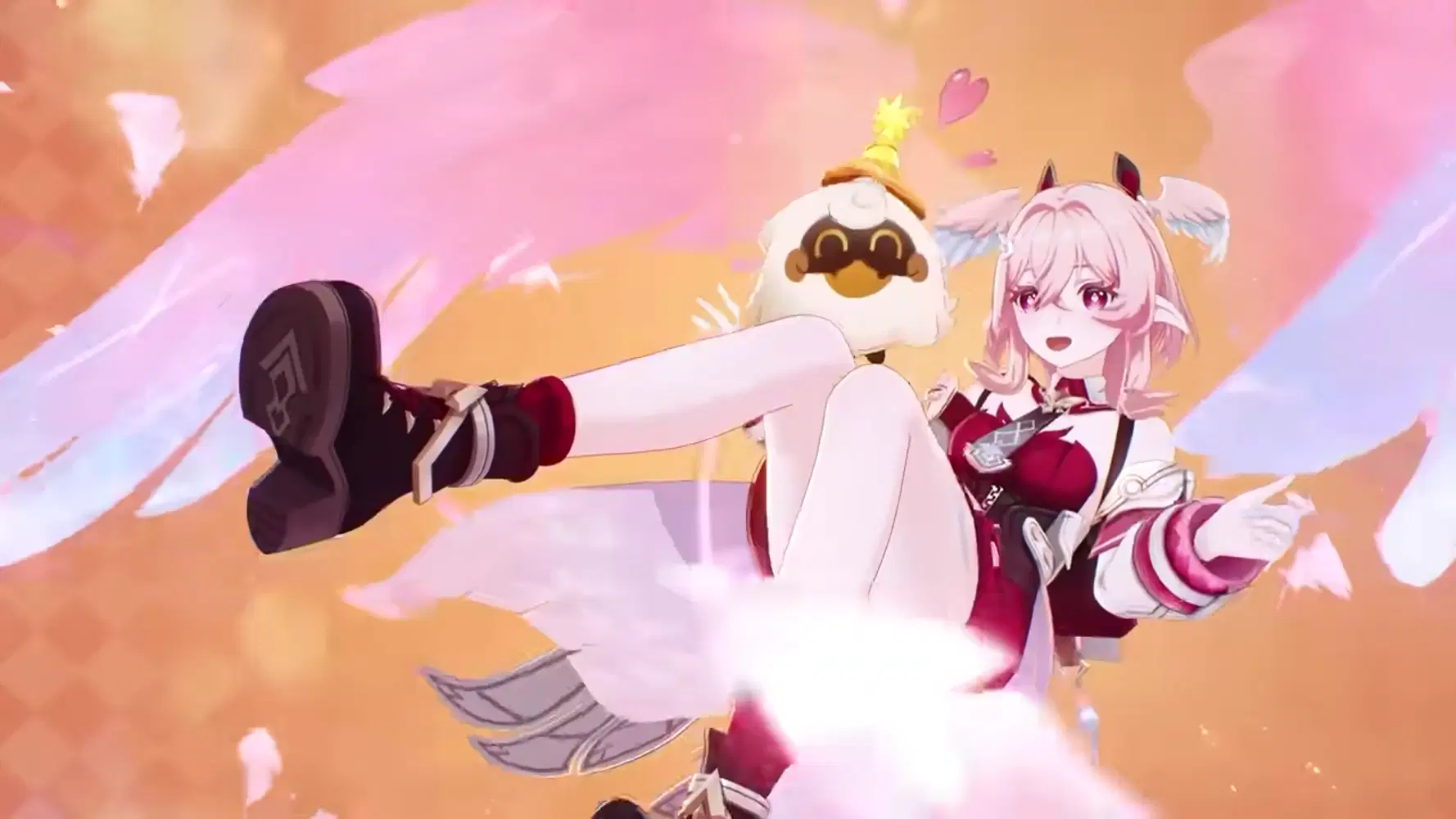
I guess she can fly freely, enlarging her wings.
Here's where folklore gets interesting, though - winged fairies are actually a surprisingly recent invention. Medieval and Shakespearean fairies had no wings at all, and the butterfly-winged fairy we all picture today only became standard at the beginning of the 19th century.
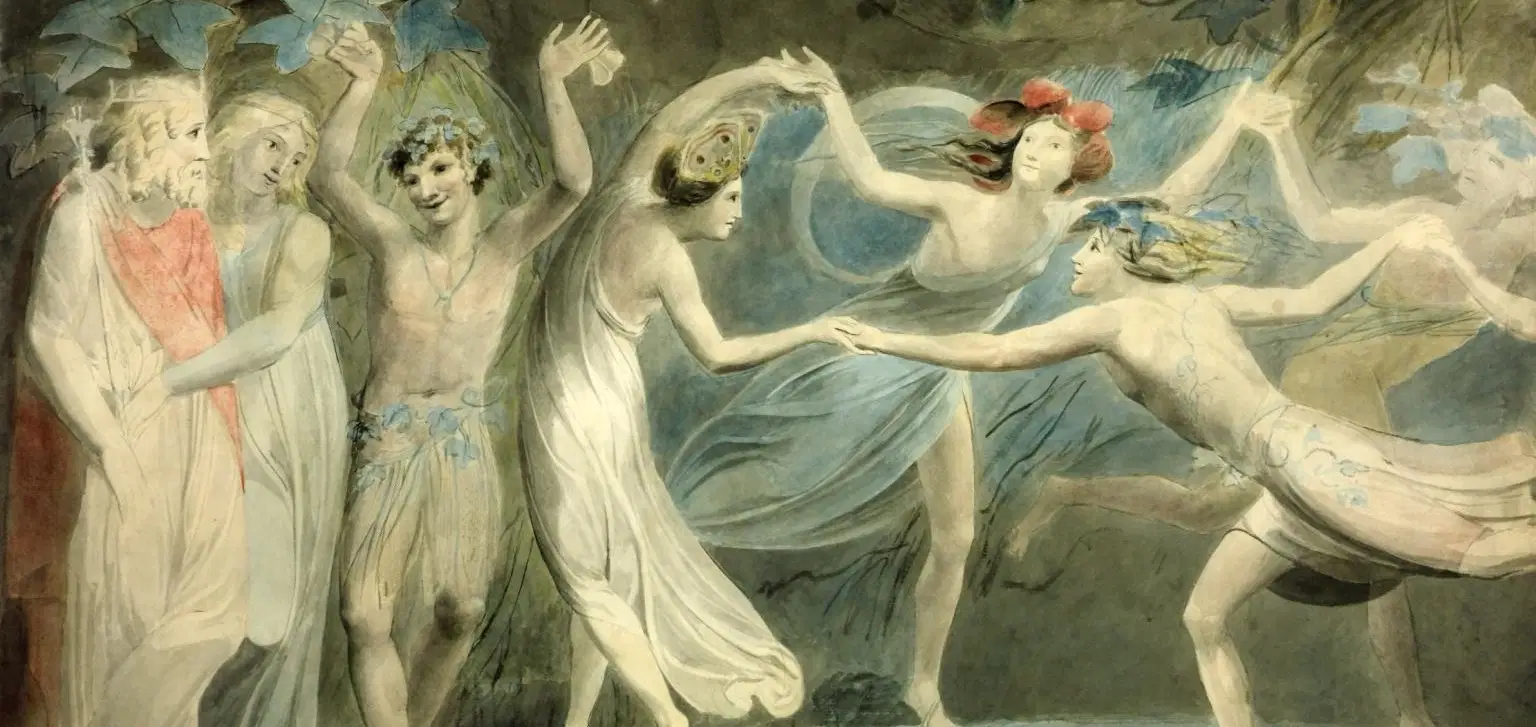
Dancing fairies (on the right) from Shakespeare’s “A Midsummer Night's Dream”
The Bow and the Net
Linnea uses a Bow - the weapon most associated with rangers, trackers, and explorers. But her relationship to the bow is uniquely her own. Outside of combat, her aimed shot transforms into a special arrow - which, when it hits specific animals, becomes a special Net that captures the creature's spiritual form that can be placed in your Serenitea Pot.
Her companion Lumi reinforces this: Linnea actively feeds Lumi gemstones during combat, their relationship is not commanding. Even in battle, she is a caretaker.
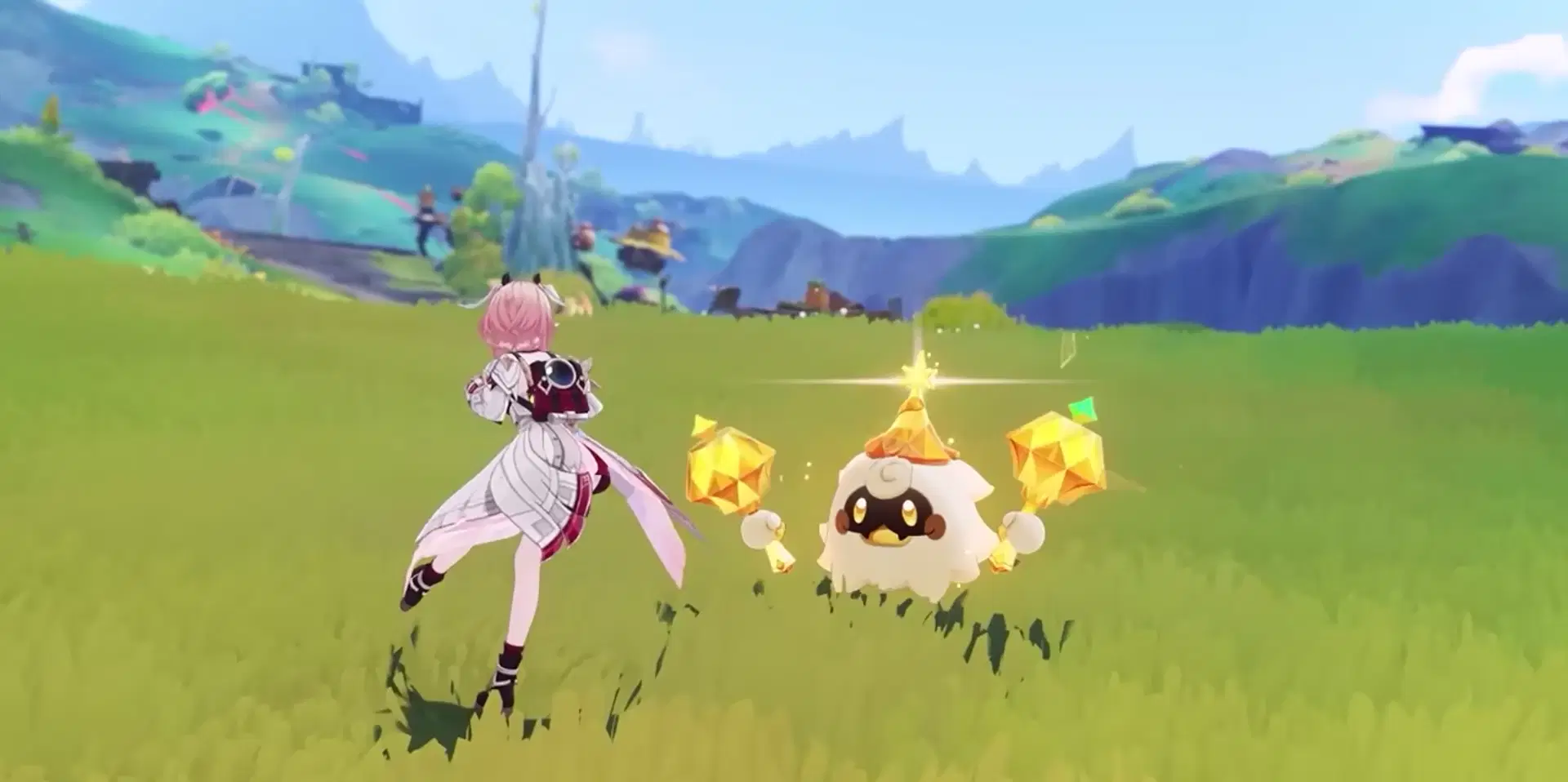
Linnea is about to feed Lumi.
"Augur of Wonders" Title
Her character title is "Augur of Wonders". An augur in classical antiquity was a priest who interpreted omens - typically from the behavior of birds and animals. The word's root connects directly to ornithology: to watch birds and read meaning in them.
Combine this with a Fae who studies life sciences, jumps on messenger birds out of excitement, wears real wings on her head, and fires nets rather than arrows - and her title snaps into focus. Linnea is someone who looks at the living world and finds prophecy in it. Not by imposing order on nature like a taxonomist, but by following the winding paths nature offers.
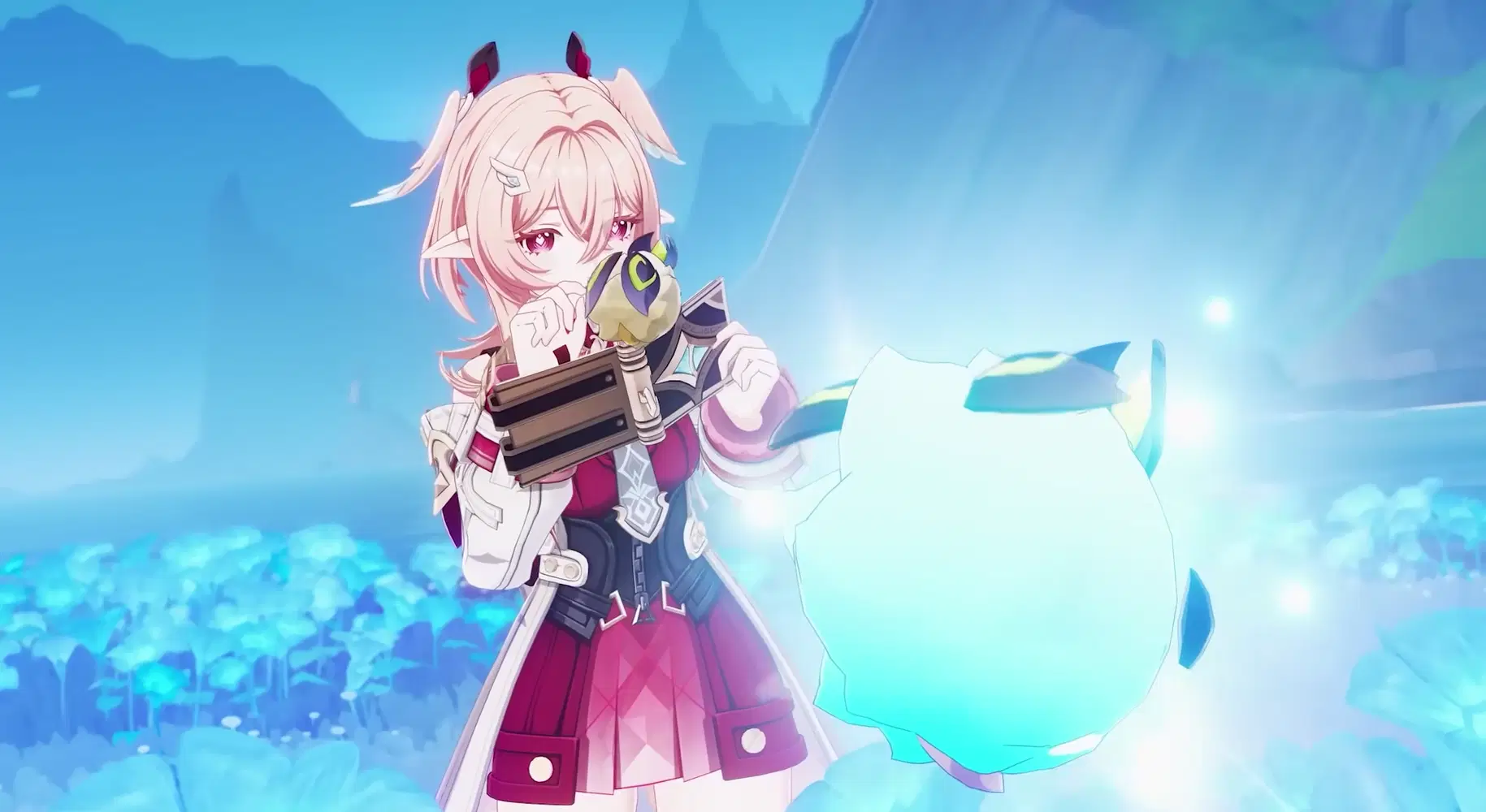
Linnea's design is hiding a surprising amount of detail if you know where to look - from her name being tied to a humble forest flower and her pink-and-white palette quietly mirroring its blooms, to the very real wing she wears without a hint of self-consciousness. Every piece of her design is saying the same thing: here is someone who finds wonder in the overlooked, and isn't ashamed of who she is.
Did you notice any of this before reading, or did something here catch you off guard? I'd love to know what other connections people are finding!