A new Mondstadt knight has arrived! At first glance, Lohen looks the part of the City of Freedom. Navy coat, silver epaulette, a chest crest shaped like wings. Another elegant knight you might say.
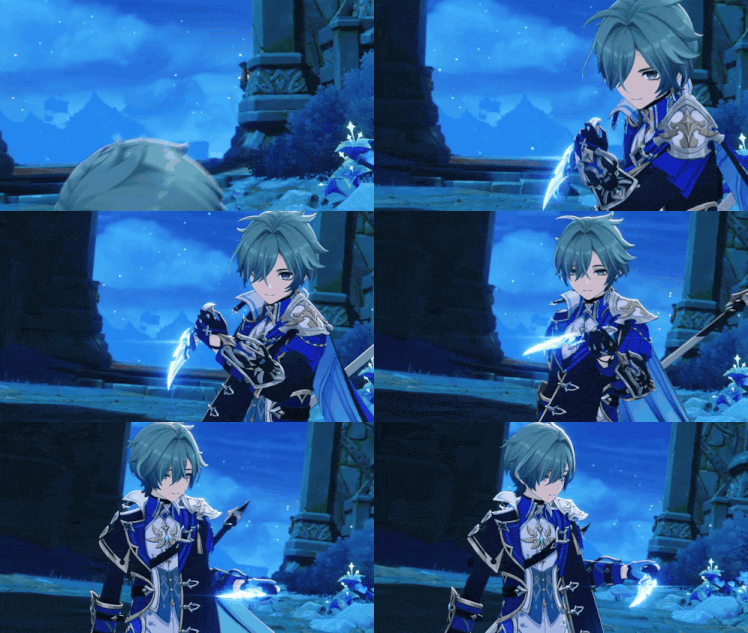
But let's look closer. There's a lot more going on. Don't worry, no story quest spoilers ahead 

Name Origin
Lohen's name may be lifted from Lohengrin — Richard Wagner's opera. The original Lohengrin was a Knight of the Holy Grail, the son of Parsifal, who arrived by swan-drawn boat to defend a woman in distress. He was a figure defined by mystery and by a condition: she could never ask who he was.
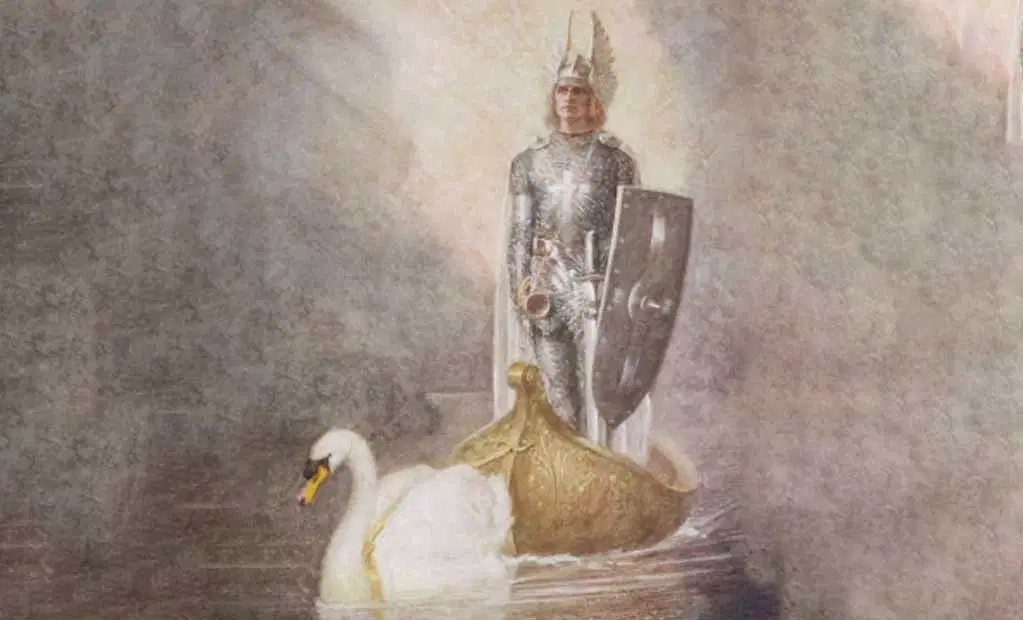
Image of Lohengrin from Wagner's opera
The reference goes deeper than just the name. All of Lohen's constellation node names are drawn from Wagner's operas — C1 and C5 reference Lohengrin, C2 and C3 reference Parsifal, C4 references Siegfried, and C6 is a translated line from Tristan und Isolde.
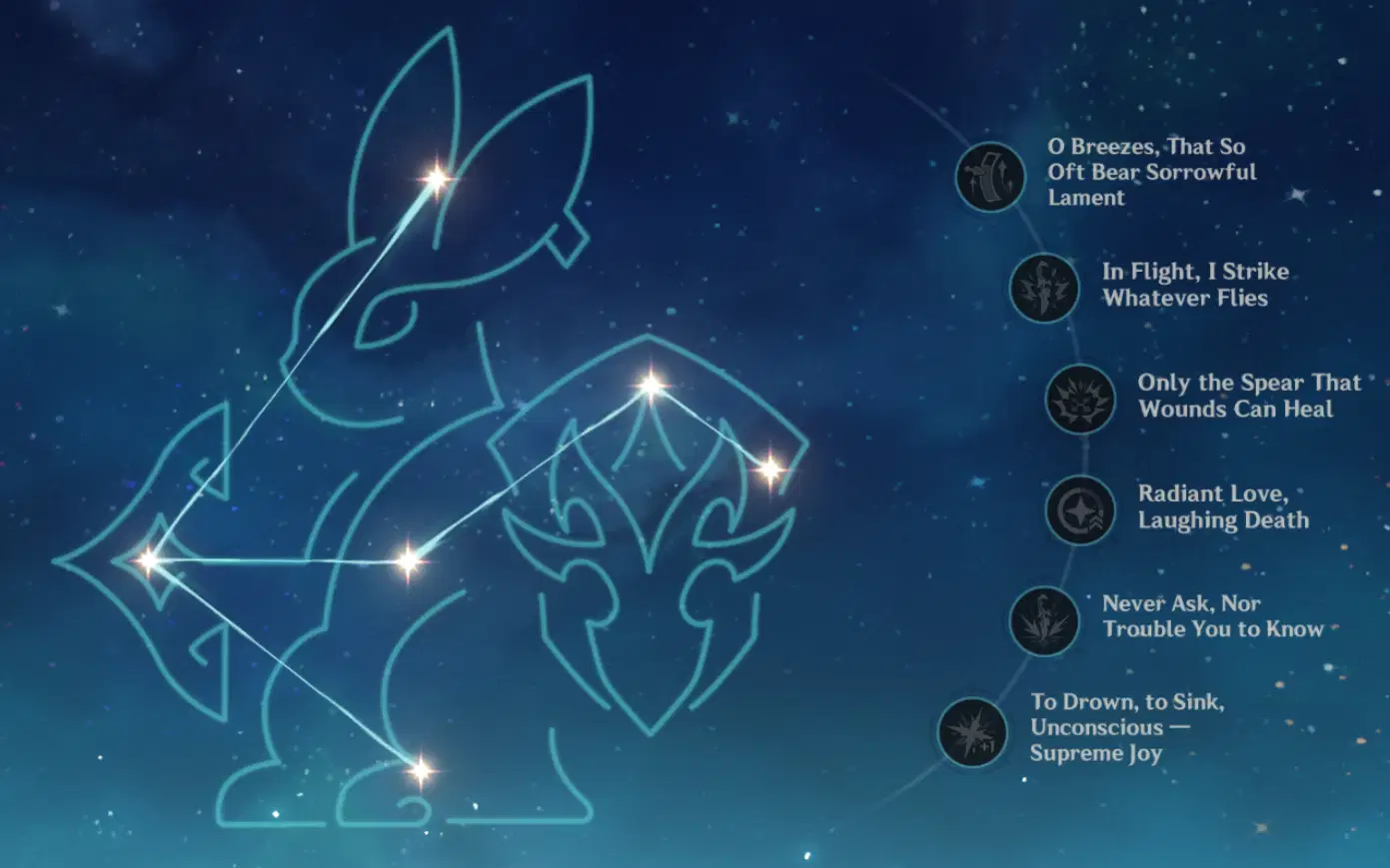
His entire constellation is a Wagnerian library — a character built out of heroes who arrive from elsewhere, carry secrets, and are defined as much by what they don't say as by what they do.
Constellation Meaning
Lohen's constellation is called Lepus Miles, which translates to "Rabbit Knight" — a nod to his fellow knights Jean and Varka, who have lion- and wolf-themed constellations respectively.
But there's one more detail here. Amber's constellation is also Lepus. Lohen is, in a sense, a Rabbit Knight where Amber was simply the Rabbit. Two Mondstadt characters, both linked to the hare constellation, but one is a cheerful outrider, the other is a vice-captain of the Ranged Company.
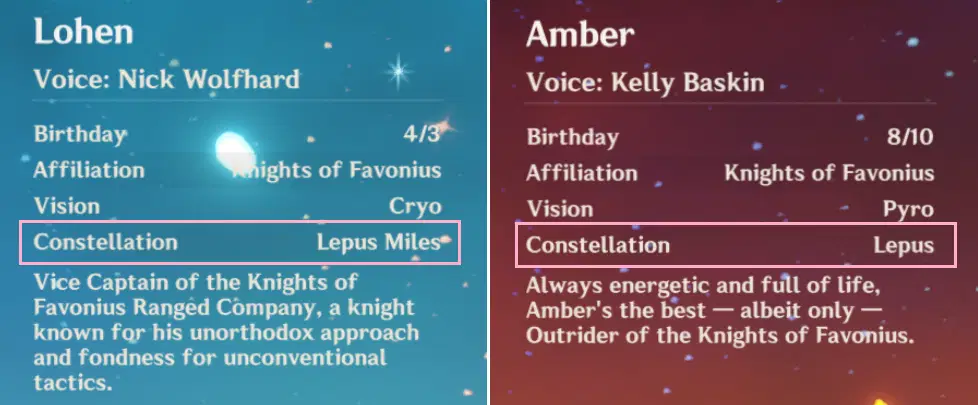
In classical astronomy, Lepus is the hare being chased by Orion and his hunting dogs, it sits directly below Orion in the sky, perpetually fleeing. The hare in this tradition is prey. It runs — that's its role. Miles means soldier. The full name takes the constellation that represents prey and gives it a rank. The thing being hunted becomes the thing that fights back.
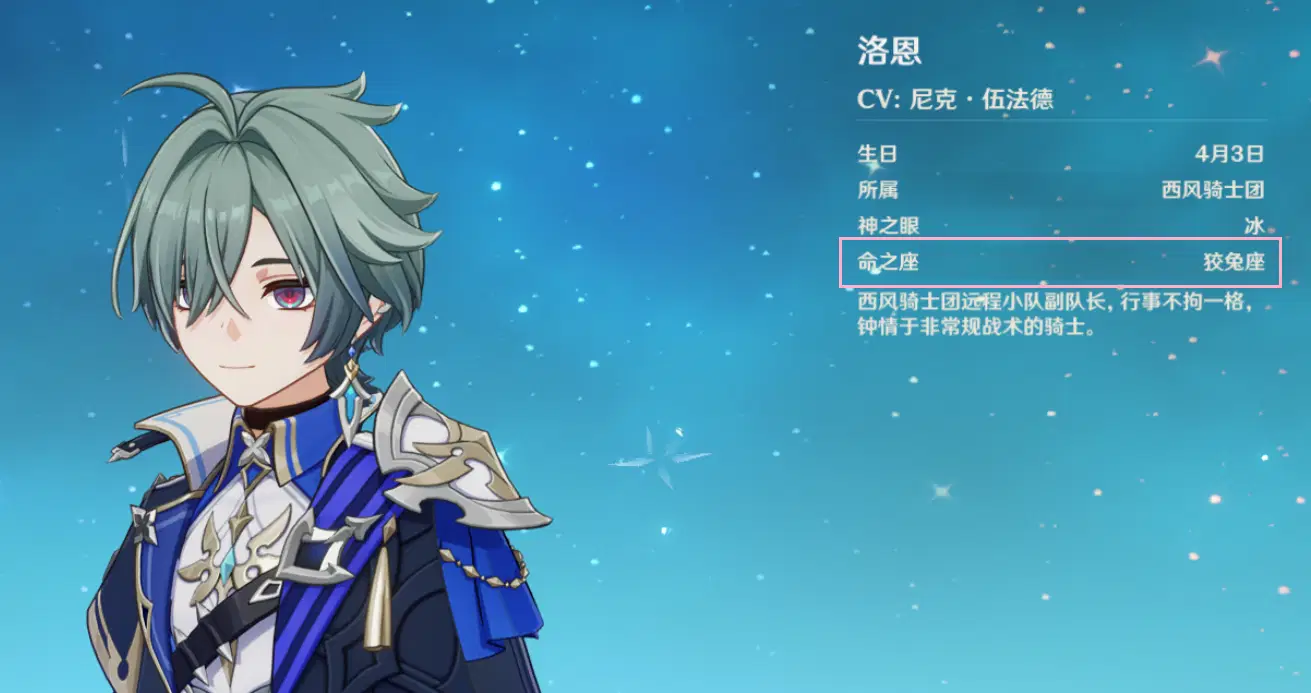
In Mandarin, Lohen's constellation is written 狡兔座 — where 狡 means sly or cunning, and 兔 means hare. Amber's Mandarin constellation name uses a neutral word for rabbit. Same animal but completely different characters.
Banner Title
Lohen's banner subtitle is Sharpened Arrowhead. On the surface it sounds like a standard medieval-weapon epithet. Then you look at what he does on the battlefield, and the title stops being decorative.
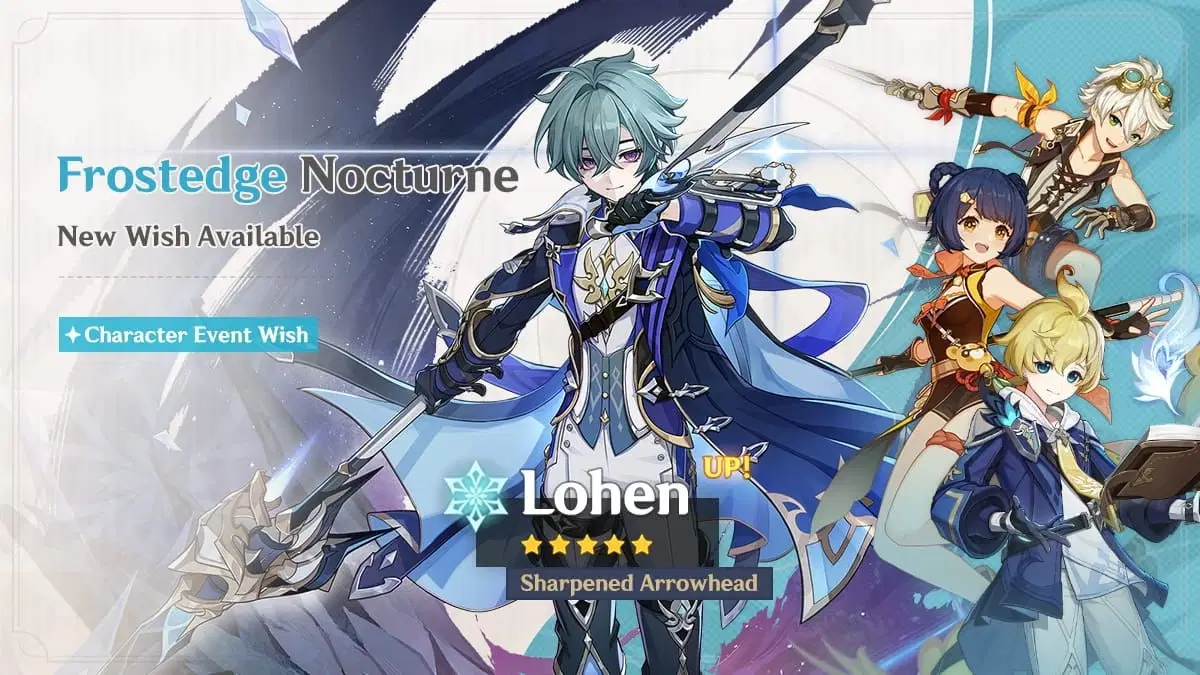
Lohen is the Vice Captain of the Ranged Company. While his teammates are still forming up in the rear with crossbows and muskets, the young knight who should be taking cover has already charged past the line, spear in hand, meeting the most dangerous enemies head-on.
His own unit had two answers ready for anyone who asked why he fights like this. As long as he stands on the front line, no enemy can get close — and everyone else can confidently provide fire support. And when he charges forward, no enemy can hold their position. He becomes the sharpest arrow in the entire company.
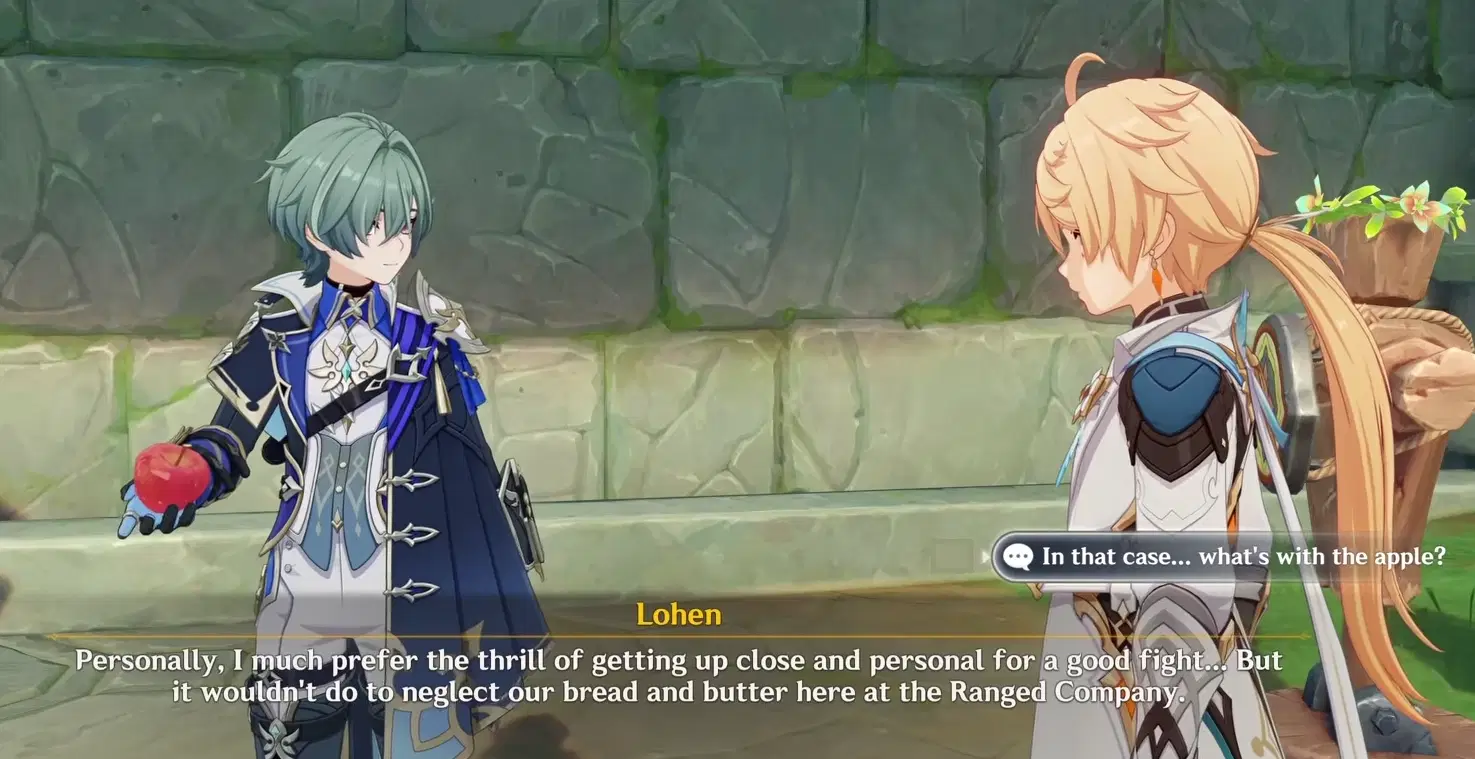
For Lohen, there is no superior or inferior distinction between weapons or tactics, only varying degrees of efficiency. He will snipe from a distance if the situation calls for it, and he will wield his spear when the time is right.
Lohen vs Tartaglia
On the surface the comparison is obvious. Both are members of a ranged combat unit who almost never use their ranged weapon. Both charge into melee against the most dangerous enemies. Tartaglia is described as a bloodthirsty warrior who lusts for combat and grows excited by fighting strong opponents, even if it could mean dying in the process. Varka said almost the same thing about Lohen that he fights because he likes it, not because he's seeking glory or honor.
Same personality type. Same fighting style. But look closer, and the reasons they do this are completely different —
- Tartaglia uses bows because he is weakest with them, making his victories with them all the more exhilarating. It's a self-imposed handicap. A way to make every fight harder, more dangerous, more worth having. The bow is a challenge he sets for himself.
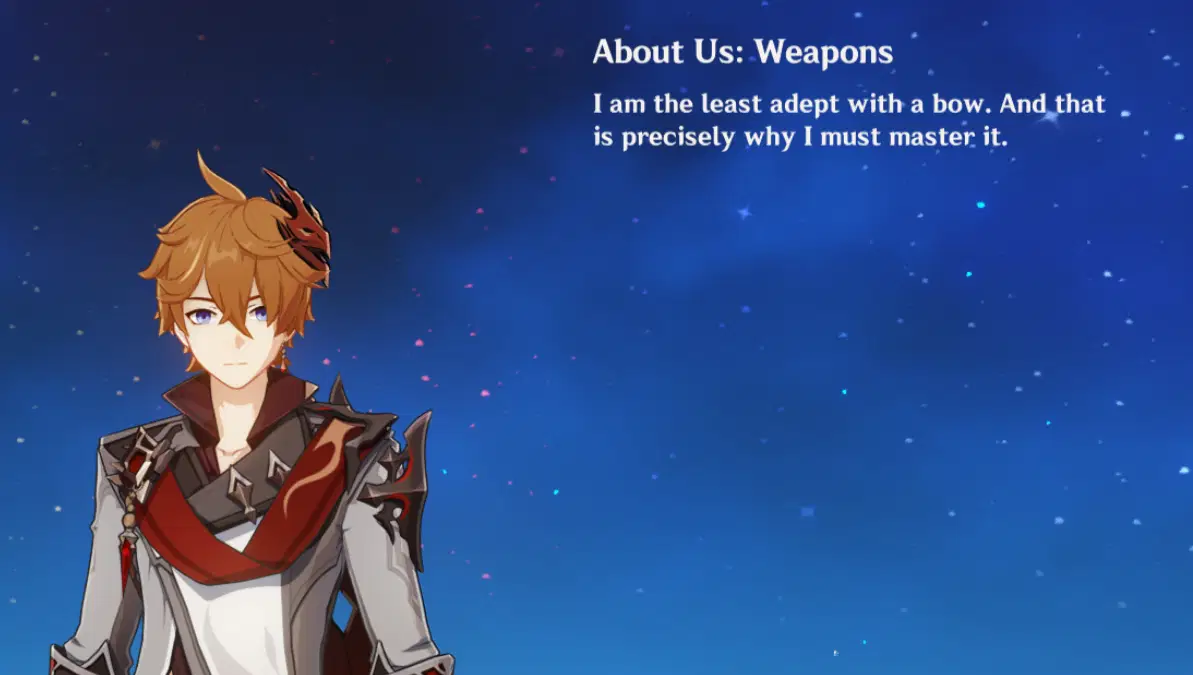
- Lohen uses a polearm because it's faster. The better tool. It's not about challenge — it's about outcome. He goes to the front line not for the thrill of fighting at a disadvantage, but because holding the front line is the most efficient way for his unit to win.
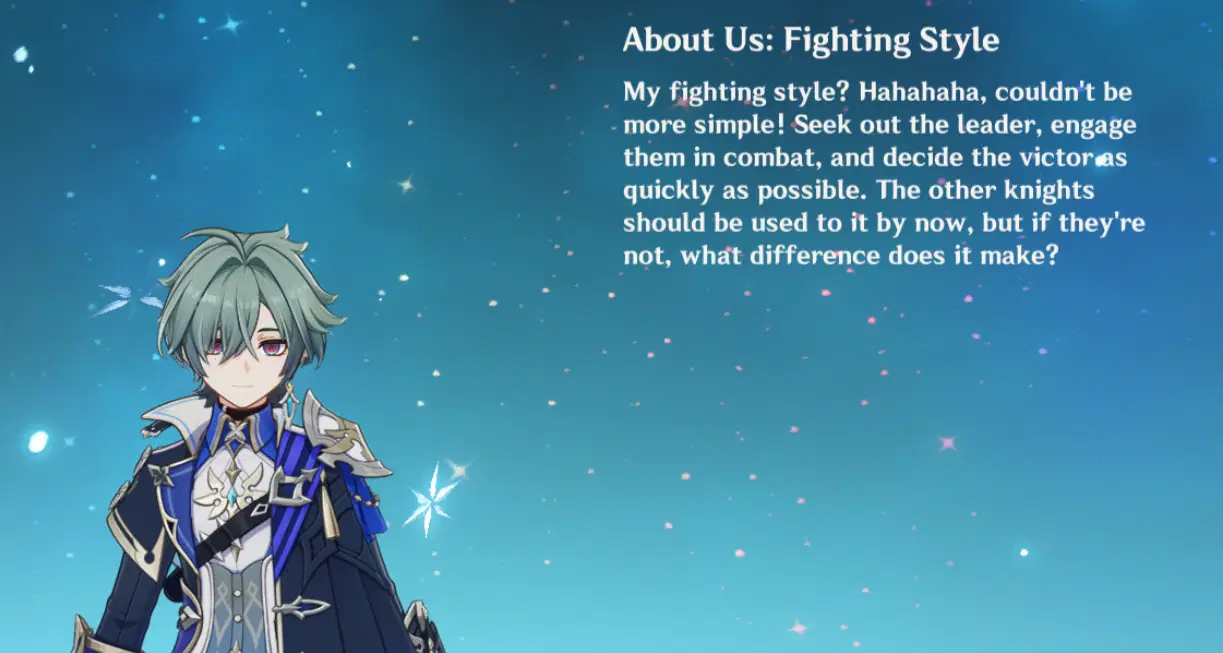
Tartaglia fights in the hardest way possible because that's what makes it feel like living. Lohen fights in the most effective way possible because winning is the point. Two fighters who love to fight. One turns that love into destruction. One turns it into a shield.
Final Thought
For someone who serves in a ranged company, Lohen spends an awful lot of time on the front line. He doesn't fight with a polearm because it's dramatic and he doesn't charge ahead because it's reckless. He does it because, in his eyes, it's the most effective way to protect the people behind him.
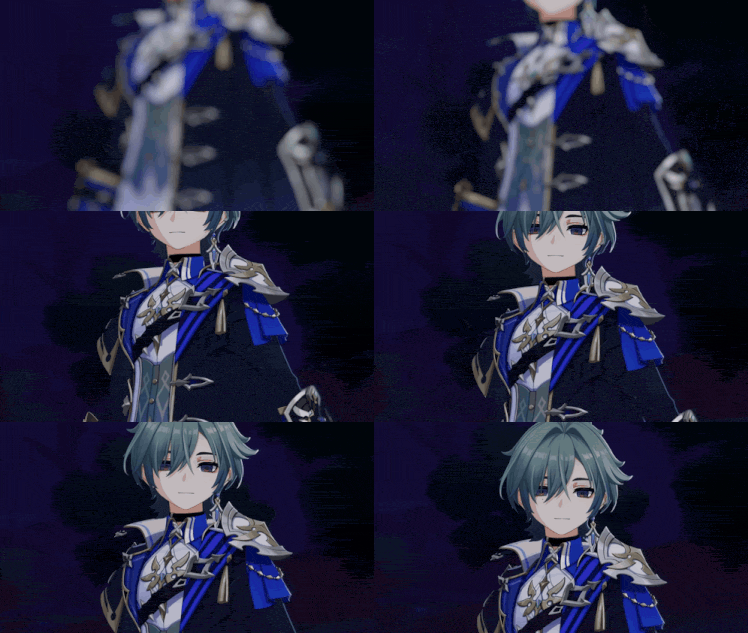
Beneath the elegant uniform and knightly image is a character built around a simple idea: when the battle begins, someone has to be the first to step forward. Lohen has already made that choice.
Thanks for reading all the way through. It genuinely means a lot  If you enjoy this kind of analysis, I write about other Genshin characters too. There's more in this collection


I also have a deep-dive analysis of Lohen if you want to know more