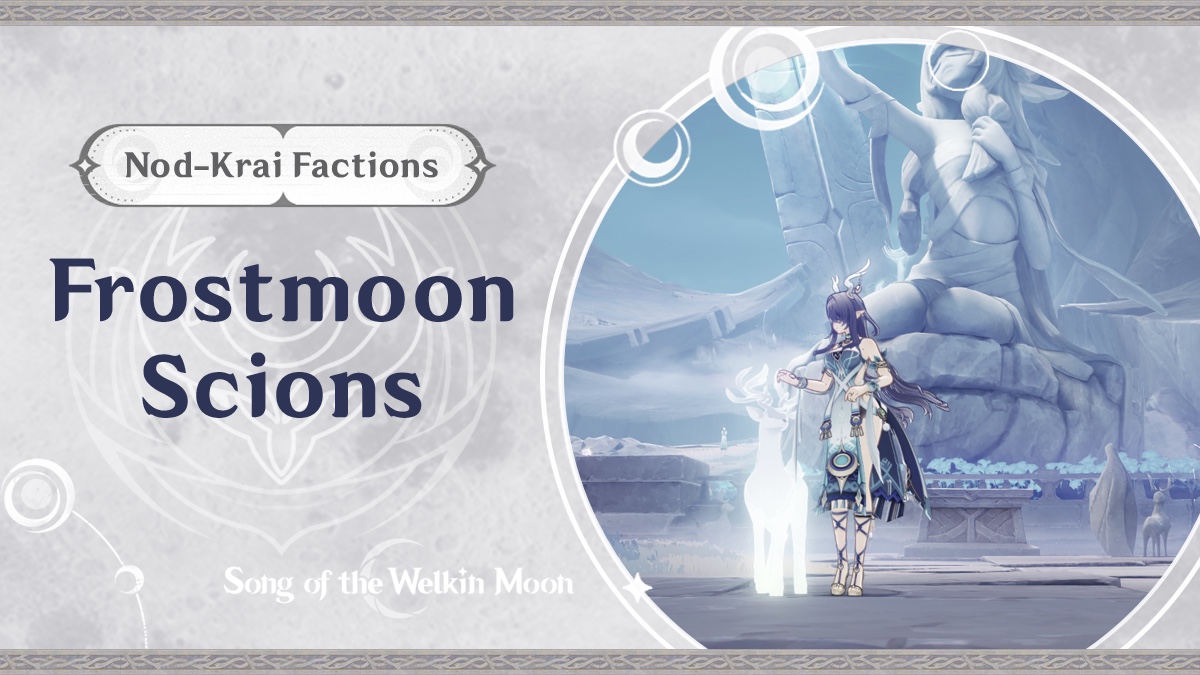
The story of Nod-Krai has come to an end, so let's learn more about it.

Frostmoon Scions
More than 6,000 years ago, Three Moons shone in the sky: the Eternal Moon, the Frost Moon, and the Iridescent Moon. They were created by Teyvat's original creator, Nibelung, before he set out to find salvation for his world. He raised three moons from the ground and bound the world with the chains of the tides. Moonlight would illuminate the bountiful land until the dragon returned from the mist-shrouded realm, but millennia passed, and Nibelung didn’t return. Until one day, the winged Descender appeared, treading upon the morning star.
It was not the great enemy that would extinguish the stars, nor did it seem intent on plundering the wellspring sustaining the world's existence. Faced with this uninvited guest, the three guardians who represented the will of the planet debated endlessly: the youngest sister opposed the Descender, but the elder sisters decided to see what would happen. The Heavenly Principle created angels and humans, led by the heavenly messengers. They wandered among the dark mortals, sowing prosperity and wisdom everywhere, and eventually, this prosperity ignited the flame of reason, which awakened a whisper of doubt.
Over time, the Moon Goddesses began to notice that their love differed from that of the Heavenly Principles. The Descender believed that free will invited nothing but uncertainty and calamity, and that mortals who transgressed the laws of reason must be punished. They bore an almost paranoid hostility and fear toward the desire of certain life forms to seek power and destroyed insufficiently sacred civilizations. They cast down celestial nails to punish the civilizations of the world below. Their rules brought order, but the price of testing them was far too great.
In a single night, Hyperborea fell, and across the frozen northern plain, dark blue crystal nails annihilated every last city. Only those who were far from the cities survived. With no refuge left to them, they simply waited for destruction to find them. The gods remained silent until the Goddess of the Frost Moon, Canon, answered them. Moved by pity, Canon heeded the survivors' prayers.
Canon spun gleaming threads from the silver glow to lead the displaced across the frozen plains, and where her tears fell upon the soil of the far north, they blossomed into lilies that would stand eternal in the icy winds. The descendants of Hyperborea called themselves the Frostmoon Scions, in honor of the divinity who gave humanity new life.
When Three Moons still shone in the sky, the people of Hyperborea learned to use the lunar tides to power their magics but were in turn affected by those same ebbs and flows, and some of them had horned crowns akin to deer antlers grow from their heads. Legends have it that the antler crown of Moonchanters today was a gift from the Frost Moon at the moment of its obliteration.
Hyperborea’s Legacy
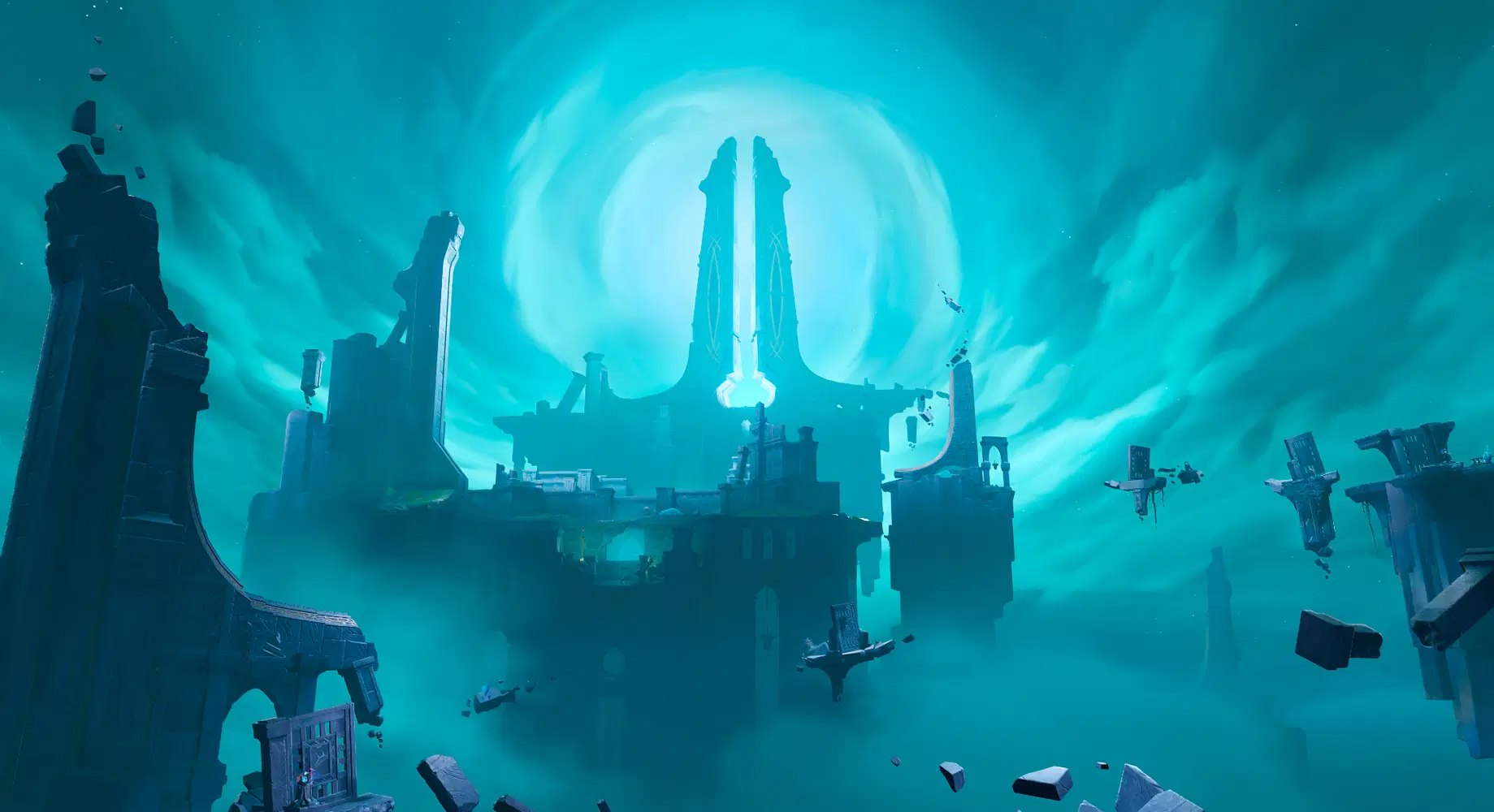
More than 6,000 years ago, the first angel transferred the power of creation from the Heavenly Principle into the hands of mortals. Turning to forbidden methods, artisans forged countless Fae spirits upon the bones of giant beasts. Furthermore, under the guidance of the first angel and the voyager from a distant world, the Hyperboreans launched the "Elysium Project." They hoped to transform the world into an Elysium for humankind alone. After experimentation, they mastered the power of tailoring and refining the Seeds of Life. The new humans born were supposed to wield elemental forces at will.
The Hyperboreans left the Frostmoon Scions with several devices created with the help of the Mekhaneikos. The only supremely advanced device was the Subatomic Assembling Mass-Energy Patterning Orb, later called the Sampo Mill. It was designed to reconstruct matter at the subatomic scale, or to transmute matter into stable energy. Although its structure remained intact, the device was unusable because the collaborative control module connected to the device was lost during the fall of Hyperborea and couldn’t be replicated with existing technologies.
One of the priestesses proposed using a controlled input of energy from the two Realms at a specific carrier frequency to bypass the collaborative control module and forcibly initiate the SAMPO, but an assessment revealed that the proposed protocol was unsafe, as it risked destabilizing the system. Following the discussion, it was decided to seal the device indefinitely without re-evaluating its feasibility.
The SAMPO gradually transformed from a device into a religious symbol. They believed that only the heir foretold in the prophecy could awaken the Mill and create an Elysium for them. The Frostmoon Scions sacrificed wheat, goat's milk, and salt to the Sampo Mill to protect them from disaster, and appointed priestesses to chant hymns day and night to ensure a rich harvest and prosperity.
The Frostmoon Scions also continued the Elysium Project (Sacred Heir Project) of the Hyperborean era. Since the core processes of the Tekhneikos and the Mekhaneikos apparatus, including the process of creating Fae and editing the Seeds of Life, were lost during the fall of Hyperborea, it was decided to purify the blood of the Frostmoon Scions through controlled selection. They identified the most suitable pairs and persuaded them to marry. It was assumed that this would result in the birth of the prophesied Sacred Heir, who would freely command the elemental forces at will without resorting to ritual implements or sacrificing their soul, thereby achieving fusion with the world.
A low-tier device of the Mekhaneikos, created during the Hyperborean era and preserved to this day, is the Arrow of Terpikeraunas. This device is designed to solidify the Light Realm energy and purge the Void Realm contamination. Unlike the Sampo Mill, the Arrow of Terpikeraunas could be restored and reused. Over time, the device also acquired religious significance, so priests prepared sacred oil and then anointed their bows and arrows with it.
Sacred Heir
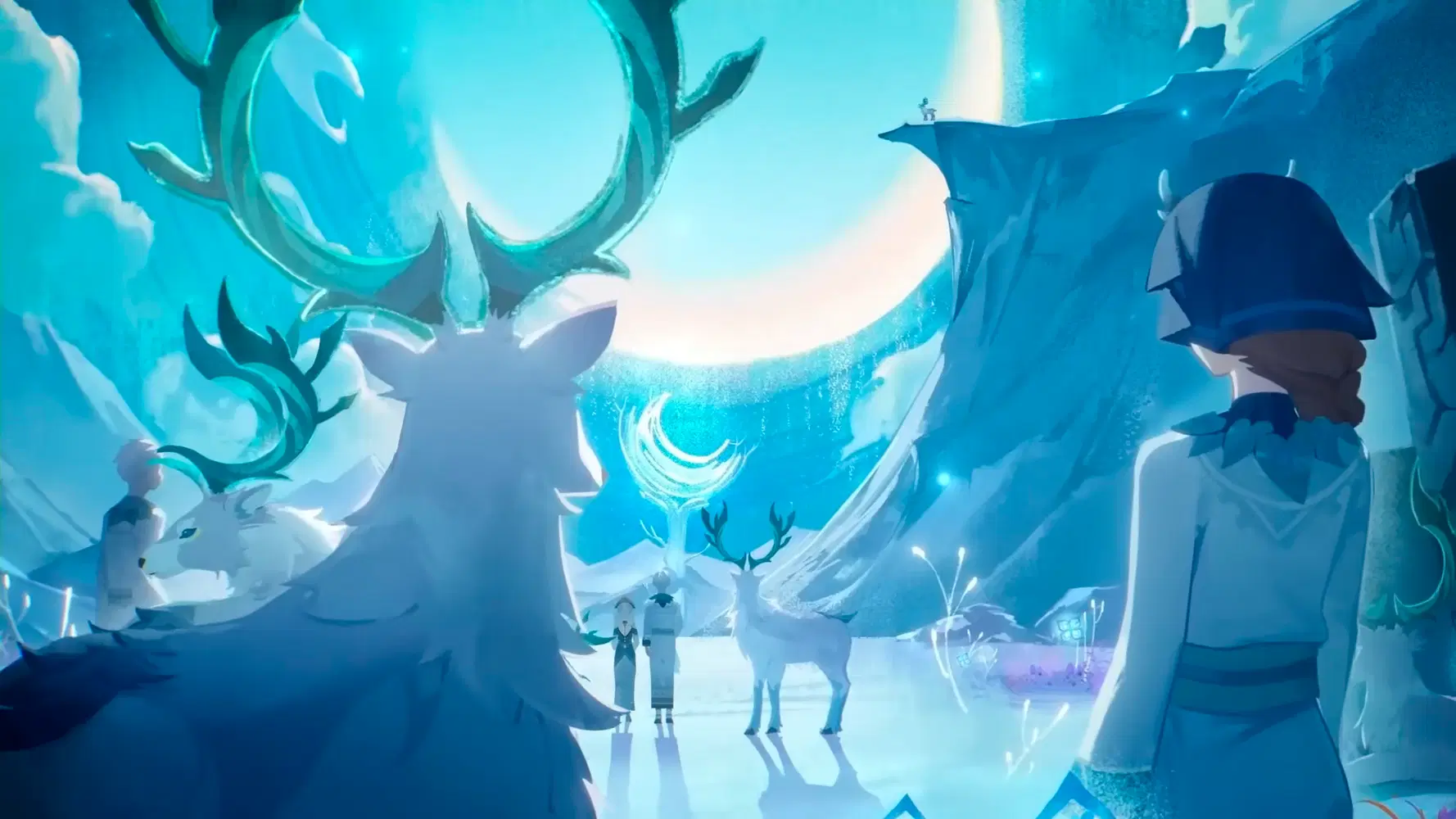
More than 500 years ago, an outsider named Lovia was adopted by the Archpriestess. The girl firmly believed in all that was "right," and therefore, only by choosing the absolutely "right" path could all things be brought to happiness. As the hearts of the Frostmoon Scions grew ever more distant and the whispers of doubt ever louder, the Archpriestess placed her adopted daughter upon the sacred throne, hoping that her kindness would pacify the disunited flock, even though the bright moonlight never flowed through her veins.
Lovia firmly believed in this truth, casting a compassionate gaze upon her flock, until her sworn younger sister, a maiden of the purest blood, sacrificed herself, protecting Lovia from a traitor. Then, Lovia realized that the path she had chosen had not been the "right" one at all, and that her gentle kindness had been an unforgivable lie. The Archpriestess believed this could be the only salvation for lost souls, and anyone who dared challenge this would be washed away in blood for their crimes.
According to prophecy, the daughter of Lovia's younger sister was to bear a sacred heir destined to rule Elysium. But when the girl met a young man from Snezhnaya, she fell in love and abandoned her mission for him, even cutting off her antlered crown. She wanted her unborn son, Avrelian, to live in peace and joy, never to set foot on the lands of Nod-Krai or believe in dreams of "Elysium." But Avrelian's voice, which she had never heard before, always whispered to her from the dead end of darkness and pain: "I shall bring an end to the warriors of this land and raise a boundless Elysium in their place. I do this not to be king, but so that no other can ever claim that role."
Dreaming of creating an "Elysium," the Archpriestess Lovia allied herself with the Belyi Tsar’s favorite, the mad monk, Rotwang. One day, he saw a pitch-black Elysium and desired to attain it. When Rotwang sent spies to capture the maiden and return her to her homeland, the girl saw her lover's blood spilling beneath her feet and slit her throat. Lovia then turned to a lesser branch of the bloodline for spares, but the twin sisters, Aila and Alia, born into this family, were pale shadows of the maiden they were destined to replace. This meant that hundreds of years might pass before a child of sufficient purity would be born, and Lovia was not prepared to wait. To purify the sisters' blood, she began feeding them the blood of the Frostmoon Scions.
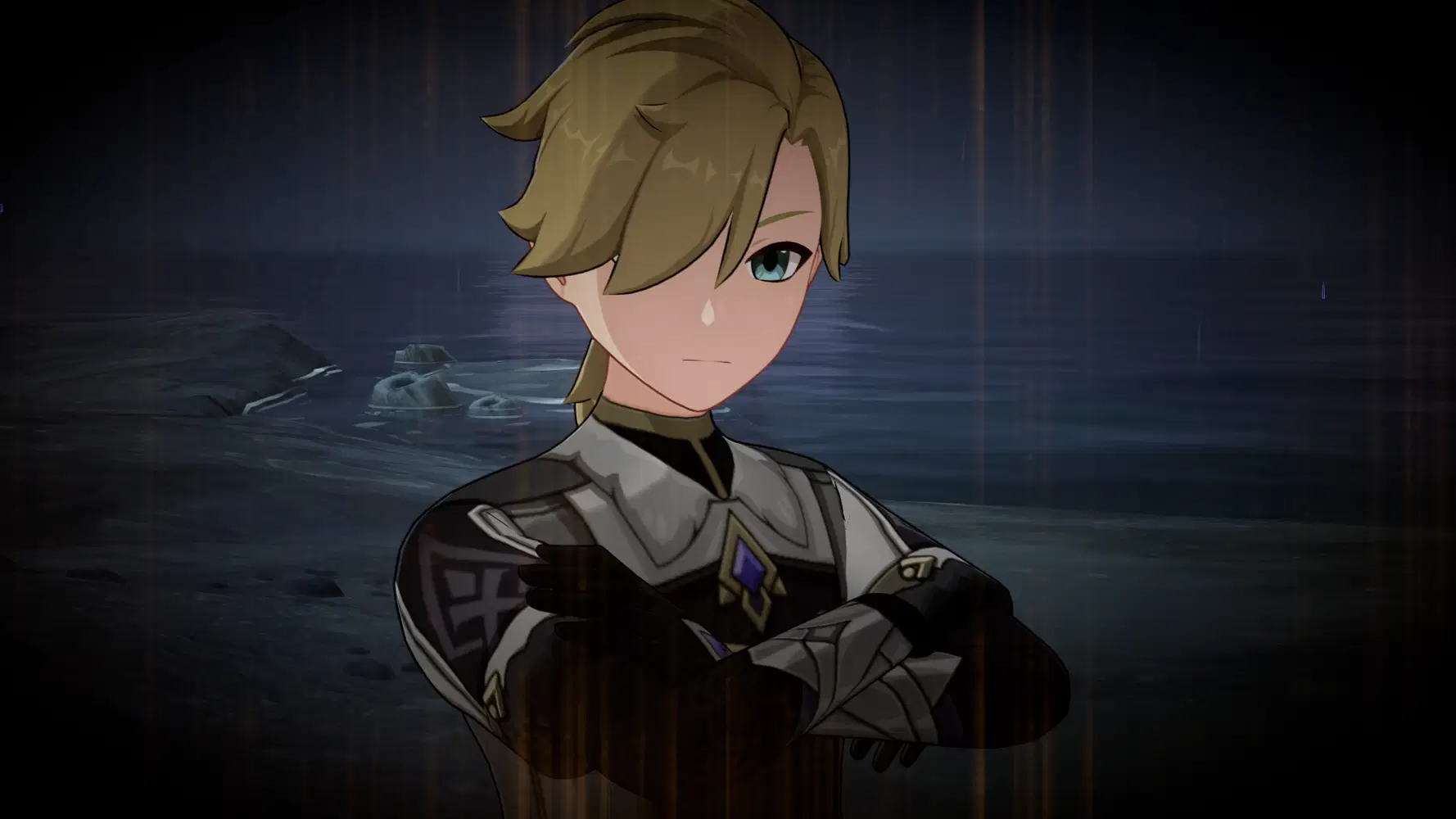
The Archpriestess was unaware that the blessed maiden had given birth to a son, Avrelian. After the loss of his parents, Avrelian was adopted by a private officer named Mikhnenko, and thanks to this, the boy was able to enroll in the Snezhnayan Royal Military Academy. But shortly after Avrelian was promoted to officer, he was marked as "died in the line of duty," a plot hatched by Rotwang and the Duke of the Pale Star court. Avrelian later returned to Nod-Krai and became the great thief Reed Miller.
When Avrelian returned to Nod-Krai, Alia fled with him, leaving Aila alone. From then on, all hope for the birth of the sacred heir fell on the younger sister, and she grew up under the control of the Archpriestess, never forgiving Avrelian. For the Frostmoon Scions, Alia became a traitor whose name was erased from history. Aila carried out every last one of the Archpriestess's commands, no matter how dreadful the punishments cloaked by her soft words.
To achieve his goals, Professor Rotwang convinced Avrelian to obtain the Sampo Mill from the Frostmoon Scions, promising they would create an Elysium together, and that's when Alia met him. Back then, the entirety of Hiisi Island was encircled by a golden wall. Later, he was convinced by a friend to walk away from the Treasure Hoarders, leave everything behind, and go to Snezhnograd to explain himself to the Belyi Tsar. However, he was promptly sent to his death without so much as a glimpse of the Tsar.
After Avrelian's death, a man named Solovei arrived in Nod-Krai and began to interfere with Lovia and Rotwang’s plans. When he met Aila, the Archpriestess wanted to convince the girl to use her wisdom to lure him to the sanctuary and pierce his heart with a sword from behind to sever the thread of his evil. The only answer the Archpriestess received was silence, which she took for agreement. The girl’s long-term obedience made her sincerely believe that suffering never caused her to feel resentful. And when Aila realized that the Archpriestess had deceived her and pierced her with a blade made of pure silver, Lovia could not understand the reason for this betrayal.
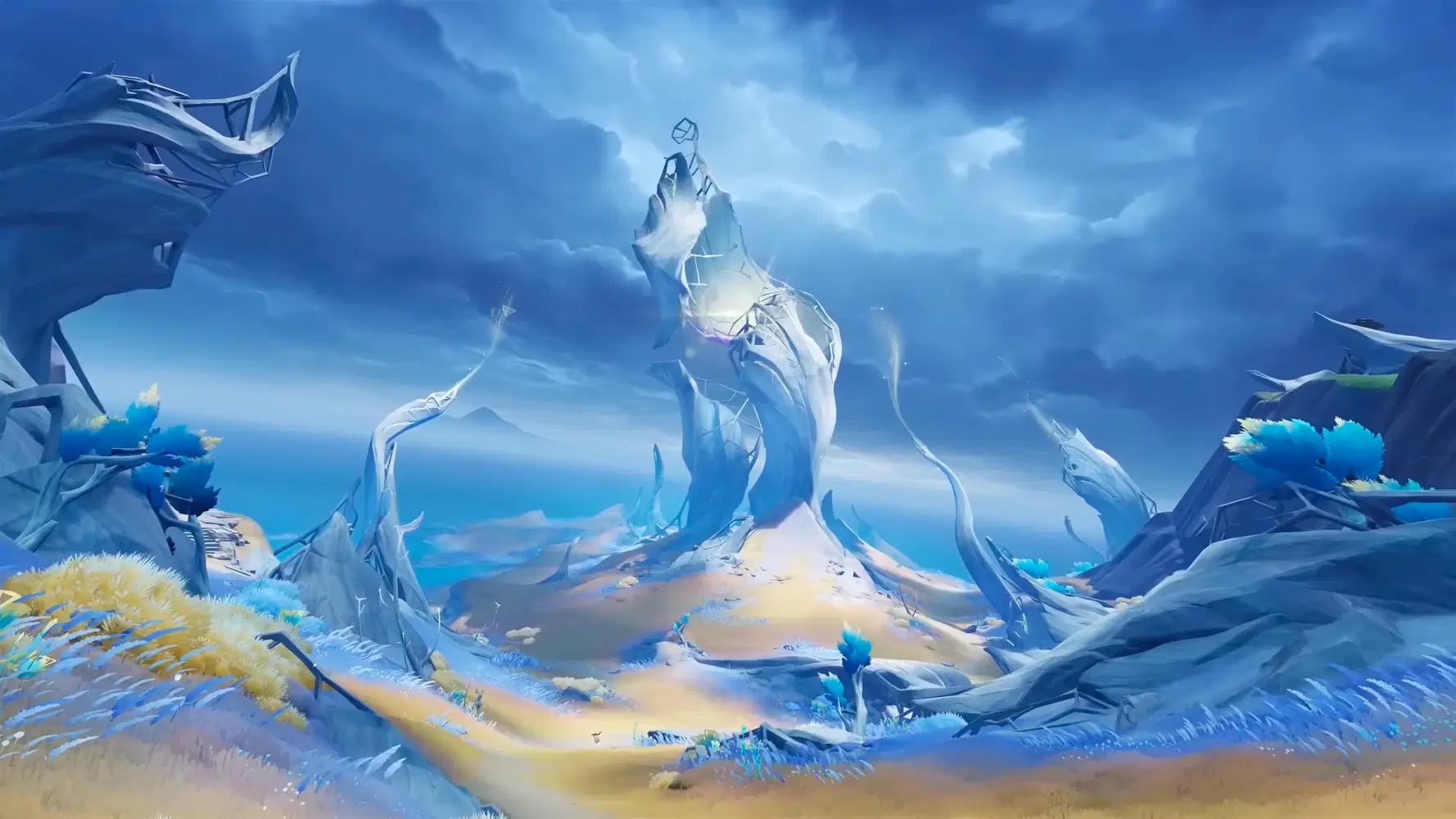
Alia understood that using the Sampo Mill could pose a grave danger to all of Nod-Krai, so she pretended to be Solovei's close friend to gain his trust. When Professor Rotwang built a heaven-reaching tower in Nod-Krai, named the Pillar of Embla, he intended to use the Sampo Mill to siphon the land's power and, through that tower, ascend to the "Elysium" he believed lay beyond the sky. If his scheme succeeded, all of Nod-Krai would have become fuel for his ascent. Alia and Solovei did all they could to stop him, but at the time, they were too weak.
When they reached the Pillar of Embla, Rotwang was one step away from his goal. Realizing there was no other choice, Alia cast herself into the Sampo Mill and ignited it with the purified blood of the Frostmoon Scions. Alia was drawn into the Mill, but she briefly lingered in the crack between time and space. Alia's sacrifice thwarted the Professor's plans and destroyed him for the first time.
Moonchanters
Due to the purification of her blood, Aila foresaw that decades later, a new moon goddess would be born, and everything Lovia had so long and desperately sought would be in vain. To prepare the Frostmoon Scions, she had to convince people that the new moon would delight only in kindness, friendship, and mutual aid. Otherwise, no matter how noble the ideal, it would only wither and fade into the filth beneath the moon. The new moon goddess was not obligated to give anything in return to her followers and was not obligated to be the ideal deity for everyone.
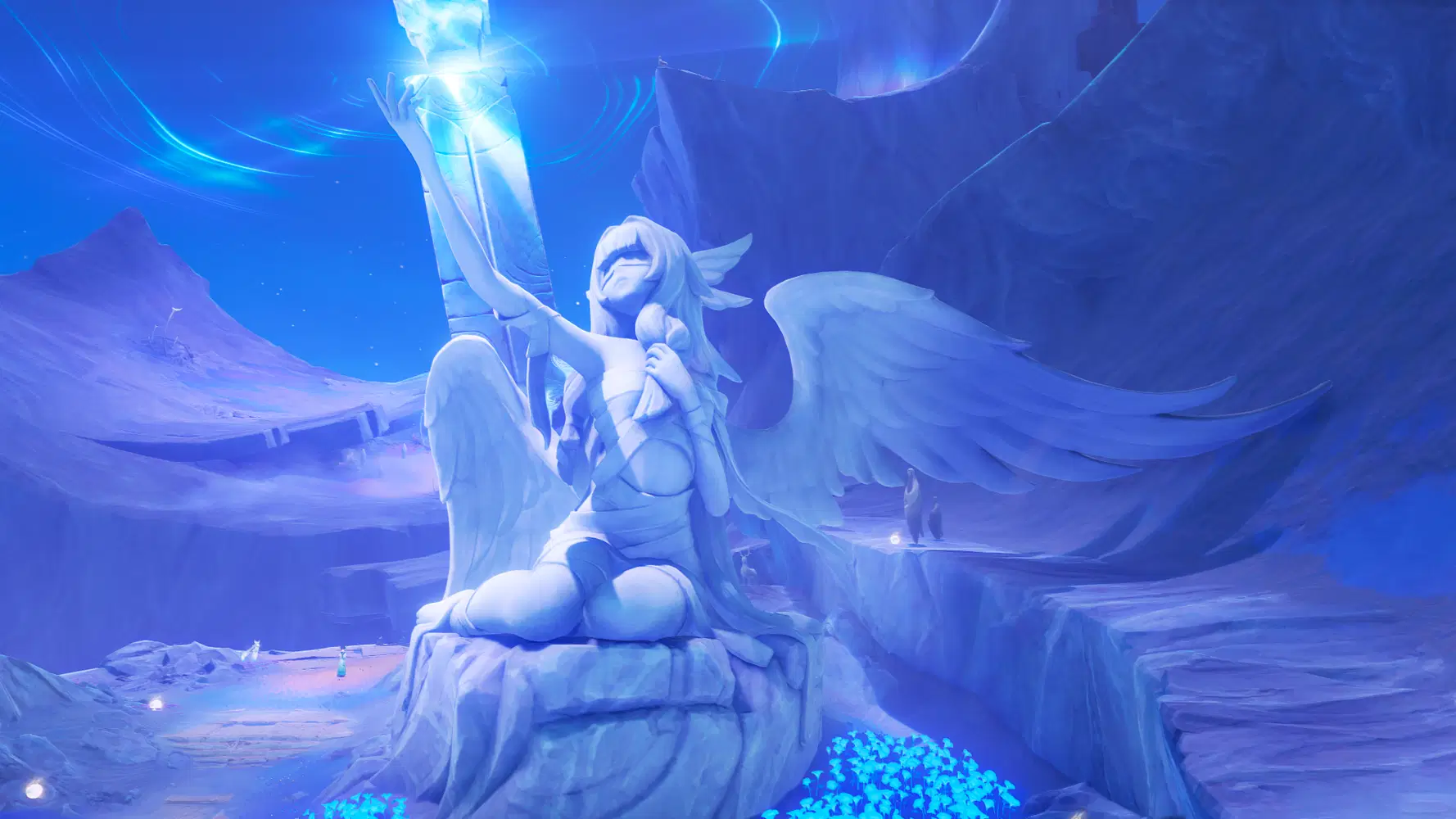
Thus, Aila became the first Moonchanter, rewrote the old prayers, hymns, and doctrines of the Frostmoon Scions, and consigned the name of Lovia to oblivion. The chamber where the Archpriestess's works were preserved was sealed, lest future descendants of the Frostmoon Scions bear the burden of her sins. And although Aila considered herself a sinner, unworthy of witnessing the birth of a new moon goddess, she witnessed her birth and personally carved a statue on Hiisi Island.
When Cataclysm struck Teyvat, Nod-Krai was abandoned by the gods. To combat the forces of the Abyss and the Wild Hunt, Aila, the Moonchanter, shared with Solovei, whom she saw as a hero destined to protect Elysium, the Arrow of Terpikeraunas. Solovei raised that first beam of light and buried it deep down alongside the nightmare-torn souls. Since Aila had the ability to see the future, she foresaw Rotwang's return, and Solovei founded an order that would meet the threat. He named this order the Lightkeepers, and he himself became the first Torchforger and the first Starshyna.
After Rotwang's first "death" at the Pillar of Embla, he returned as a being woven from the Abyss. Solovei and Aila were able to push the demon and his followers back to Kipumaki Cliff and seal him there. Since Aila knew that the seal placed on Rotwang would one day weaken and he would return to the world for a third time, she recorded her image to leave a message for the hero of the sublunary world who would rid the world of the undying serpent.
Five hundred years after Rotwang's second death, the Traveler arrived in Nod-Krai, whom the priestess recognized as the protector of Elysium. Aila guided them and the priestess of the Frostmoon Scions, using the Ancient Moon Remnants, whose fall she had also foreseen, to remove the seal from the Court of the First Edict. She left them the last sword, forged in moonlight by the Apostle of the Far North. It was with this blade that Aila once slew the Archpriestess Lovia, and with it she offered the first drop of silver blood to the newborn moon goddess.
When the new Moon Goddess was born, the Frostmoon Scions had nothing but hope. Before she could comprehend what was happening, they named her their goddess, Kuutar, and she had no reason to refuse. But despite the efforts of the first Moonchanter, the Frostmoon Scions cared more about their own beliefs than about the truth. They constantly asked for weapons to be forged, enemies to be driven away, lands to be expanded, wounds to be healed, and strength to be granted. They prayed to Kuutar for everything, and she fulfilled their will until she could no longer answer, her strength draining.
The goddess knew that the moon in the sky was not real, and her true home lay beyond the heavens. Teyvat continually rejected her, causing her to lose strength. Since Kuutar felt no home among the Frostmoon Scions, she abandoned them. Only many years later did she return to Hiisi Island and, thanks to the new Moonchanter, Lauma, decided to become part of their family.
By the time of Lauma's birth, the pure blood of the descendants of Hyperborea had practically vanished, and the appearance of silver blood and horns had become a great rarity. When Lauma was born, her horns growing in the moonlight, her silver blood resembling the moon reflected in water, she became a source of hope for the Frostmoon Scions and proof that the Moon Goddess had not abandoned them. Lauma was immediately appointed the new Moonchanter and given the Moon Wheel.
Because of the purity of her blood, Lauma had a special sensitivity to kuuvahki that only those born once a century have. She felt that the full moon in the sky was lifeless and empty, and the true tides that stirred her soul and made her antler crown grow were somewhere beyond her reach. Although this feeling troubled her, she chose to live in "concealment," not wanting to shake the faith of the Frostmoon Scions.
One day, after the Ancient Moon Remnants fell to earth, she encountered Kuutar, who had by then returned to Hiisi Island. Lauma asked the Moon Goddess why she had left the Frostmoon Scions and realized they had betrayed her: for many years, they had walked a path of error, praying to a false moon and a goddess who could no longer answer them. After this, the Moonchanter decided to tell the Frostmoon Scions the truth about the false sky and the true Frost Moon. Some were unable to accept the truth and left the society forever, but others remained, ready to change together.
Traditions
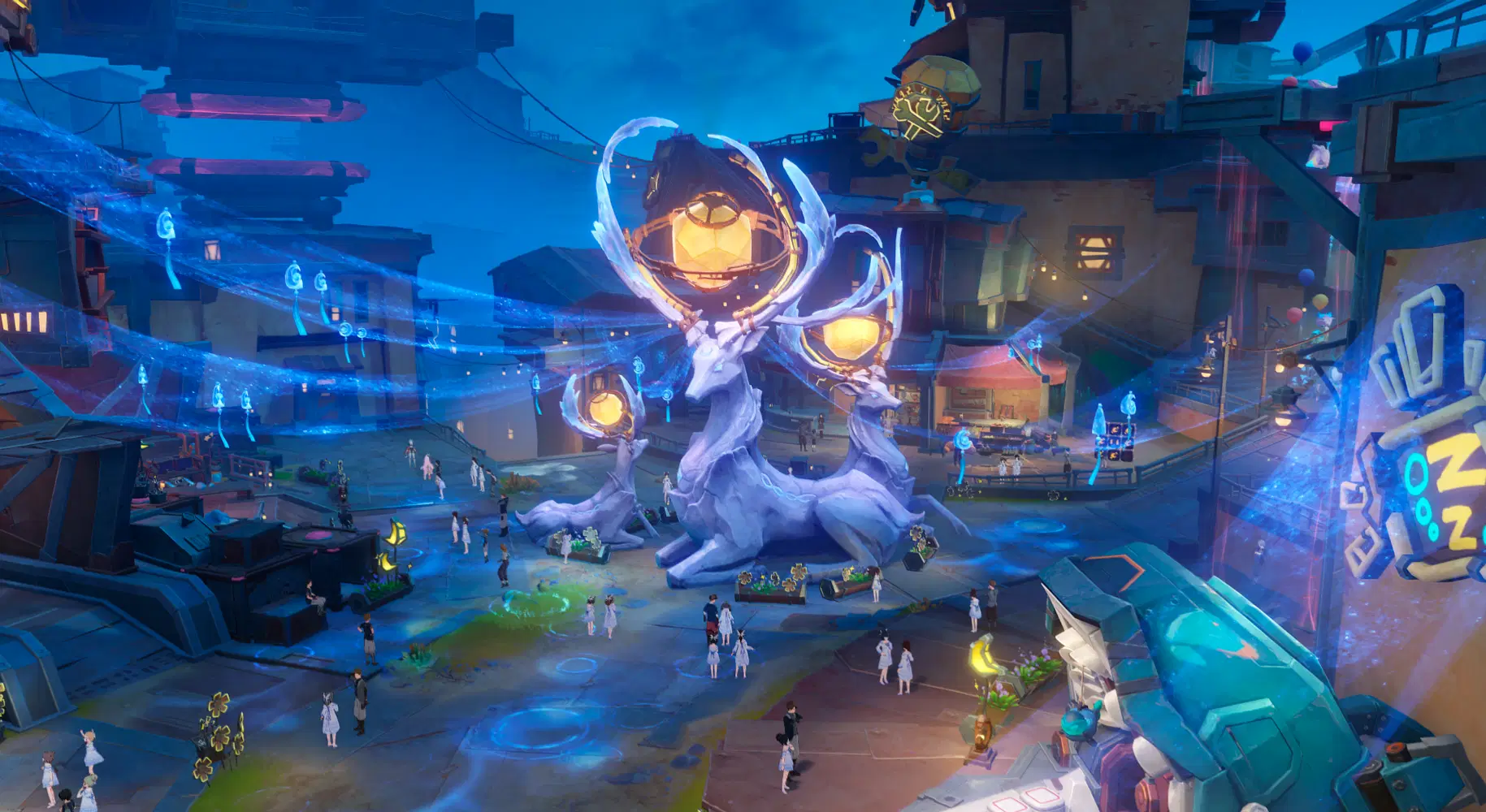
Moon-Prayer Night (Kuunrukous) is a traditional festival celebrated by the Frostmoon Scions in honor of the birth of the Moon Goddess, Kuutar. Initially a purely religious holiday, it eventually evolved into the most popular festival in Nod-Krai, celebrated even by ordinary residents. When the Frostmoon Scions learned that their beliefs were false, the Moon-Prayer Night became more of a local custom than a celebration of the Moon Goddess.
The holiday has no fixed date and depends on the movement of the Moon, as the Moon is closest to Teyvat on the Moon-Prayer Night. The Frostmoon Scions make a rough estimate and then determine the exact time by observing changes in the Verdant Crests and Moon-Prayer Blossoms. On this day, the crescent moon at the top branches of the Verdant Crest turns into a full moon, and the Moon-Prayer Blossoms bloom with a special radiance, considered a blessed omen.
One day, a special fragment of the Ancient Moon's Remnants called the Moon Marrow, possessing the power of the Goddess of the Eternal Moon, Aria, fell on Hiisi Island. This relic allowed the true past to be revealed at the moment when kuuvahki in Nod-Krai reaches its peak, on the Moon-Prayer Night. Only the Moonchanter has the right to take the Moon Marrow from its sealed sanctuary once a year.
Thanks to the Moon Marrow, the Traveler was able to see their spaceship arrive in Nod-Krai long ago. Although no one had left the ship during this time, during the Cataclysm, the Traveler's twin came from outside to free them. When the Frostmoon Scions’ blood was still strong, under special circumstances, the Moonchanter could act as a vessel and hold the relic within their body, but for only two days. Only the Traveler can effortlessly hold the Moon Marrow within themselves, enhancing their perception of kuuvahki.
The Frostmoon Scions have always advocated coexistence with nature, encouraging their followers to build positive relationships with the beasts of the wild. At the same time, to ensure their animal friends build the strength to withstand hardship and disasters, they put selected animals with whom they share a special bond through a unique sort of training. This is how the "Spirit Envoy Championship" was born, a trial designed to find the strongest human-animal pair by means of friendly sparring. In previous years, the competition was restricted to the Frostmoon Scions only, but in the last year, participants from all over the world were invited to participate.