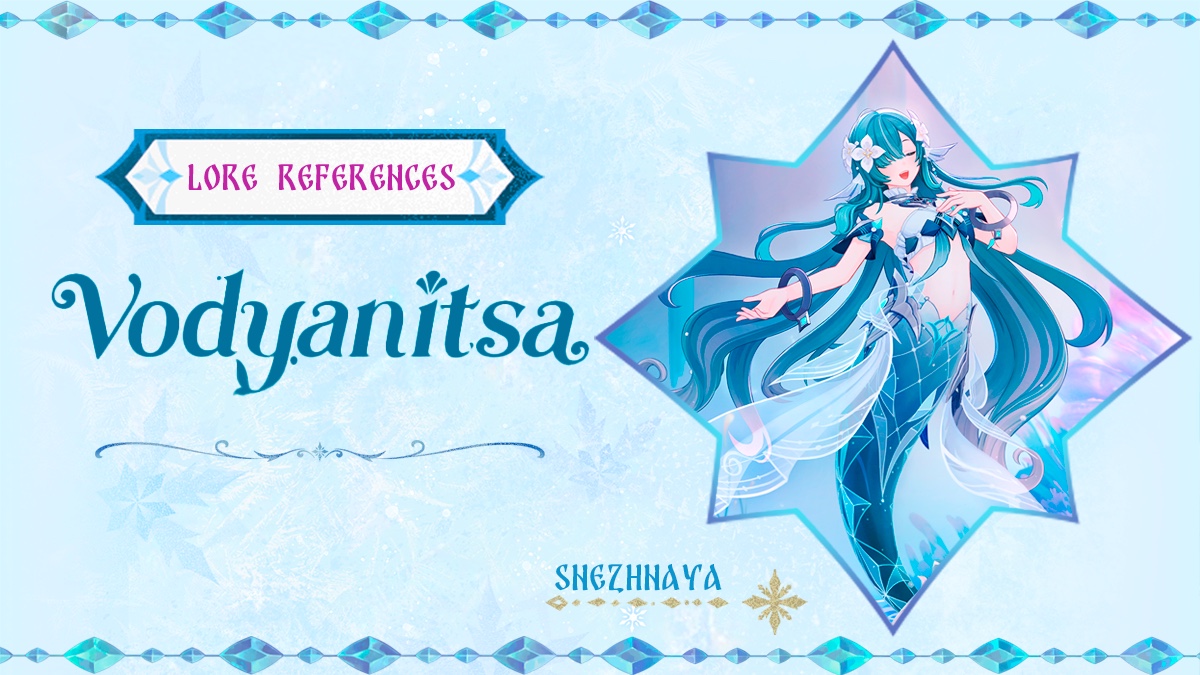
The beautiful Rusalka Vodyanitsa will be released next week, so let’s take a look at the origins of the names related to her.
The names of her talents and constellations are taken from the CE server.

Vodyanitsa is a type of mermaid (Rusalka) in Slavic mythology. This term is sometimes used to refer to the wives of Vodyanoy. They are baptised drowned women who were cursed by their parents or took their own lives because of miserable love. As they are baptised, they are not considered evil spirits and not inherently aggressive, yet they can be killed. They are usually depicted as beautiful, naked young women with pale skin and greenish hair. Vodyanitsas possess the ability to shapeshift, transforming into swans or fish.
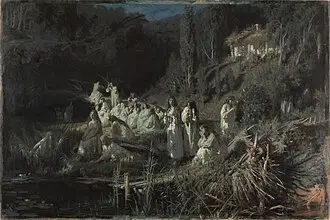
Slavic Rusalka
In Slavic mythology, Rusalkas do not have tails and appear as young women, so Vodyanitsa's design also draws from European mythology. In Slavic folklore, Rusalkas lured men into water, where they might drown them or tickle them to death. Western mermaids (mere = sea + maiden) are sea maidens inhabiting saltwater. They are depicted as half-human, half-fish, resembling Faraonki of Slavic mythology (creatures with fish tails said to originate from drowned Egyptians. Faraon = Pharaoh). These mermaids were believed to possess beautiful voices capable of luring sailors into the water to drown them. Like Slavic Rusalkas, European mermaids could also rescue drowning children and protect them.
Mermaids are also related to the Sirens of ancient Greek mythology. Initially, they were depicted as half-woman, half-bird creatures, but later they came to be portrayed as typical European mermaids. In some myths, the Sirens were companions of Persephone, but after Hades abducted her, Demeter transformed them into winged creatures because they had failed to save Persephone. Sirens were believed to possess enchanting voices, they would lull sailors to sleep with their songs and then tear them to pieces. If someone heard the Sirens' song but managed to escape them, the Sirens themselves would perish.
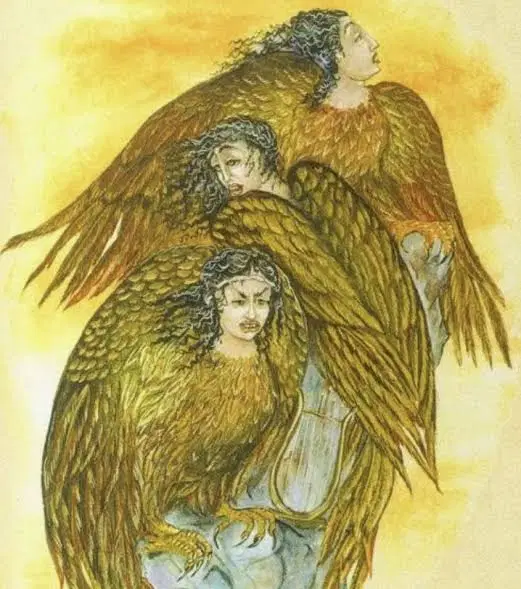
Sirens
Vodyanitsa is a Water Imp, which is called Vodyanoy in Slavic folklore. In the game, Vodyanoy is the name of the Water Imps' leader who fought against the Belyi Tsar a few thousands of years ago. Vodyanoy is a water spirit from Slavic mythology. They were often depicted as old men with fish tails or exceptionally long legs. Sometimes they possessed cow tails, horns, webbed limbs, or other animalistic features. Vodyanoy inhabit deep bodies of water and sometimes dwell near mills, so millers would appease them to prevent them from breaking the mill wheels. Ukrainian legends say that burying a horse's skull offered protection against the Vodyanoy, while Belarusian folklore says about turning a sleigh upside down to prevent the spirit from stealing unbaptized children.
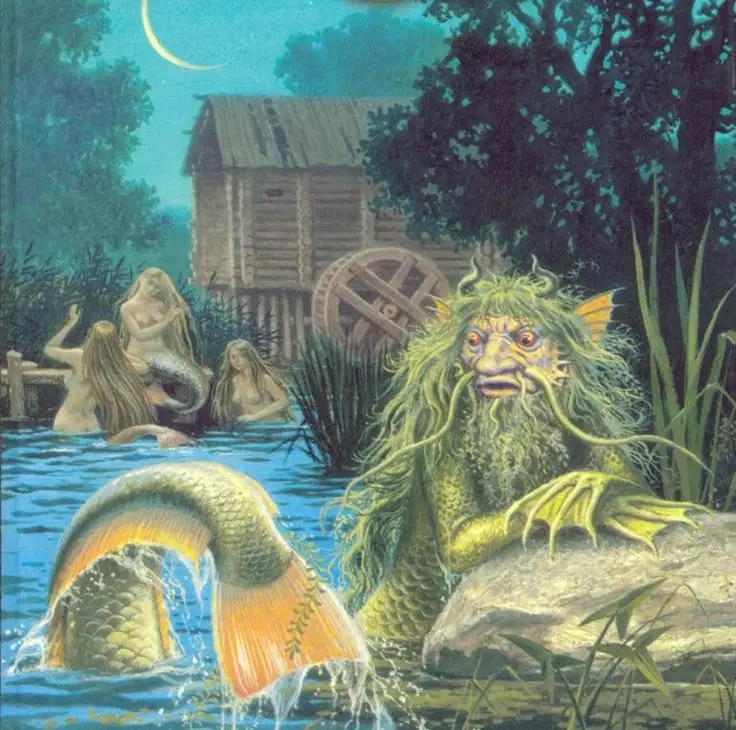
Vodyanoy
Vodyanitsa's NA is called Psyshkhwe Arietta. An "Arietta" is a musical genre, a short aria. Psyshkhwe is part of the name Psyshkhwe Guashe, the Lady of Rivers in Adyghe mythology. In some myths, she was responsible for rain, though she later became the guardian of bodies of water. The Lady of Rivers was depicted as a young woman with very long hair, which she would comb.
The word is easier to pronounce than it is to spell: listen here.
Adyghe (Circassians, Cherkess) are a Northwest Caucasian ethnic group.
One of the talents is called The Last Djeguako Songstress. Djeguako were Adyghe singers who performed tales from the Nart epic at festivals in the form of recitative-style dialogues. They were accompanied by musicians, and the melody was repeated for every strophe of the story.
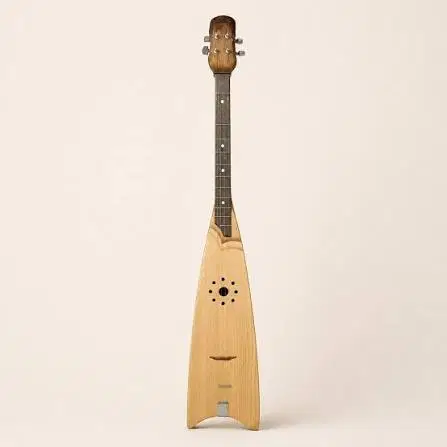
Another talent is called Dirge of the Fandyr. The Dala-Fandyr (Phandar) is an Ossetian/Vainakhish folk plucked-string instrument. It typically has two or three horsehair strings, and its body is made of maple wood.
You can listen to it here.
The Nakh peoples are a group of North Caucasian peoples. Vainakh (our people) refers to Chechen and Ingush people. The Ossetians are people also from the Caucasus Mountains.
The passive effect of Vodyanitsa's weapon is called the Rondo of Slumber. A Rondo is a musical form in which the main theme repeats at least three times, alternating with various other motifs. Using the weapon can trigger the Vatsamonga's Vatic Vintage effect. Vatsamonga is a magical, revealing chalice from Ossetian mythology. The chalice could discern a hero's worth. It would rise of its own accord to the lips of those who had performed feats of valor, offering them a healing draught. If a hero lied, the chalice would fill with a foul-smelling liquid teeming with lizards.