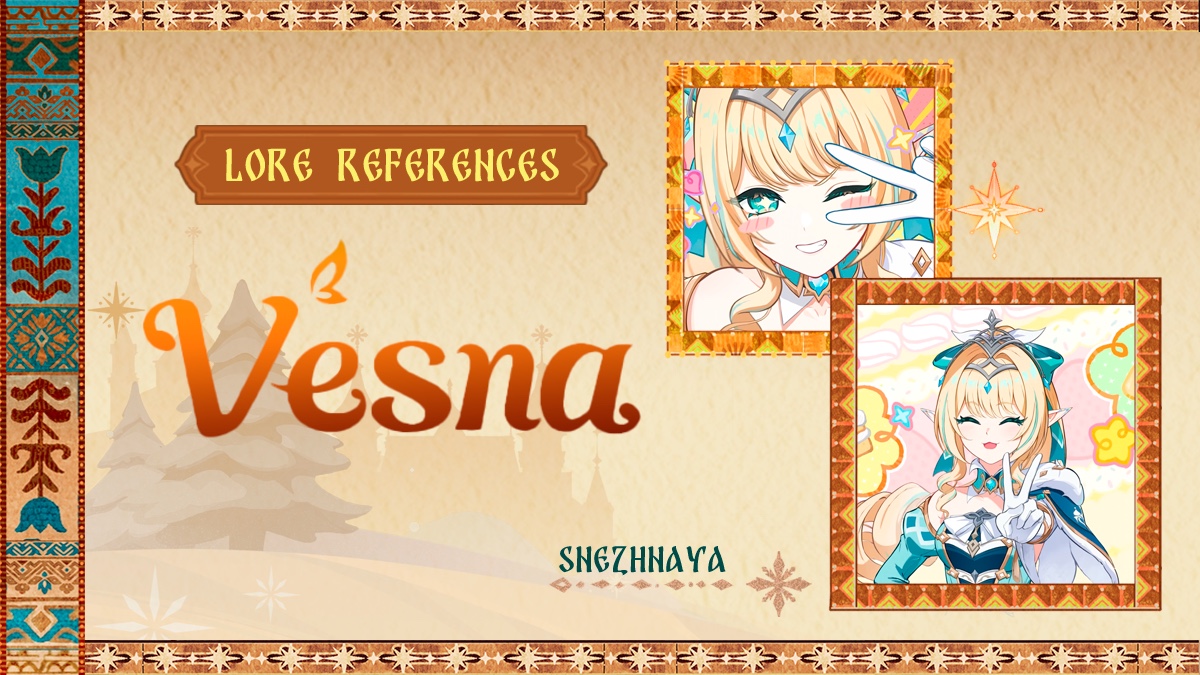
Very soon, the beautiful Vila, Vesna Strivozha, will be released. Let's learn more about her references to real culture.

Vesna (spring) is a significant season in Slavic culture. It marks the awakening of life, and in Slavic mythology, Vesna was personified as Lelya (or Lyalya) — a young, beautiful, playful, and cheerful maiden. Wherever she appeared, flowers and grasses bloomed, birds sang, and people rejoiced. During the festival dedicated to Lelya, the most beautiful young woman was chosen to represent her. She was dressed in white, crowned with a wreath of spring flowers, and adorned with garlands of herbs around her neck and wrists. Accompanied by her friends, "Lelya" would go out into the fields, offerings and wreaths were placed around her while her companions danced in a circle and sang vesnyanki — ritual songs invoking a bountiful harvest. Lelya would then share food and distribute the wreaths, which were kept until the following spring.
Vesna is associated with the name Strivozha, linked to the East Slavic wind god Stribog (though some also regard him as a god of the sky or water). Little information about him has survived, and most of what is known relies on “The Tale of Igor's Campaign,” where Stribog is portrayed as a malevolent deity.
Vila
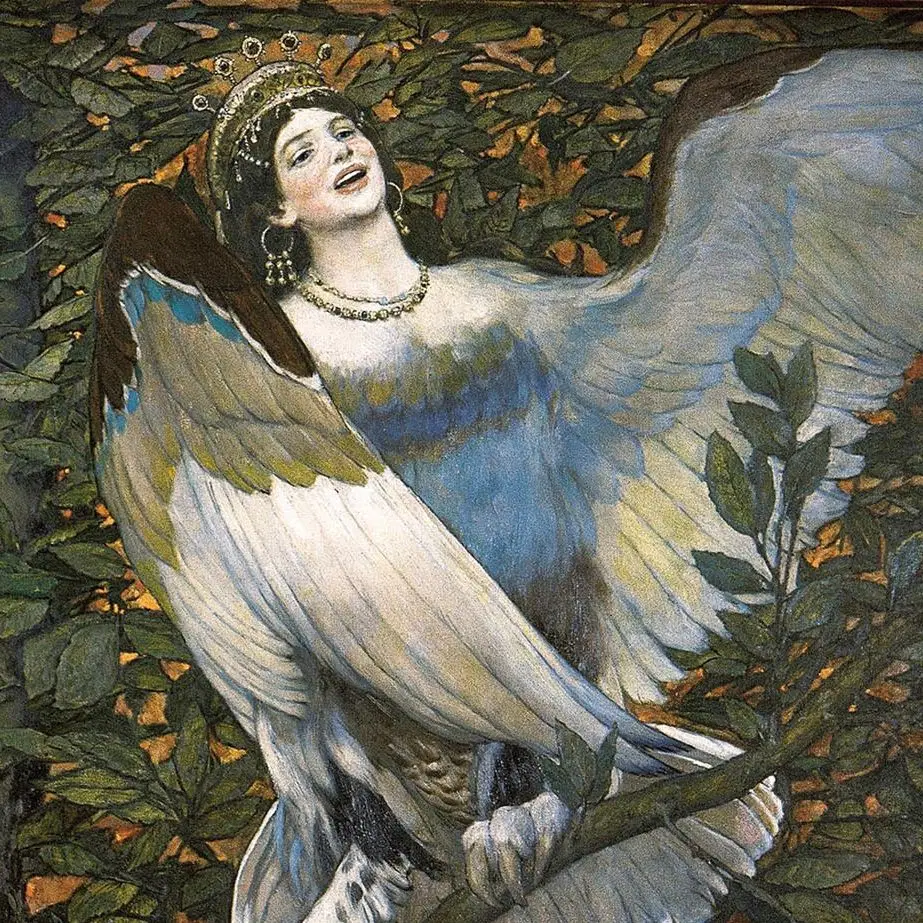
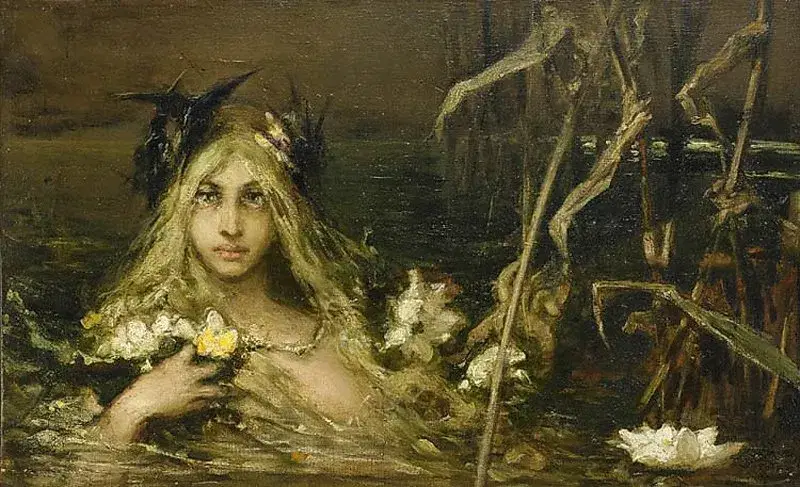
Vesna belongs to the Vila clan. Vila (Samodiva/Samovila) is a figure from South Slavic mythology, depicted as a young woman with very long, fair hair, wearing a white dress with a green sash. According to some legends, a Vila would die if even a single hair were plucked from her head. Vila inhabit the mountains and hold dominion over lakes. In certain regions (ex., Poland and Slovakia), they were depicted with wings that allowed them to fly. If Vila were deprived of her wings, she would transform into an ordinary woman. It was believed that men would steal their wings and take them as wives, though Vila would eventually reclaim their wings through trickery and fly away. In other legends, Vila were subject to anyone who managed to take away their magical garment.
According to legends, Samodiva aided mothers during the harvest and formed bonds with men who had done them a service. Sometimes they would voluntarily have relationships with men, yet they would dominate their lovers, eventually driving them to death. Vila and humans’ children possessed supernatural abilities: the young women were incredibly beautiful, while the young men were superb warriors. Although Vila are generally considered benevolent beings, they can exact revenge for wrongs done to them. Bulgarian mythology has a type of Vila known as Yuda that is hostile toward humans. They would sometimes block water sources, kill shepherds, abduct beautiful maidens, or bring misfortune upon them.
In some regions, Vila were depicted with the legs of donkeys or horses, which they concealed beneath long garments. While in others, they were believed to be invisible to ordinary people. They could be seen only by those born on the Saturday before All Souls' Day or Easter, those born between Christmas and Baptism, dogs with two spots above their eyes, a child of Samodiva and a mortal, and children who had returned to breastfeeding. (Fleur Delacour, btw, is part Vila).
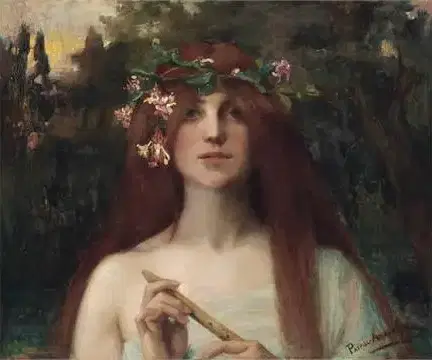
It was believed that at twilight, Vila would head to bodies of water, where they would undress to bathe and wash their clothes, drying them in the moonlight. Afterward, they would venture deep into the forest to dance in circles barefoot all night long. Samodiva would often abduct shepherds and force them to play their flutes. At dawn, they would vanish, as they feared the sunlight. They are often associated with Rusalka (water imps/mermaids), and in some legends, Vila are the souls of sinful young women rejected by both heaven and earth. Vila deeply resented anyone who surpassed them in beauty, singing, dancing, or wit. If a young woman caught the eye of a Samodiva, she would meet an untimely death or be abducted by them, and transform into a Samodiva herself.
There is a Serbian legend about the warlord Miloš, who once drank wine with the Vila Ravijojla. She warned him that if she ever heard him singing in the mountains, she would strike him down with an arrow. Prince Marko, who was traveling with the warlord, promised to protect Miloš and asked him to sing so he wouldn't fall asleep on the journey. As soon as Ravijojla heard the warlord singing, she grew furious that he sang better than she did and struck him with two arrows: one in the throat and one in the heart. The Prince chased after the Vila and forced her to gather medical herbs to save the warlord. From that time on, Ravijojla warned other Vila not to harm young men until Marko and his horse had died.
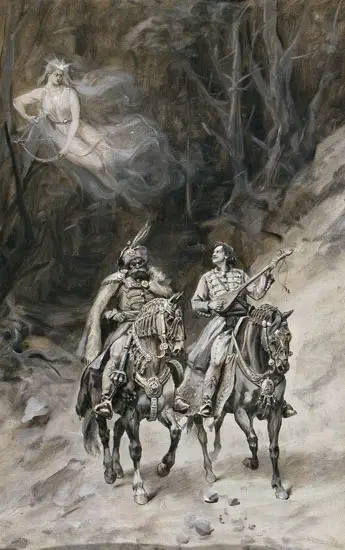
Ravijojla, Marko, and Miloš
One of Vesna’s constellations is named Kolo of Spring's Arrival. The Kolo is a South Slavic folk round dance in which participants hold hands or place their hands on one another's shoulders. It is performed during religious holidays or major celebrations.
Vesna’s talent is named Rite of Spring's Procession, which may refer to the ballet "The Rite of Spring." Odette’s talent, Spring Rite of the Chosen One, also references this same ballet. Stravinsky’s ballet is based on a ritual in which a chosen maiden dances herself to death to summon the spring.
Vesna is the leader of the Druzhna. The Druzhina was a princely (knyaz) retinue or military force responsible for maintaining order in settlements and defending against enemies. The word is believed to derive from the Proto-Germanic druhtinaz = troop.