⸺ ✦ Hoyolab Post Thumbnail ✦ ⸺




With Sumeru right around the corner, I've been diving into some of the really early Sumeru lore, some of which had been available even before Genshin Impact's global launch. Let's take the time to refresh and distribute our knowledge about this beautiful nation, which will hopefully come in handy in preparing for what's to come.
(Unlike those intellectual misers at the Akademiya who instituted some ridiculous policy on keeping information within the Akademiya, I think knowledge should be openly shared, thank you very much!)
I've also been comparing those early English localizations to the original Chinese text, and there's some pretty interesting differences that got lost (or potentially added) in translation.
In this post, I'll do a deep dive into Dainsleif's commentary about Sumeru from the Teyvat Chapter Storyline Preview: Travail, and compare it to some of the newer insights into Sumeru that we've gained.

⸺ ✦ What is Travail, anyways? ✦ ⸺
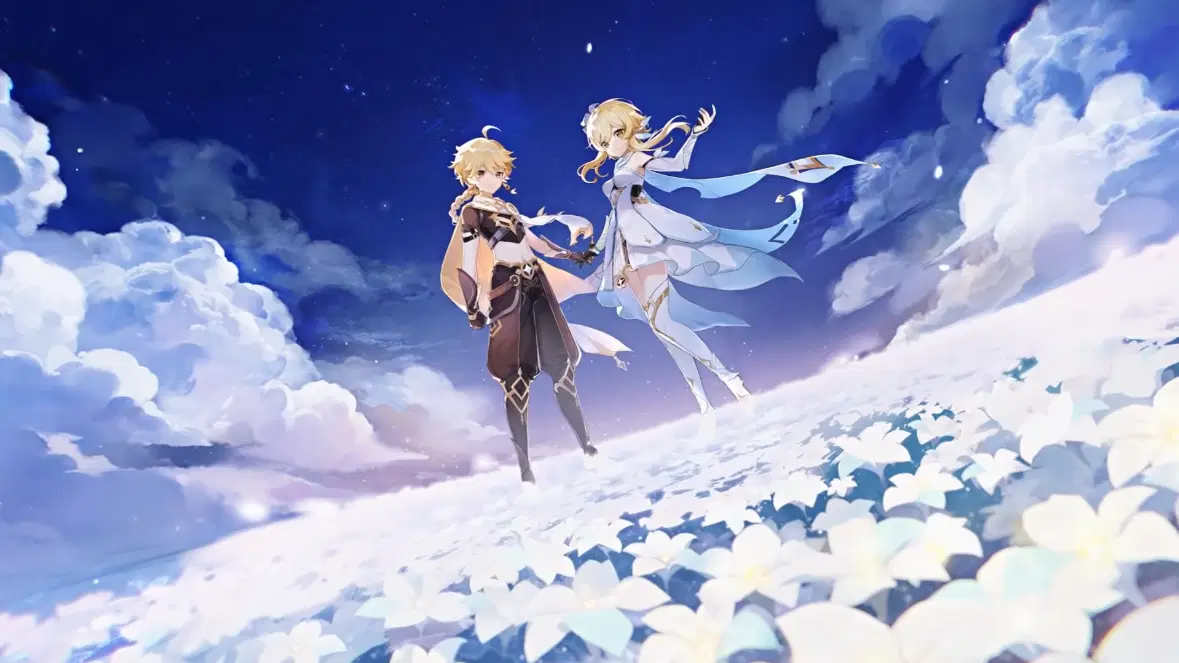
Teyvat Chapter Storyline Preview: Travail, published on the official Genshin Impact YouTube account nearly two years ago, is a major source of foreshadowing and theorycrafting for the plots of upcoming Archon Quests. Narrated by Dainsleif himself, we are hinted at what awaits us in each region and the ultimate conflict that awaits us at the end of the Teyvat Chapter.
For the Sumeru Chapter, he has this to say:

(Text transcript: The God of Wisdom's enemy is wisdom itself, and the oasis of knowledge is a mirage in the desert of ignorance. In the city of scholars there is a push for folly, yet the God of Wisdom makes no argument against it.)
Now, let's take a look at what he says in the Chinese version:

Unofficial translation by my fellows over at the Genshin Impact Fandom Wiki:
Wisdom is the enemy of the God of Wisdom. Knowledge is a bait floating on the surface of the sea of ignorance. In the city of learning, the scholars are pushing for foolishness, and the wisdom of god has raised no objections to this.
Some bits look kind of similar, and others look a little bit different. Now, let's break down these parts a bit, phrase by phrase.
⸺ ✦ "The God of Wisdom's enemy is wisdom itself" ✦ ⸺
Chinese translation: Wisdom is the enemy of the God of Wisdom.
This is a fairly straightforward translation, no bells or whistles added or missing. How we're supposed to interpret it, however, is something we've only been able to speculate on. Most interpretations have relied on the second half of Dainsleif's sentence in English (which is something I'll cover below), plus the fact that the current "God of Wisdom" is the youngest of The Seven at only 500 years old.
The Version 3.0 Trailer and Special Program shed some new light on the relationship (or lack thereof) between Lesser Lord Kusanali and her predecessor, Greater Lord Rukkhadevata, and how they're perceived by the sages at Sumeru Akademiya. Greater Lord Rukkhadevata valued wisdom and was indeed the God of Wisdom, as confirmed by Xiao Luohao (Head of Genshin Impact's Creative Concept and Writing Team) during the Version 3.0 Special Program.
But what about Lesser Lord Kusanali, who has taken up Greater Lord Rukkhadevata's position?

During the Summertime Odyssey main quests, the person behind the mysterious voice (which is almost certainly Nahida's, based on the Sumeru Promotional Teaser) is hinted to be Lesser Lord Kusanali herself, and she tells the Traveler that she is quite fascinated by dreams — something which most adults in Sumeru don't experience for some reason. In fact, they take pride in this; they see this as a reflection of their rationality.
In the general theme of "wisdom is the enemy of wisdom," I can't help but think about Lisa's Character Story 5:
Having personally witnessed raving-mad scholars in the forests of Sumeru and powerful sages sitting underutilized on advisory councils, Lisa realized what uninhibited erudition can really do to a person.
It seemed such a high price to pay... How much did one have to sacrifice to attain the profoundest knowledge of all?
Put off by this realization, Lisa decided to leave Sumeru.
(By the way, I wonder if people in Sumeru being unable to dream might relate back to why Lisa couldn't use the nirnama detector, a device she invented herself, during Venti's Story Quest? )
⸺ ✦ "The oasis of knowledge is a mirage in the desert of ignorance" ✦ ⸺
Chinese translation: Knowledge is a bait floating on the surface of the sea of ignorance.
Between the two languages, Dainsleif describes the ideas of "knowledge" and "ignorance" differently, and I think the English localization is pretty clever here! An oasis is a patch of fertile land in arid, dry climates like deserts. However, the desert heat makes light reflect off the ground in order to create a mirage of an oasis — something that has caused people to chase after an oasis that doesn't actually exist. Not only is the concept very similar to bait floating over the water, it also plays on Sumeru's geography!
The word "mirage" is also used during Version 2.8's main event, Summertime Odyssey, to describe the domains which were formed around the memories and subconsciousness of Kaedehara Kazuha, Xinyan, Fischl, and Mona.
These domains formed when a Fatui device designed to mimic the power of a certain god went haywire... And it seems that very god sensed a power "related" to them coming from the Golden Apple Archipelago, investigated it, and decided to pitch in...

(In Chinese, the equivalent term for "mirage" is 幻境, which literally means "fantasyland" but can be translated as "dreamland." The god related to this power — who I think is Lesser Lord Kusanali, and the voice also seems to be a perfect match for Nahida's in the Sumeru Promotional Teaser — communicates to the Traveler and talks about the party's "dreamscapes," or 梦境, which is a more literal "dreamland.")
⸺ ✦ "In the city of scholars there is a push for folly" ✦ ⸺
Chinese translation: In the city of learning, the scholars are pushing for foolishness
For those who don't know, "Fatui" is Latin for "fools," which shares a meaning with "folly." This is perhaps even more obvious in the Chinese version, where the word for "fool/foolish" (愚) is directly used in their equivalent name for the Fatui, 愚人众 (Group of Fools).
As previously covered in our post Collei, Diluc, Dottore, and the Remains of Gods, a Sumeru sage (interestingly, called a "missionary" instead of a sage in the original Chinese text) served as Dottore's subordinate in the manga and was personally involved in experimenting with the remains of gods. Collei was a survivor of his experiments and towards the end of the manga, Cyno helps her seal away the power of the gods before taking her back to Sumeru.
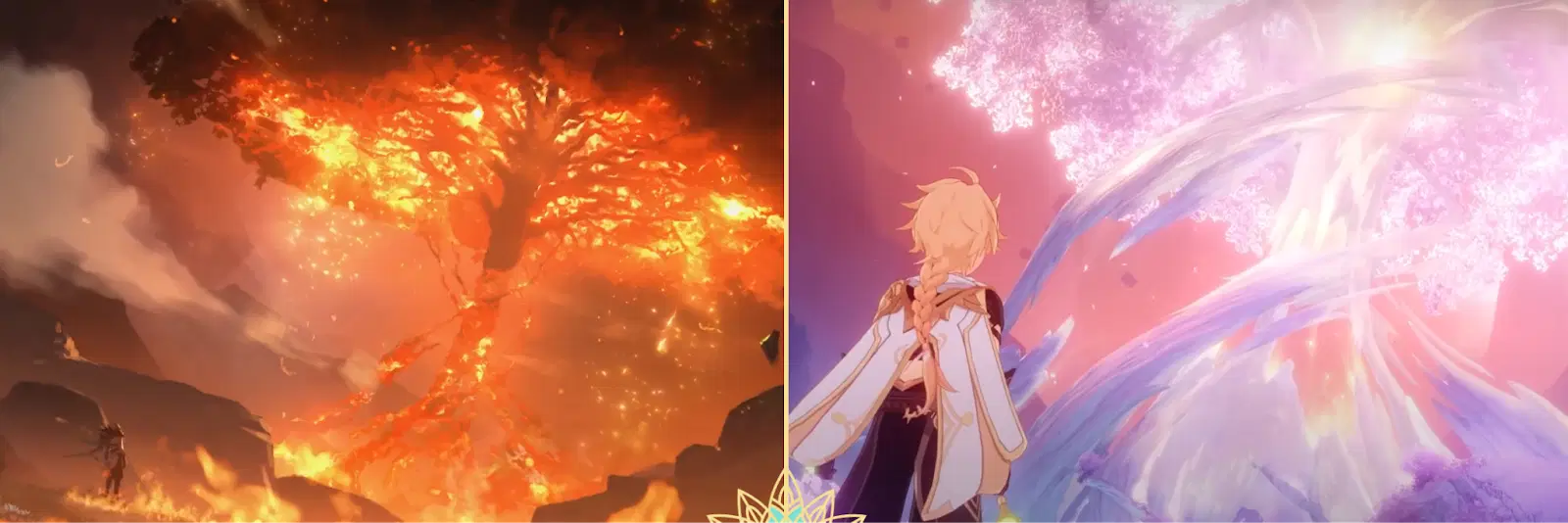
This connection between the Fatui and their possible role in the Sumeru Chapter is strengthened by Teyvat Chapter Interlude: A Winter Night's Lazzo. Capitano asks Dottore what he's doing to track down Scaramouche and the Inazuma Gnosis. Dottore gives a vague answer about "Divine Knowledge" and the "Divine Gaze." In the stinger, he tells Columbina that his "Prime" Segment is off performing an experiment into "heresy" at a tree that looks an awful lot like the Irminsul which Greater Lord Rukkhadevata is (or was?) connected to. (As we've seen from the remains of gods, Andrius, and the previous Electro Archon Makoto, a god's power and sometimes even their consciousness can linger after their physical bodies have died.)
In A Winter Night's Lazzo, Pierro's opening line was "The sages think themselves to be all-knowing, but we alone are wise to the virtue in those acts of folly." Even though he's probably talking about the sages of his probable homeland of Khaenri'ah (see the Pale Flame Circlet of Logos artifact, Mocking Mask), considering Lazzo's timing both in real life and in Teyvat's story... What if this could also be foreshadowing what's to come in the Sumeru Chapter?
⸺ ✦ "Yet the God of Wisdom makes no argument against it" ✦ ⸺
Chinese translation: And the wisdom of god has raised no objections to this
The following difference is a rather important one. The original Chinese version says 而神的智慧对此并无意见 ("the wisdom of god has raised no objections to this"), but the English localization translated it as "yet the God of Wisdom makes no argument against it."
"God of Wisdom" is usually a translation of 智慧之神, which was used earlier when Dainsleif said, "The God of Wisdom's enemy is wisdom itself." So the fact that the Chinese version used a different term in this line seems a bit significant to me.
I think this significance relates back to the Gnostic concept of gnosis. In Gnosticism, gnosis (which is Greek for "knowledge") is a higher, divine wisdom which allows a person to transcend the mortal realm. (In Gnosticism, the mortal realm was created by the Demiurge, who also created the seven archons to rule over them.)

In-game, the English term Gnosis corresponds with the Chinese version's 神之心 (Heart of God), and it is an item owned by the Seven Archons which takes the form of a chess piece and allows them to "resonate", or connect, directly with Celestia. For reasons that haven't been explained, the Fatui are playing "gotta catch 'em all" with the Gnoses... (Which is why Scaramouche running off with one is a bit of a problem.)
During A Winter Night's Lazzo, after Capitano asks Dottore what he's doing about the Electro Gnosis (神之心), Dottore's response includes an interesting phrase: "Divine Knowledge (神之灵知) cannot be rationally comprehended." In Chinese, 灵知 (literally "spiritual knowledge") is the word used for the real life Gnostic concept of gnosis.
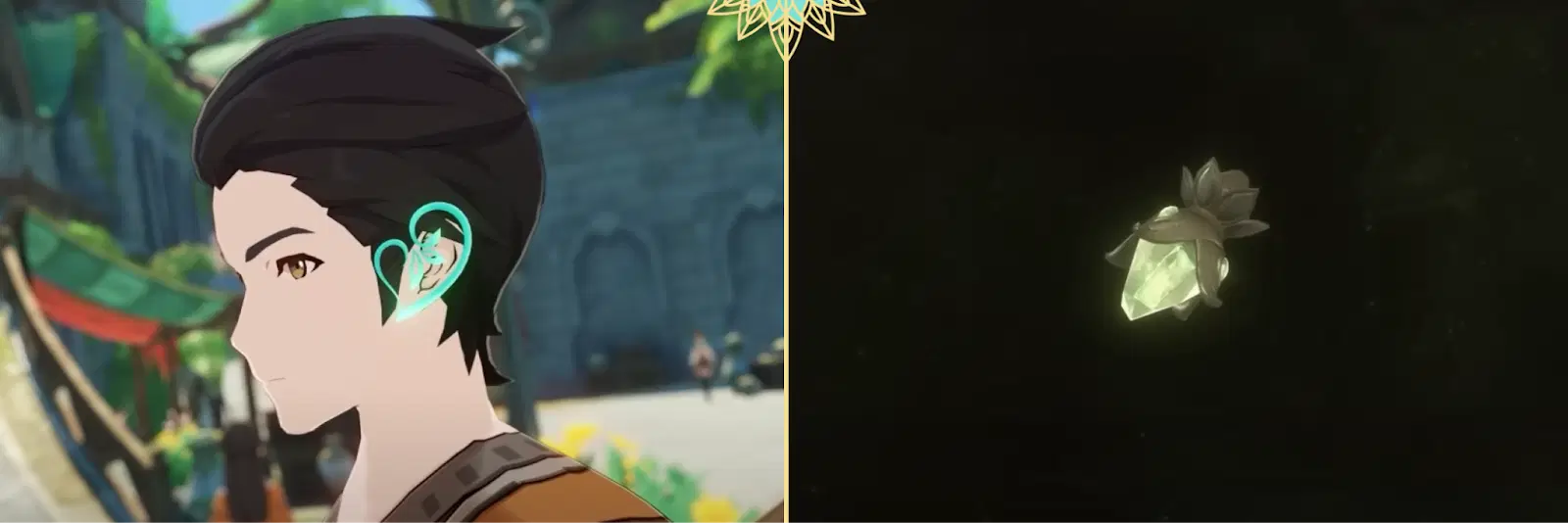
From Sumeru Preview Teaser 03 and the Version 3.0 Trailer, we learned about two interesting items related to either Gnoses or Divine Knowledge: the Akasha system developed by the Akademiya using Greater Lord Rukkhadevata's Gnosis, and a Divine Knowledge Capsule which supposedly grants its owner the "wisdom of the gods." (By the way, the phrase "wisdom of the gods" correlates to the phrase 神明的智慧 in the Chinese version, and that phrase is in the same exact format as the phrase highlighted at the start of this section, 神的智慧 "wisdom of god".)
What a trip! We can glean all this from promotional materials, and we haven't even entered Sumeru yet. I'm excited to see how all of this really appears in Chapter III of the Archon Quests!

Visit the Genshin Impact Fandom Wiki!

Sources:
Teyvat Chapter Storyline Preview: Travail
Teyvat Chapter Interlude Teaser: A Winter Night's Lazzo
Version 3.0 "The Morn a Thousand Roses Brings" Trailer
Summertime Odyssey Event Quest: Immernachtreich Apokalypse (Part 3)
Summertime Odyssey Event Quest: Like Rhyme and Song, the Summer Reverie
Venti's Story Quest, Carmen Dei Chapter, Act I, part 1: A Child's Secret
Pale Flame artifact set, Mocking Mask
Khedive's dialogue and Wherefore Did the Spiritstone Descend? - Sumeru Akademiya's policy on sharing knowledge