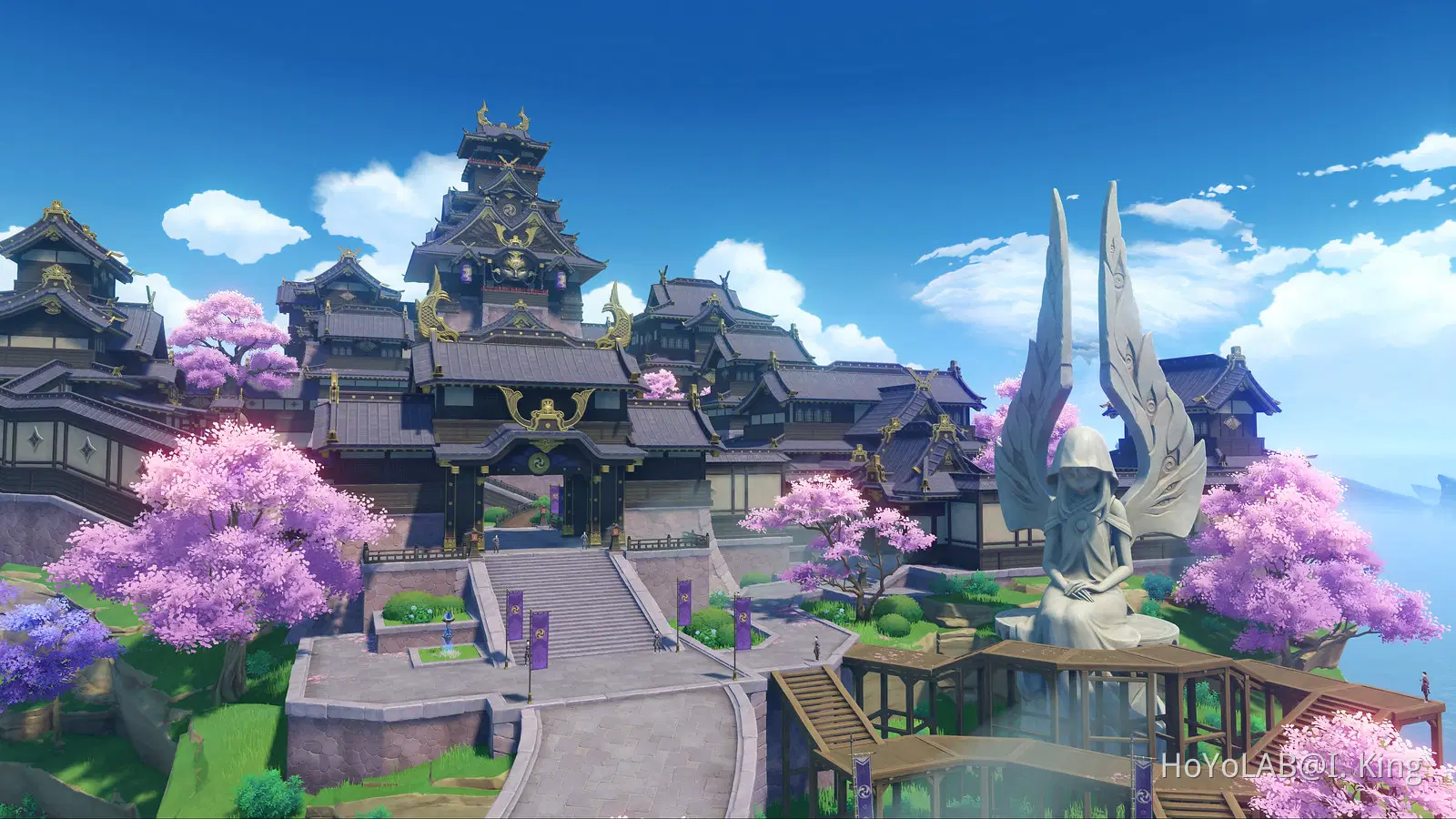
Last time I talked about how German Mondstadt is. This time let's talk about how much of Japan is in Inazuma. And I really wanted to get to it because I actually had a conversation a long while back where somebody claimed Inazuma was just a "purple hell" and MiHoYo put much more effort into Liyue because this player (only) really liked Qingce Village.
You might think the most obvious accurate portrayal would be Tenshukaku Castle but while the structure is spot on for the period the coloring is not and the mask is more kabuki than reality. Actually the most accurate part is the religion.
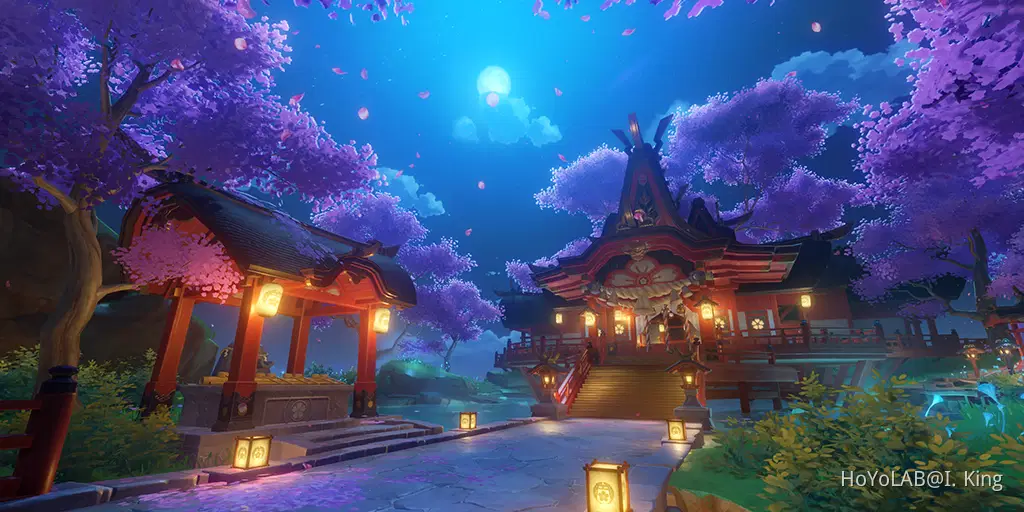
The look of the shrine, the outfits worn by the miko, the torii gates that lead up to it and the fact that its leader is a kitsune are all a very real part of Japanese culture. In Shintoism a major deity is Inari Okami the goddess of rice cultivation and economics. Her shrines litter the Japanese landscape and "her soul" has been split hundreds of times into many different idols as more shrines are made for her. Inazuma itself is actually related to this worship. Inazuma is one of Japan's ways of saying lightning but the reason why is because when lightning strikes the ground it infuses it with nitrates which promotes rice cultivation. Inazuma actually means rice wife.
The setting itself has already been stated by many people to be a recreation of the real life Sengoku Period of Japan. The Tri-Commission or Sanbugyo are literally the Sanbugyo of Shogunate Japan and the Kanjou Commission is named after its real world counterpart too. Meanwhile the Tenryou Commission is fictional only because it reflects the difference of government with the real world Machibugyo meaning city commission. Tenryou on the other hand means divine leadership. Finally the Yashiro Commission (actually the Shabugyo in Japanese) is almost the same as the Jishabugyo. The Ji part stands for temples related to Buddhism which isn't part of Inazuma where they only have sha or shrines.
The entire government structure actually is the same. The Bakufu is the name of the Shogunate era military rulership and means military encampment. Their leader is the Shogun who had decreed things like the Sakoku Edict prohibiting foreigners from entering Japan and Katanagari or Sword Hunt Decree where samurais had their swords confiscated just like Inazuma's allogenes had their Visions confiscated. And I mean that literally. Just like we saw allogenes losing their ambitions and path in life when a samurai lost their katana it was a severe drop in social status that could cause the same effects.
The next part is something I talked about a few times. The Shogunate is called the Shogunate because it isn't a legitimate government. Shogun actually means general. The "true" leader of even this period of Japan is the Tenno but with a powerful general the military ends up following his orders instead of the king. While in the west kings are deposed all the time during war in Asia the Emperor usually has some kind of divine claim to the throne. So instead of deposing them the Shogun makes them their puppet instead and rule through them officially. (Trust me it's less complicated that way.) And that's why when the Shogun was a weakling it didn't take much for Emperor Meiji to reassert himself back into power.
I talked about why this part of Japanese history didn't end up playing out in Inazuma even though the story was clearly moving in that direction. Well surprisingly that is also an accurate portrayal by Genshin's Japan. During Sakoku in the Tokugawa Shogunate and then the Meiji Period that followed Japan did a few things they aren't proud of. And they dealt with it by rewriting those parts of their history. This goes all the way to the modern day where even gaming has been used to rehabilitate things like WWII and even yokai origins with nicer versions. (Click here and here for more details.)
One of those rewrites we are going to be seeing for a while. The resistance on Watatsumi Island plays off the many instances in Japanese history where the Yamato suppressed the older civilizations native to the Japanese islands. (see the youtube videos linked in the previous paragraph) Watatsumi itself likely represents the Okinawan people of Kyushu Prefecture. Similarly Tsurumi likely represents Hokkaidou and the Ainu people.
Moving on to more positive points there's the recent Onmyouji and Shikigami. Just like it was portrayed in the game Onmyoudou is a real thing in Japan. The practice drew inspiration from Taoism but evolved on its own. Onmyou is literally Japan's way of saying Yinyang and dou just means way. Ji in Onmyouji just means practicioner. On the other hand Shikigami are part of that separate evolution. It might be based on a combination of ofuda seals (also Taoist) and Japanese Shinto shamanism. The idea is that ofuda seal away evil spirits but where do those spirits go? Well Shikigami are those specific spirits and in the hands of Onmyouji they can be summoned out of paper cutouts. Think Pokemon and Trainers. As for the domain we got from the event I'm not quite sure if that fits anywhere. But finally when Harunosuke said he'd take off and learn more about his craft by going to Liyue I think that's a shout out to the real world migration of Tang China era practices into Onmyoudou and other religions in Japan.
Finally there's just all of the different creatures unique to Inazuma. I should first point out though that some of them are actually also brought over from China. (It was annoying that people watched Shang-Chi and thought "China was stealing" from Japanese culture.) Sorry to diehard weeaboos but kitsune (fox spirits) and the Kyuubi (ninetails) came from Chinese folklore. But where they are minor creatures back home kitsune is a very big part of Japanese folklore. (just go back up in this topic when I was talking about Inari) On the other hand mishmashing of Chinese words helped to create unique Japanese creatures too. Opposite to kitsune are the tanuki and just like in Inazuma there really was a war between the two. Why? Because the word for fox in Chinese is 狐狸. 狐 is kitsune in Japanese and 狸 is tanuki so since both words are part of the word fox in its original Chinese Japanese folklore turned that into a struggle for supremacy and legitimacy between the kitsune and tanuki and they ended up sharing so many of their powers. Oni like Chiyo and the upcoming Arataki Itto are also major monsters in Japan. And Kujou Sara along with Sasayuri are tengu. As far as I knew tengu were 100% Japanese. But apparently because of the name they might have been based on the Chinese divine dogs. (For fans of Inuyasha that would be really cool because this original form of the tengu could be the inspiration for Inu no Taishou Inuyasha's father.)
And that's all I've got for you guys. Wait there's one last thing. When the region first came out many players discovered that so many NPCs led miserable lives and most of the World Quests were depressing. Well watch any show based in the Sengoku Period. It was a very depressing time.
Ok that's a wrap for me. Hope you enjoyed this deep dive and if I missed anything let me know!

Tips and Tricks from a Super Casual Genshin f2p